
HN96 ‘Michael James’ first joined the Metropolitan Police in the 1970s as a uniformed officer, transferred to Special Branch and then went to the Special Demonstration Squad (SDS) in late 1978.
James used the name and home location of a deceased child to create his undercover identity. He was deployed into east London in early 1979 to infiltrate the Socialist Workers Party (SWP), joining the Clapton branch.
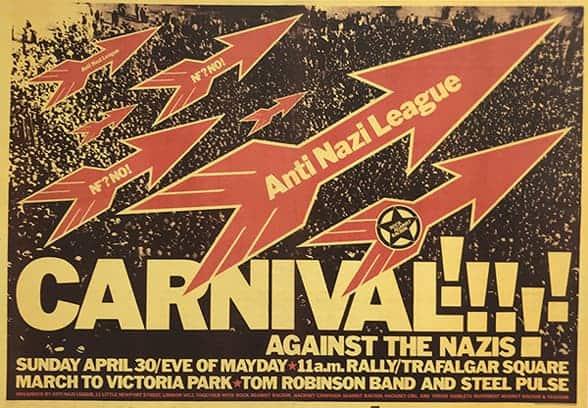
By September 1979, James had been elected to the Hackney District Committee of the SWP. He spied on its east London branches and, indirectly, on their offshoots such as the Anti-Nazi League (ANL), the Right To Work (RtWC) marches and the campaign for justice for Blair Peach.
From late 1980 until the end of his deployment in spring 1983, James infiltrated the Troops Out Movement (TOM). He rose from the east London branch into the national steering committee of the organisation taking on the post of secretary and chairing meetings.
In March 1982, James infiltrated the May 8 Demonstration Organising Committee (M8DOC), becoming its treasurer. The final stages of the deployment saw him reporting by proxy on the emerging Red Action (RA) group.
James was withdrawn from active service in the spring of 1983, after just under five years’ deployment and left the Metropolitan Police some years later at the rank of detective sergeant.
Unless otherwise indicated, the information below is taken from the first witness statement and the oral evidence of HN96 ‘Michael James’.
James was born in the 1940s and joined the Metropolitan Police in the 1970s, after training at Hendon Police College in north-west London. He entered the Metropolitan Police as uniformed constable before successfully applying to join Special Branch at the rank of detective constable (DC).
In Special Branch, after a year on probation, James spent much of his time in B Squad responsible for ‘Irish related groups’. He did not, however, take part in any undercover activities in the field. James recalled that it was common knowledge in Special Branch that an undercover unit existed and that you had to be ‘spotted or selected’ to join it. James stated:
I was interested in undercover work. I felt that I would be good at it. I had done youth work before and felt I had the right interpersonal skills to do the job. Although I did not know exactly what would be required, undercover work sounded exciting. Even though it was not something that you could apply for, I decided to go along to the office and introduce myself.
Recruitment
James approached HN34 Geoffrey Craft , the chief superintendent of S Squad, which included the SDS, and was told he would be considered for a posting in that unit. However, after receiving no response for several months, James decided to further his career by studying for the promotion exam to become a sergeant.
On the day of the exam, James happened to meet HN356 ‘Bill Biggs’ , an undercover officer with the SDS, with whom he had worked in Special Branch. Biggs was also studying for the Competitive Promotion Examination, although he was in the field at the time. He told James that the SDS would select him. Worried that promotion to sergeant might jeopardise his recruitment, James walked out of the exam without finishing his paper.
A couple of months later, James received a call from SDS Superintendent HN608 Kenneth Pryde , who confirmed that he had been selected to join the unit. According to James, there was no formal interview procedure or psychological profiling to determine recruits' suitability. Selection was based solely on personal recommendations, including his current management and SDS officers who knew him. James also stated that, before joining the SDS, he was told little about the unit or its activities.
James was married at the time of his recruitment and he observed in retrospect that:
The SDS preferred to recruit married officers. One of the main dangers of the unit was over involvement with the role. It was felt that if you had a family at home you would approach the job in a different way to a single man who had nothing other than work in their lives. The thinking was that having a personal life away from the job allowed you to retain an objective distance from your work and the group you were reporting on.
James formally transferred to the SDS in late 1978 and, shortly after his arrival, he suggested to his SDS managers that he thought it would be useful for them to meet his wife, so she ‘would know who to contact if she was having any problems, or she had any concerns relating to my work’.
As a result, Detective Chief Inspector (DCI) HN135 Michael Ferguson and Detective Inspector (DI) HN244 Angus Brian McIntosh visited James at home. Although they said nothing to James’ wife about the nature and content of his undercover work, or the impact it might have, they reassured her that they were looking after her spouse’s security and she could contact them at any time. James claimed that the home visits became regular practice in the SDS recruitment process after this point.
Training and tradecraft
James began his career in the SDS by working on administrative tasks in the unit's back office at New Scotland Yard. He also attended the two regular weekly meetings between SDS managers and undercovers at the designated safe houses. This gave him the opportunity to question the undercovers ‘about what they were doing, and how they were doing it’.
He considered the following four the most important in providing practical advice; HN296 ‘Geoff Wallace’ , HN21 , HN80 ‘Colin Clark’ and HN126 ‘Paul Gray’. All had infiltrated the SWP in London.
Wallace was at the end of his deployment, and James would replace him. He provided the majority of the advice on how to behave while undercover. For example:
[Wallace] told me it would not be difficult to become very involved in the groups you infiltrated and assume positions with lots of responsibility. However, he cautioned me against doing that. He said that I should be helpful and that I should try [to] be in the right place at the right time, but that I should not make myself too accessible to members of target groups.
Wallace’s overall guidance was to avoid ‘leadership’ positions and aim to infiltrate from the bottom to the middle of an organisation’s hierarchy, as you did not necessarily receive better information at the top, and it presented more danger of discovery.
This nuanced approach, Wallace argued, should be replicated in personal relationships with members of target groups:
You had to be friendly and helpful, but you did not want to be around too much, or get too close to members of your target groups. He told me not to volunteer too much information about myself.
Outside this informal advice, James could not remember receiving any specific guidance from his managers regarding personal relationships or seeing any SDS ‘tradecraft manual’ describing how to behave in the field. He was not aware of the Home Office circular 97/1969 titled ‘Informants Who Take Part in Crime’ , though he did accept that in the SDS it was understood ‘that you should not act as an agent provocateur’. James added that he felt that he was expected to use his ‘common sense and sound judgement to decide how to behave in any given situation’.
This common-sense approach also applied to sexual relationships with members of target groups, which he claimed were ‘definitely not allowed’. The same was true of participating in criminal activity or provoking or encouraging members of target groups to take part in crimes. He could not recall any specific advice from SDS managers about what to do if he was arrested while in the field or if brought before a court as either a defendant or witness, other than to phone the SDS back office. Similarly, he could not recollect being given any guidance on what to do if he obtained access to legally privileged information.
Cover identity
James recalled that he was asked by senior SDS management, either DCI Ferguson or DI McIntosh, to obtain the ‘identity of a deceased child who would have been a similar age to me had they survived’. He achieved this by visiting the Registry of Births, Marriages and Deaths in London and selecting ‘Robert Michael James’. Using the deceased child’s middle and last name as his full name, he then took the child’s place of birth, Blackpool, as his home town.
The officer did not see any moral dilemmas, as ‘no family was injured or caused any distress because of this practice’. He also asserted that this was standard practice in the SDS at the time.
James was advised by the SDS office to visit Blackpool to flesh out his legend. Using discrete Special Branch assistance local to Blackpool, he was able to confirm that the real family of the deceased ‘Robert James’ was not living at the address listed in the death register and that there was no trace of where they had moved to. Finding that they were not easily contactable reassured him:
that if there were any moves in the future to try to understand my … background, [...] that would have been difficult for people to do.
Although James had his Blackpool back-story prepared, he claimed that he never had to actually use it during his deployment.
James chose a cover job as a painter and decorator, and planned to present himself to target groups as ‘a young man who was making a reasonable living from his job’. The SDS provided a cover employer and a driving licence in his false name. James purchased a small estate vehicle from a large second-hand dealer in London using funds provided by the SDS office.
James carried painting and decorating materials in the vehicle to make it look like he had just come from work, and in some cases, he even splashed paint on himself to enhance the deception. In practice, he carried out ‘a couple of minor jobs but did not do any substantive work’.
Aware that he was going to be infiltrating the SWP in east London, he rented a small flat in Hackney that suited his ‘legend’ and fitted the SDS budget. After about six months, he found a nicer bedsit in Hackney, only to discover there were two SWP members living on the same street. So once again he sought alternative accommodation, this time for security reasons.
The next flat was slightly larger, which made James worry that the extra space might encourage pressure from one of his SWP comrades to move in. To mitigate this risk, he approached the head of the SDS at that time, DCI HN307 Trevor Butler , to get permission for a fellow undercover to move in with him. After some persuasion, pointing out the operational benefits, James was given permission for his colleague and family friend, HN106 ‘Barry Tompkins’ , to share the flat.
Tompkins was infiltrating the Spartacist League of Britain (SLB) in east London and provided a useful cover if any of James’ SWP comrades were to call in at the flat. James and Tompkins shared the flat for around three years, this was the first time the SDS had sanctioned such an arrangement. James made one more move, towards the end of his deployment, to a flat in Stoke Newington in north London where he lived for six months.
While preparing for his deployment in the SDS back office, the officer altered his appearance from clean-shaven with short hair to a beard and long hair. He purchased casual wear, jeans and sweaters, which he thought would be in keeping with members of the SWP. James embellished his legend by creating a fake ‘Jewish girlfriend who was not keen on my political activities’. This, he claimed, was for two potential situations that might arise during his deployment:
The first reason was in case someone spotted me with my wife whilst I was off duty. The second is that it would have given me a reason to rebuff someone's advances if they showed a romantic interest in me. Thankfully, neither situation arose during my deployment.
Socialist Workers Party
As already noted, James was effectively a replacement for HN296 ‘Geoff Wallace’, who for more than three years (1975-1978) had infiltrated the Hammersmith branch and the Inner West London district committee of the SWP. By the end of 1978 the attention of the SDS managers was drawn to east London, for several reasons.
First, the long-running Grunwick dispute in Willesden had ended in July 1978, which removed the emphasis for local infiltration of SWP branches in the west of the capital. Second, the east London SWP groups were considered the strongest in the city and the most ‘disruptive’. Finally, the national office of the SWP was based in Reading Lane, Hackney.
Consequently, DCI Ferguson and DI McIntosh tasked James with infiltrating the SWP in east London and specifically in the Hackney area. While James knew other SDS officers were operating in branches of the party in London, he was not given any further information. His preparation included reading copies of the party’s paper Socialist Worker and, after he had secured accommodation in Hackney, he said:
I spent a few weeks exploring the local area and showing my face in the local shops and pubs. Once I had got my bearings and built up a bit of a presence, I approached my target group.
James recalled that it was not difficult to come across the SWP in Hackney; Socialist Worker was regularly sold on the streets and meetings of the party were advertised in local pubs. He noted that the party membership locally was a mix of young and old, and that Hackney was a real ‘melting pot of various political groups’. He came across several other left-wing organisations and their front campaigns during his deployment, including the Revolutionary Communist Tendency/Party (RCT/P) , Red Action (RA) and the Troops Out Movement (TOM).
James’ first report in February 1979 concerned the organisation of the Hackney District of the SWP, noting that it comprised three branches, Clapton, Hackney and Stoke Newington, of which the former had the largest membership. His next reports in early 1979 concentrated on identifying members of the Clapton branch.
In May, James reported on a meeting of the Hackney Anti-Nazi League (ANL) , which attracted 250 people including leaders of the national organisation, such as Labour MP for Hackney and Stoke Newington Ernie Roberts and activist Peter Hain. The end of the report contained the names and details of a further 15 identified attendees.
James continued his reporting on individuals, including a 16-year-old boy who had been recruited into the SWP’s youth section, Red Rebel , and a member of the SWP sub-group Women’s Voice. He also provided details of planned protests over government austerity measures, pickets of local police stations in the wake of the death of SWP member Blair Peach at the hands of the Special Patrol Group (SPG) in Southall in April 1979 and counter-demonstrations against the National Front (NF).

In June, James reported on his Clapton branch spawning the new Homerton group, expanding the Hackney District of the SWP to four branches. In September, James intervened in the Clapton branch meeting stating that sales of Socialist Worker could be increased by ‘a little more effort on the part of those who rarely sold the paper’. This suggestion effectively led to his election to the branch committee. James initially feigned reluctance, but then accepted the post.
In December, at the request of MI5, James identified five fellow committee members and attempted to obtain details of particular individuals in the party.
The early winter months of 1980 were dominated by the strike in the steel industry. James reported on plans for supporting the steelworkers’ pickets by the SWP, party recruitment in areas affected by the strike and identified members of the SWP and International Marxist Group (IMG) hosting travelling steelworker pickets in their homes. It is noticeable at this stage of his deployment, probably because of his role in the Hackney District Committee, that James was attending meetings of different branches in the district, rather than just Clapton.
By February 1980, the undercover also identified three local workplace branches of local-authority workers, teachers and hospital workers. He also reported on the composition of the district membership noting that ‘the majority […] are employed in white collar professions’. His own role on the District Committee was listed as book organiser, which James recalled was probably ‘something to do with distributing SWP books or literature’.
James continued his spying on the justice campaign for the murdered SWP member Blair Peach by supplying a list of 14 police stations that were planned to be picketed by the SWP branches across London on 23 April 1980. This was in the build-up to a national protest in the capital calling for the disbandment of the Special Patrol Group (SPG) the following weekend. James’ information included the exact start times of the protests, suggesting he was now getting access to higher-level planning documents, for London at least.
James was present at the picket for Peach at Stoke Newington police station and used it as an opportunity to identify SWP members in his report. After the national march to Trafalgar Square, he helped to name many of the 200 or so SWP and IMG members in a report co-authored with HN106 ‘Barry Tompkins’, his colleague and cover flatmate.
In July 1980, James reported on the attempt to create a national co-ordinating body to deal with cases of state brutality by police and prison authorities. This initiative came from the Friends of Blair Peach Committee , the Richard ‘Cartoon’ Campbell and Jimmy Kelly campaign groups, all fighting for justice for people who died at the hands of the police.
By late summer 1980, James had identified the Hackney Trades and Labour Club (HTLC), as a rich source of information on leadership figures and higher echelons of the party, perhaps better than SWP branch meetings. In a report outlining the formal structure of the SWP in the District of Hackney, he made the observation that, although the national office and printers for the party were in Hackney, none of the leadership attended branch meetings in the district. Instead:
many full-time officials are seen regularly associating with members in Hackney, a favourite venue being the Trades and Labour Club, Dalston Lane.
In his report James emphasised the importance of the area:
there can be little doubt [...] that Hackney will continue to be regarded as ‘the heart of the revolution’, a real melting point of revolutionary socialist activities and an area that attracts socialists from all over the country.
During 1980, James reported on several SWP campaigns and sponsored organisations. These included the Right To Work (RtWC) marches and pickets, protests against local-authority cuts to services and various Trades Union Congress (TUC) Days of Action over unemployment and austerity.
In late 1980 and early 1981, national news was overshadowed by Irish Republican prisoners’ hunger strikes that aimed to re-establish their political status as prisoners of war. It was probably the re-emergence of the struggle for independence on the streets of Northern Ireland that encouraged closer ties between the SWP and the TOM in 1981, and James’ growing interest in the latter group.
In 1981, the Hackney branch of the ANL revived in response to racist attacks in the area. James reported on relations between Hackney ANL and the Deptford Massacre Action Committee (DMAC) and the East London Workers Against Racism (ELWAR) group. The latter, a front organisation for the Revolutionary Communist Party (RCP), had been infiltrated by fellow undercover Barry Tompkins.
Throughout the rest of 1981, James continued to report on the SWP and its membership. This included details of changes to the party’s structure, supplying internal newsletters and party directives, identification of individuals and details of their home addresses, living arrangements, sex lives and marriages. However, his focus for infiltration had already shifted away from the SWP, towards the struggle in Ireland.
Troops Out Movement
At the end of 1980, about two years into his deployment, James began to report on the Troops Out Movement (TOM). He claimed this transpired because the ‘TOM were eager for new recruits and there was lot of overlap in membership with the SWP’ and this was reflected in informal social networks in Hackney:
My recollection is that I got talking to members of the TOM in an ‘SWP pub’ in Hackney, and they invited me to attend meetings.
James discussed this development with his SDS managers, and they encouraged him to infiltrate the TOM. He believed this was for two principal reasons, first that there were no SDS undercovers within the TOM at that time, whereas the SWP had several, and second that:
there was an element of concern about whether it [TOM] was providing support for the Irish Republican groups who may commit acts of terror.
Following the cautious tradecraft principles expounded by his mentor, SDS undercover ‘Geoff Wallace’, James decided that becoming a full-time member of both organisations ‘would look strange’ and might draw undue attention.
His SDS managers agreed and suggested that he keep informal contact with SWP members via the Trades and Labour Club and gain intelligence in that way. James also reduced the number of SWP meetings he attended and increased his attendance at TOM social events and gatherings. He was then invited to formal meetings of TOM where he ‘formed friendships with various members’.
From December 1980 to March 1981, James reported on public meetings and protests organised by the TOM. In May, he identified the secretary of the east London branch of the TOM and the venue for the group’s meetings; again, Hackney Trades and Labour Club. This evidence suggests he had infiltrated the branch by this stage.
In June 1981, James took part in an occupation of the Trades Union Congress headquarters building in Great Russell Street, central London. The protest, organised by TOM, targeted the ‘TUC’s silence on, and… their tacit acceptance of, the Tory Government’s policy in respect of the Republican hunger strikers’. Although the protest largely failed, as it gained little publicity and the occupiers were not arrested but instead escorted from the building by TUC officials, it served another function for James:
Well, we were trespassing. We weren't looking to break any law. I understand that I'm justifying my actions. I was part of that protest. I felt that it was something that I -- to assist in my, if you like, credibility in that organisation [TOM], I -- and I -- I saw that as a protest that I could get involved in. So I didn't see it as breaking the law.
James’ spying on the TOM included the typical SDS emphasis on identifying attendees at both public and private meetings and protests. In September 1981, he reported on a delegation of families of Irish nationalist hunger-strikers travelling to London, along with Republican MP Owen Carron.
Around this period, James began to gain access to the minutes of the TOM’s London-based steering committee, which he supplied to Special Branch, along with details of the committee’s meeting place. These documents gave him information on finances, security measures and on planning and policy for the organisation. He also had access to reports by TOM delegations on meetings in Dublin with Provisional Sinn Féin (PSF).
This change in access suggested a promotion, which James recalled:
Hackney was a particularly ‘active’ branch of the TOM, in the sense that there were a lot of active and enthusiastic members. A number of its members were on the National Steering Committee. At some point during my time on the TOM there was a vacancy to join the National Steering Committee. The post that was available was that of Membership and Affiliation Secretary and I believe it was decided that post had to be filled by a member of the Hackney branch of the TOM.
And so, somewhat contrary to his earlier policy of staying in the middle of the hierarchy in an organisation to avoid detection, James took on the role. James was now able to attend the highest executive body of the TOM and presumably had access to the campaign’s membership and affiliation records.
Sitting on the steering committee gave national perspective to his intelligence, reporting on plans for protests and pickets in Leeds, Brighton, Manchester and Coventry, along with details of the national delegate conference of the TOM. It was also bringing James into contact with other ‘anti-imperialist’ political groupings such as the Indian Workers Association (IWA), South West Africa Peoples’ Organisation (SWAPO) and the Irish Republican Socialist Party (IRSP).
In January 1982, James reported on a motion at the TOM National Delegate Meeting in London which called for a national demonstration on the first anniversary of the death of Republican hunger-striker and MP Bobby Sands on 8 May 1982. In March, James followed this up with a more detailed report from the TOM steering committee with its plans for the commemoration.
The TOM formed the ‘May 8 Demonstration Organising Committee’ (M8DOC) as a broad front along with other groups including SF, IRSP, Labour Committee on Ireland, IWA and Veterans Against The War. James sat on the M8DOC as treasurer, and thus took a leading organisational role on behalf of TOM in planning the event, while supplying committee minutes and other internal information in various reports to Special Branch.
The march, led by Owen Carron from Hyde Park to County Hall, attracted somewhere between 2,000 and 5,000 people, but was barely reported in the media, despite 27 arrests. MPs Ernie Roberts and Dafydd Elis-Thomas, along with Ken Livingstone, head of the Greater London Council (GLC), spoke at the rally and were included in the reporting, in breach of the Wilson Doctrine.
James continued to report on the TOM steering committee and east London branch meetings throughout the rest of 1982. He also attended the TOM National Conference in early April in London, providing Special Branch with the detailed minutes of the meeting, full financial records of the TOM and a list of its active branches; eight in London and 23 around Britain. In June, a report on a meeting of the National Steering Committee listed James as the ‘chair’.
His role as membership secretary for the steering committee of the TOM also began to liberate results for Special Branch. In August, James provided a list of 48 organisations affiliated to the TOM, including groups in Canada and West Germany, along with their contact addresses. The groups ranged from trades councils and Labour Party branches to student societies, the Co-op and the African National Congress (ANC). Most of these organisations appear to have MI5 registry files associated with them.
James followed this up a month later with a four-page report listing all people who had taken up individual subscriptions to the TOM over the previous year (1981-1982). With the redactions, it is difficult to estimate how many people are on this list, but it is likely to be more than 100.
In December 1982, James was re-elected treasurer of the TOM committee organising the hunger strikers’ anniversary march for May the following year. However, after only a few weeks in the post, in January 1983, he resigned and stepped down, probably in preparation for his exfiltration.
In February 1983, at the end of his deployment, James provided his most comprehensive and detailed report. At the request of his SDS managers, he wrote an assessment of whether the TOM ‘could be used by Republican terrorist groups for logistical support in the UK’.

The 34-page document outlined the organisation's politics and internal structure, including the national steering committee, finances, the national office, and conferences. It focused on the relationship between the TOM and the republican movement and the annual delegations to Northern Ireland, as well as detailing its publications and propaganda. It identified the individuals involved and their responsibilities, and listed affiliated groups and branches.
The only detail that proved a challenge for James was the national membership. He noted:
No central records are kept of branch membership mainly because of security reasons and it is therefore impossible to provide an accurate figure of the total membership.
As an afterthought, the report also provided the details of the TOM bank account and names of the two authorised signatories.
Red Action
In early 1982, James reported on the formation of Red Action (RA) , a group set up by one-time members of the SWP who had resigned or been expelled by the party leadership. He noted in his report that:
One of the main differences with the SWP is that the members of the new group consider a more ‘confrontationist’ attitude should be adopted in the question of anti-racist work.
One of the fundamental reasons for the formation of RA was the feeling that the SWP central committee turned its back on the struggle on the streets that many militant working-class anti-fascists had been waging since the mid-1970s. Described by the party leadership in derogatory terms as ‘squadists’, a number of these anti-fascists were expelled in 1981 and ‘some jumped before they were pushed, whilst others left in solidarity with their comrades’.
The origins of RA were visible months earlier, in the summer of 1981, when the nascent group produced a paper critical of the SWP leadership titled ‘The news Socialist Worker forgot’ and began to organise in the environs of the SWP in London later that year. The first issue of the new organisation’s paper Red Action was published in February 1982.
Even though the nexus of the group was ex-SWP members in the east end of London, James did not infiltrate the group. Retrospectively, he explained why:
I did not join Red Action, but members of the group would attend SWP meetings and they would drink in the same pubs as SWP members. I did not form any friendships with members of Red Action. They were a difficult bunch of people to get along with. Despite that, I would find out what they were up to through word of mouth from members of the SWP that I knew.
One would have thought that the reputation of RA members – violently confronting fascist parties in an organised and effective manner – would have made them a primary target for SDS infiltration. It appears James, either through fear of discovery or because his SDS managers preferred him to stay in his leading role in TOM, merely relied on SWP gossip about RA.
Indeed, James’ reporting on RA over the rest of 1982 was reduced to supplying the odd leaflet or paper, second-hand accounts of public meetings, and noting where RA met up with other groups before demonstrations in central London.
James described his undercover role as being ‘a job you would do seven days a week’. For five days of that week, he claimed to be on duty for 16 hours per day. During this time, he would attend demonstrations, meetings and other events, as well as socialising with members of the target groups he had infiltrated, while maintaining his cover employment as a painter and decorator. On average he stayed overnight at his cover flat twice a week.
As his mentor HN296 ‘Geoff Wallace’ had suggested, on top of these activities he should be ‘helpful and that I should try to be in the right place at the right time’. James achieved this by attending meetings and social events on a regular basis, using his vehicle to transport SWP, and later TOM members, to protests and events, selling Socialist Worker when requested by the party and helping out where necessary.
For James, deployment as an SDS undercover was considerably different to his previous role in Special Branch:
Life in the SDS was much less structured. You had to have a lot of self-discipline as you did not have a senior officer behind you all the time telling you what to do. You had to be very conscious to remember that you were a police officer, despite spending your entire time pretending to everyone you met that you were not.
Outside the periods where he had to maintain his cover identity, he remained ‘on duty’ while writing up his reports at his ‘real’ home and attending the weekly meetings with other SDS undercovers and his managers. The remainder of his ‘off duty’ free time James claimed he spent with his wife.
Like almost all undercover officers in the period, once James’ deployment began, he never returned to the SDS office at New Scotland Yard. Instead, he and other SDS undercovers and their managers would meet twice a week, on a Monday and a Friday, at two different safe houses – although other undercovers remembered meetings being on Mondays and Thursdays. At these meetings, James would submit his reports, diary of overtime hours and expenses and could privately discuss with his managers any issues of concern.
The bi-weekly meetings also served a social function, where, according to James, undercovers had a ‘rare opportunity to be yourself instead of your cover identity’. These informal discussions were governed by the unwritten rule not to discuss deployments, with the exception that if you had a ‘particular problem you wanted some advice from someone on’. SDS managers were present during these conversations, but not at the sessions in the pub which, according to James, some undercovers participated in outside the bi-weekly meetings.
Other than these social arrangements, undercovers and their spouses, and SDS managers met only for the annual Christmas party. There was no contact between SDS managers and undercovers outside the bi-weekly meetings, and the only exception to this routine was rare visits to the safe houses by commanders, deputy assistant commissioners and a commissioner.
Relationships
James claimed that he had ‘no sexual activity whilst in my undercover identity’. He also denied being aware of any other undercover, including his flatmate ‘Barry Tompkins’, having had sexual relationships with members of target groups.
James did admit to having formed ‘friendships’ with members of targeted organisations, naming four individuals in the SWP and TOM in particular who he saw ‘both socially and at group meetings’.
There are several requests by MI5 (‘Box 500’ in the documentation) for specific information on individuals and organising groups that involved James during his deployment. Typically, in this period, these came from the F6 and F7 departments, the former dealing with Trotskyist and radical organisations, the latter with a wider range of groups including anarchist, feminist, pacifist, Black power, nationalist and fascist parties.
In November 1979, MI5 asked the SDS to confirm the identity of a member of the SWP. James provided this a month later, along with details of the subject’s current and previous addresses and educational history. A similar request the following year, involved confirming that an individual, who had already been identified ‘phonetically’, was a particular member of the SWP. It appears James was able to determine the subject's identity.
In May 1981, as resignations and expulsions were underway in the SWP related to the emerging RA faction of the party, MI5 asked for details on four people who had recently left the Hackney branch. It also requested information on the formation of a new Central London District Committee of the SWP. It is unclear whether James was able to deliver this information.
Finally, in April 1982, the F5 department of MI5, which dealt with what was called Irish terrorism in the period, requested (via F6) information from the SDS on two specific subjects; changes in TOM’s office accommodation and, from the M8DOC, information on planning the national demonstration, details of members and organisations involved, and the attitudes of various members to the protest.
The brief also asked for an assessment of which individuals/organisations provided the driving force for the M8DOC and what attitude republicans from Provisional Sinn Fein (PSF) in the committee took to its other members. James was involved in both organising groups, so was well-placed to respond.
The written request from MI5 also stated the following:
…we receive regular reports on TOM in London from MPSB [Metropolitan Police Special Branch] which are largely based on SDS information. We find these fully cover our general requirements for maintaining our records of TOM membership and activities.
This statement provides evidence for the importance of James’ role in the leadership of the TOM and that the information supplied by the SDS was fulfilling the majority of the intelligence requirements of MI5 regarding the TOM. This begs the question how relevant this type of information was for the stated purpose of the SDS in gathering information for the policing of protests.
James understood that the maximum deployment for an SDS undercover at the time was five years, so some time before this cut-off point, in late 1982 or early 1983, he had a meeting with his SDS managers HN99 CI Dave ‘Nigel’ Short and HN45 DI ‘Dave Robertson’. In this meeting they agreed that James should withdraw from his deployment and launch his exfiltration plan. This involved gradually leaving ‘the field’ whilst planting a story that he was going travelling.
They also discussed his post-deployment role in C11, part of the criminal investigation department of the Metropolitan police. This was a covert unit carrying out surveillance and suited the SDS practice of placing post-deployment undercovers in postings that were out of the public eye for security reasons.
James recalled that he had ‘very little to do with the SWP’ at that stage of his deployment in any case and so he gradually began to reduce his involvement with the activities of the TOM. His exfiltration story, which he began to disseminate, was that would be leaving the country to go travelling in Australia. Once he had ‘left’, he arranged for some postcards to be sent from Australia to the ‘friends’ he had made in the SWP and TOM. After this point James claimed he had no contact with those he was reporting on and made no further use of his cover name.
James’ deployment finished in spring 1983 and, as he had accrued a large amount of untaken leave, he was able to take a break with his family for several months to ‘decompress from my deployment’. In 1981, during his deployment James had passed his examinations and had been promoted to detective sergeant.
He was not debriefed by the SDS as such and, rather than joining C11 as planned, he was sent straight back into Special Branch as they were ‘short of sergeants’. James was unhappy with this decision:
I was not given much choice in the matter. It felt as though concerns for my security totally went away once I left the SDS.
James eventually retired from the Metropolitan Police after 30 years of service.
On 7 March 2018, Mitting was 'Minded to' publish HN96's cover name but not his real name. This decision was later formalised, and on 3 July 2018, HN96's cover name was published. HN96 submitted a written statement to the Inquiry on 19 December 2019. He later appeared before the Inquiry on 13 May 2021.
All published evidence and procedural records are available under the documents tab.