
HN356 ‘Bill Biggs’ joined the Metropolitan Police in 1968 and Special Branch in 1976. Before he joined the Special Demonstration Squad (SDS), he had gained some experience of undercover work, having spied on protesters at the Battle of Lewisham in August 1977.
Biggs, a married man, used the name and details of a deceased person to create his undercover identity. He was deployed into south-east London in January 1978, in order to infiltrate the Socialist Workers Party (SWP), which he achieved through the Plumstead branch. By April, he was the branch treasurer and was soon spying on organisations associated with the SWP, such as the Anti-Nazi League (ANL) and local Campaign Against Racism and Fascism (CARF) groups.
In December 1979, Biggs became the organiser for the party paper and thus was able to report on the internal workings of the South East London District committee of the SWP. He began to chair branch meetings, speak on political subjects and effectively lead public and branch meetings.
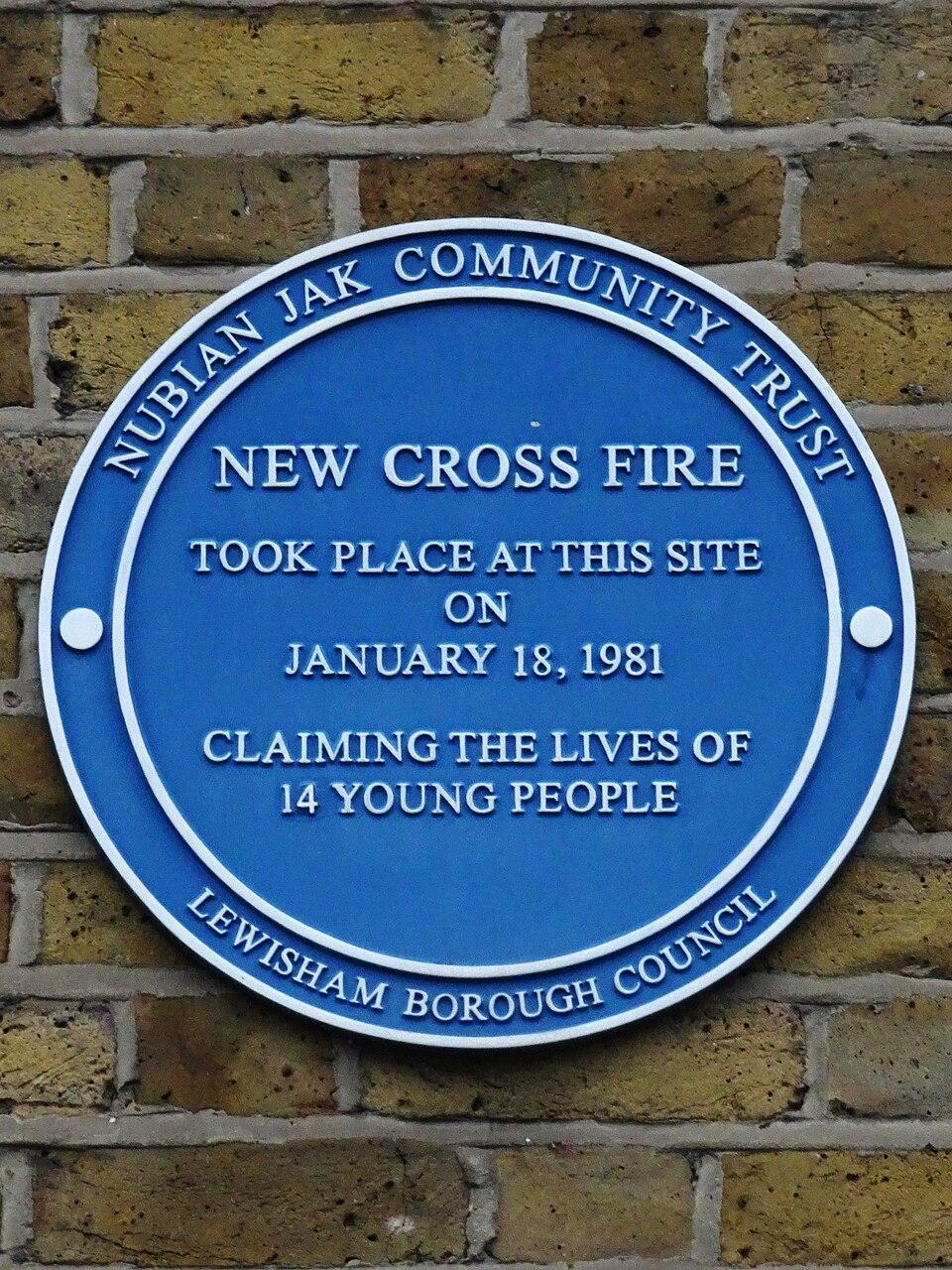
After the New Cross fire of January 1981 and the Brixton riots of April that year, Biggs was reassigned to the new SWP branch in Brixton, south London, where he spent the remainder of his deployment. He was withdrawn from undercover duties before March 1982.
HN356 ‘Bill Biggs’ was deceased by the time of the inquiry. The lack of either an oral or a written statement by Biggs presents difficulties in recording his background before joining the SDS, aspects of his training and tradecraft, his life undercover, his exfiltration, and his post-SDS career.
Unless otherwise indicated, the information below is taken from the Undercover Policing Inquiry, opening statement by Counsel to the Inquiry for Tranche One, Phase Two.
Bill Biggs was born in the 1940s and joined the Metropolitan Police in the summer of 1968. He was recruited into Special Branch in the spring of 1976, at the rank of detective constable (DC).
There is evidence that, prior to his joining the Special Demonstration Squad (SDS), Biggs had some experience of operating undercover for the Special Branch at protests and demonstrations. On 13 August 1977, Biggs was present at the epicentre of the violence in the Battle of Lewisham , a clash between the National Front (NF) , protected by the Metropolitan Police, and anti-fascists and the local multi-racial community in south London.
There, Biggs provided real-time intelligence information by phone to Special Branch on the movements of Socialist Workers Party (SWP) ‘heavies’ (‘squads’ as they would later be known within the party).
Biggs, a married man, joined the SDS in October 1977. He had already been lined up by SDS managers, along with HN126 ‘Paul Gray’ , to replace an unnamed undercover and HN200 ‘Roger Harris’. These undercover officers had both been withdrawn from their deployments, the latter due to ill health.
Harris, and it is likely the unknown undercover had infiltrated the International Socialists (IS) , the precursor to the SWP. The former had been operating in branches of the IS in south-west London and then had become detached from the organisation after a split to form the Workers League (WL).
The SDS needed to replace both undercovers in the SWP, and Biggs and Gray were chosen for this task. Gray joined a couple of months after Biggs in December 1977, with the latter acting as a mentor in creating a cover identity for him.
Undercover identity
Gray described how he was ordered by HN608 Superintendent Kenneth Pryde to go with the more experienced Biggs to ‘Somerset House’ to obtain a deceased child’s identity.
Gray also recalled that Biggs advised him on how to obtain a cover flat and many other aspects of creating an undercover identity. This was immediately before Biggs was deployed, in December 1977.
SDS managers decided to send their two new replacement undercover recruits to infiltrate the SWP in diametrically opposite areas of the capital.
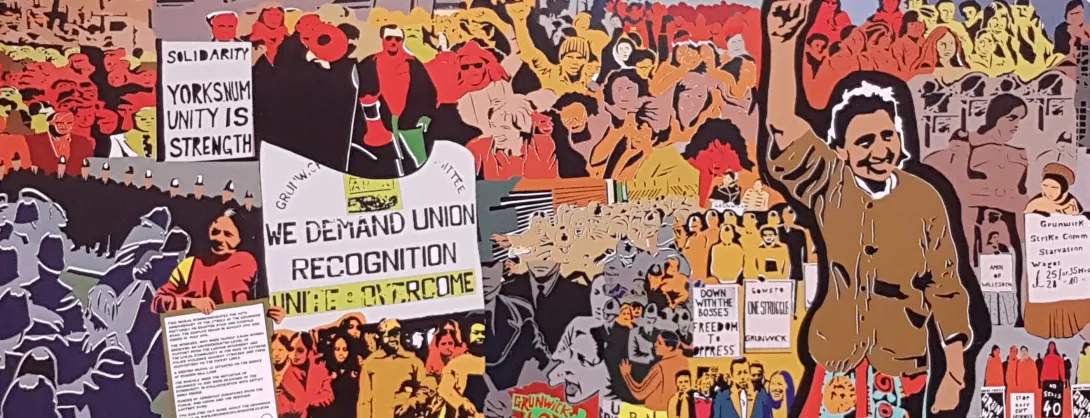
Biggs was deployed into south-east London, probably because of the recent events in Lewisham; Gray was sent to north-west London, as the Grunwick dispute was still ongoing after the mass pickets of the summer and autumn of 1977.
Socialist Workers Party
Biggs sent his first report on a public meeting held by the South East District of the SWP, on 24 January, 1978. Within two weeks, he had infiltrated the Plumstead branch of the SWP in this district, reporting on a closed meeting at Thamesmead and would continue to do so.
By April 1978, Biggs had been made treasurer of the branch, which gave him access to membership lists and to the South East District committee of the SWP. By October, he had deconstructed the organisation of the South East District of the SWP, reporting that it comprised six branches. These were the National Association of Teachers in Further and Higher Education (NATFHE) and local branches in Plumstead, Greenwich, Bexley, Lewisham and Deptford.
In each case, Biggs noted the meeting place, relative strength and militancy, and identified members of each of these branches, noting that his home branch, Plumstead, ‘boasts the largest membership and the most activity in the District’. Thus, Biggs, by design or chance, had infiltrated the choice target in the District.
Alongside his more detailed analysis of the SWP branches in the report, Biggs also analysed the relationships with the local Anti-Nazi League (ANL) and the various Campaign Against Racism and Fascism (CARF) groups. Together with all this information was a list of around 40 identified SWP activists.
By December 1978, Biggs was chairing the Plumstead branch meetings of the SWP and switched his role from treasurer to organiser for the sales of the party paper, Socialist Worker. The tactical importance of the latter role, as against treasurer, was emphasised in a South East District meeting in March 1979, where it was proposed that the two delegates from each branch for the District committee should be made up of the secretary and the Socialist Worker organiser.
Biggs’ new role also allowed him to gauge how active a particular branch was, based on the number of paper sellers and sales, and to pass on the location of each sales pitch to Special Branch.
There is a paucity of reports attributed to Biggs for most of mid-1979, though in September his home branch, Plumstead, amalgamated with the nearby Greenwich branch. In April 1979, the Battle of Southall occurred, which led to the death of SWP activist Blair Peach at the hands of the Metropolitan Police's Special Patrol Group (SPG). It is interesting to note that there are no reports about the protests and violence in Southall by Biggs, either before, during or after the events.
Biggs is, however, certainly interested in the campaign for justice for Blair Peach. He reported several times on the campaign from 1979 to 1981, on public meetings, and pickets at police stations in Woolwich and Eltham. In each case, he sent lists of identified members of the SWP who were present at the protests and memorials for Peach.
Biggs’ trusted position in the South East District of the party is reflected in a meeting of the Greenwich branch of the SWP in December 1979, where he was the keynote speaker on the political situation in South Africa under apartheid. According to Biggs, who was presumably reporting on himself, this included:
some of his personal experiences regarding the workings of apartheid. This prompted a lengthy and interesting discussion on the subject.
Biggs’ infiltration of the South East District of the SWP continued into 1980 and is reflected in his reports. In April, he appears to have gained access to the ‘registration forms’ for members of the District, allowing him to report on gender, sexual orientation, ethnicity and trade union membership. He provided financial information, members’ occupations and statistics on paper sales at branch level as well.
By 1980, Biggs was also chairing meetings of SWP branches. In June, he led a meeting of the Greenwich branch of the party titled ‘Racism and Fascism’ in collaboration with the Greenwich branch of the Indian Workers Association (IWA).
Reports by Biggs on demonstrations and marches during 1978-1980 are relatively scarce. In May 1980, he spied on a trade union day of action in Woolwich and Charlton, with a march beginning on Clapham Common. He listed around 25 identified attendees, along with the Labour MP for Greenwich, Guy Barnett.
There are some examples of potentially more violent or disorderly events, ostensibly within the remit for his infiltration of the SWP. These include the appeal by the Greenwich branch of the Indian Workers Association (IWA) for help in dealing with racist attacks in the area, and the proposed disruption of the Henley Regatta by the Right to Work Campaign (RtWC).
Later in the year, Biggs reported on a callout to support a SWP paper sale in Camberwell, south London, after attacks by the National Front and British Movement. However, there is little evidence that any of these events actually became violent.
One event where there were clashes with the police was the 2 March 1981 Black People’s Day of Action, which came in the aftermath of the New Cross house fire of 18 January 1981. The fire, which killed 13 young black people, was attributed by many to a racist attack, understandable in the light of similar, though far less tragic, incidents in recent years in the New Cross, Deptford and Lewisham areas.
The New Cross Massacre Action Committee (NCMAC) was set up to campaign for justice for the victims and their families. Although it is unclear whether Biggs took part in the Day of Action, he did report on the NCMAC and pickets by the SWP of Deptford police station.
In the febrile atmosphere in south London after the fire in New Cross and amid increased stop-and-search by plain clothes police directed at Black communities, there was little surprise that the Brixton riots erupted over the weekend 10-13 April, 1981. It appears that after this event, either the SWP moved Briggs to its new Brixton branch or his SDS managers advised him to do so.
By May, he was reporting in detail on members of the Brixton branch of the SWP, including a ‘gay’ man. In June, at the inaugural meeting of the Brixton branch, Biggs was elected treasurer of the group, followed by a public meeting in July in Stockwell that explicitly referred to the April riots.
In October 1981, Biggs reports on the Brixton Defence Campaign (BDC), set up in the aftermath of the April riots to defend those arrested. Biggs’ final report before his withdrawal identified those SWP members chosen by the central committee to run the South London District committee of the party.
Greenwich and Bexley Campaign Against Racism and Fascism
By November 1978, there were three CARF groups operating in the area covered by the South East District of the SWP in London. These were the All Lewisham Campaign Against Racism and Fascism (ALCARAF) and the Greenwich and Bexley groups. CARF groups were typically local campaigns that brought together various anti-racist community groups, including ethnic and religious organisations, civic bodies, trade unions and trades councils, along with political parties of the left.
The inclusion of the latter did lead in some cases to sectarianism. Biggs, for example, notes in his review of the South East District of the SWP that Bexley CARF, in fact, seemed dependent on an SWP presence in order to function:
In contrast, however, the All Lewisham CARF […] have made it known that they hold no truck with the SWP and for this reason they even resent the Anti-Nazi League.
Biggs reported that the Greenwich CARF had, to date, held one meeting and a carnival and was continuing to seek support in the local area.
Consequently, Biggs’ spying on the CARF concentrated on the Bexley and Greenwich groups from March 1978 until October 1980. Although these reports are not numerous, they include the inaugural meeting of the Greenwich CARF, where Biggs identified all those who spoke from the floor as well as other attendees.
He also reported on a meeting of the Bexley group in October 1980 to plan a counter-demonstration against a march of the British Movement (BM) through Welling in south-east London. A very brief report by Biggs on this protest was dominated by three pages of identified attendees, presumably from the ANL/SWP and Bexley CARF.
Anti-Nazi League
The close relationship between the ANL and the SWP is demonstrated by the reports Biggs delivered to his SDS managers. In his overall assessment of the South East District of the SWP in November 1978, Biggs noted the emergence of the ANL and located four new groups in the area, Lewisham, Greenwich, Bromley and Bexley.
His detailed reporting is limited to the Bexley branch of the ANL whose inaugural meeting in August 1978 in Welling Public Library was met by a contingent of the NF. Although no violence ensued, police were required to keep both sides apart outside the meeting. Biggs, following typical patterns of SDS reporting, took the opportunity of identifying a number of the participants, presumably entirely from the anti-fascist contingent.
Outside of branch meetings of Bexley ANL, later reports included the collaboration with Bexley CARF over the BM march in October 1980, and pickets of police stations to support the justice campaigns for Blair Peach and the victims of the New Cross fire. In each case Biggs took the opportunity to identify attendees.
There is little information about Biggs' life while deployed as an SDS undercover. There are three annual assessments of Biggs by five different senior SDS officers from 1978 to 1980.
These assessments suggest that Biggs enjoyed his work, was a popular member of the SDS team and recommended him for promotion, assuming he could pass the Competitive Promotion Exam (CPE). However, having worked on the CPE for several years whilst on deployment, Biggs failed the exam in 1980.
There is one example, in November 1981, of a series of requests made by Section F6, the MI5 section monitoring Trotskyist and radical organisations for specific information from Biggs concerning the ‘SWP in South London’.
This so-called shopping list concerned:
- The status within the party of a redacted individual
- The location of the District office
- Future branch and district plans
- Future policy ‘particularly with regard to blacks’
- The composition of the District committee and branch organisation
- Details of plans relating to those members of Womens Voice (WV) who renounced their SWP membership but retained their revolutionary socialist beliefs.
These demands came late in Biggs' deployment and so it is unclear whether he was able to deliver any useful intelligence, other than the names of those nominated for the SWP South London District committee. What it does expose is the interest of MI5 in the relationships between the SWP and Black communities and ‘revolutionary socialist’ women in south London connected to WV.
There are no details available to show how Biggs exfiltrated from the SWP, ANL or CARF groups. All that can be ascertained is that by 15 March 1982 Biggs had been withdrawn from his deployment.
There is no information available about Biggs’ career after the end of his deployment.
On 15 January 2018, Inquiry Chair, Sir John Mitting, minded to grant a restriction order over HN356’s real name; but no application was made in relation to his cover name.
Although HN356 is dead, his widow wanted a restriction order covering both HN356’s real and cover names, but she did not make a formal application. In April 2018, HN356’s cover name was released but on 15 May 2018 the Inquiry ruled his real name would be restricted.