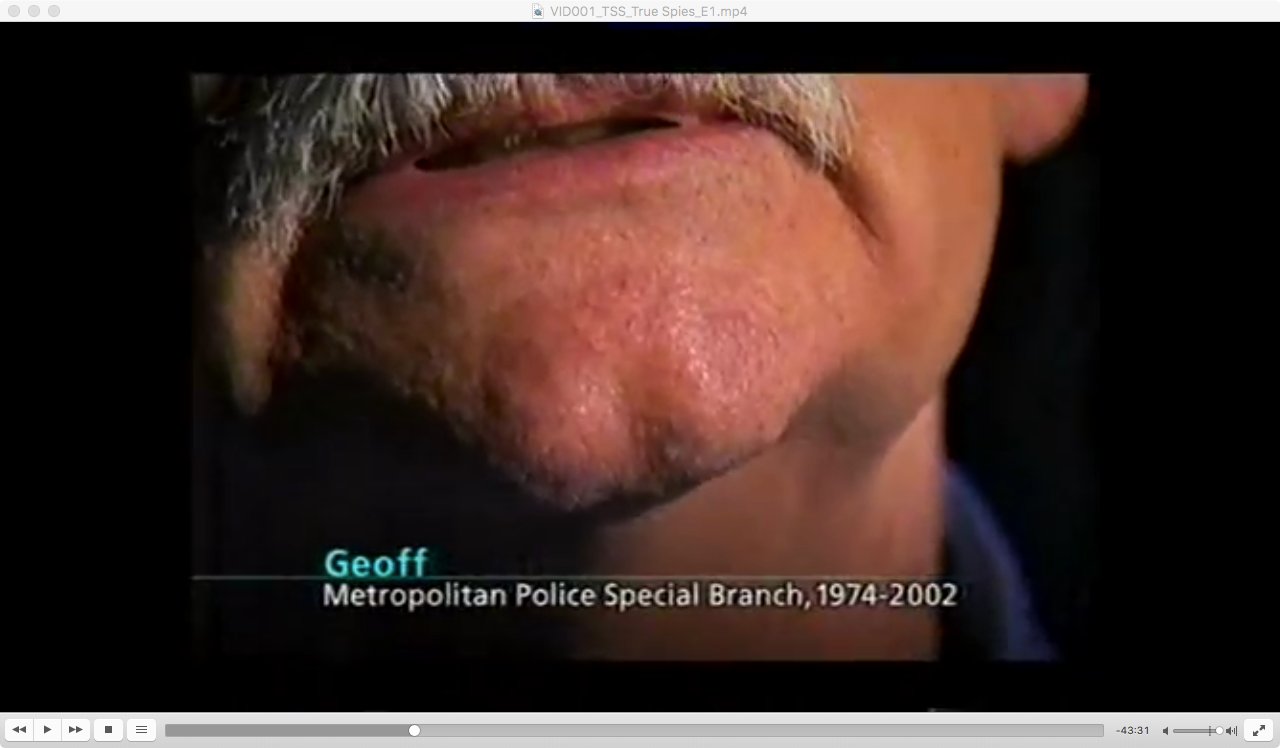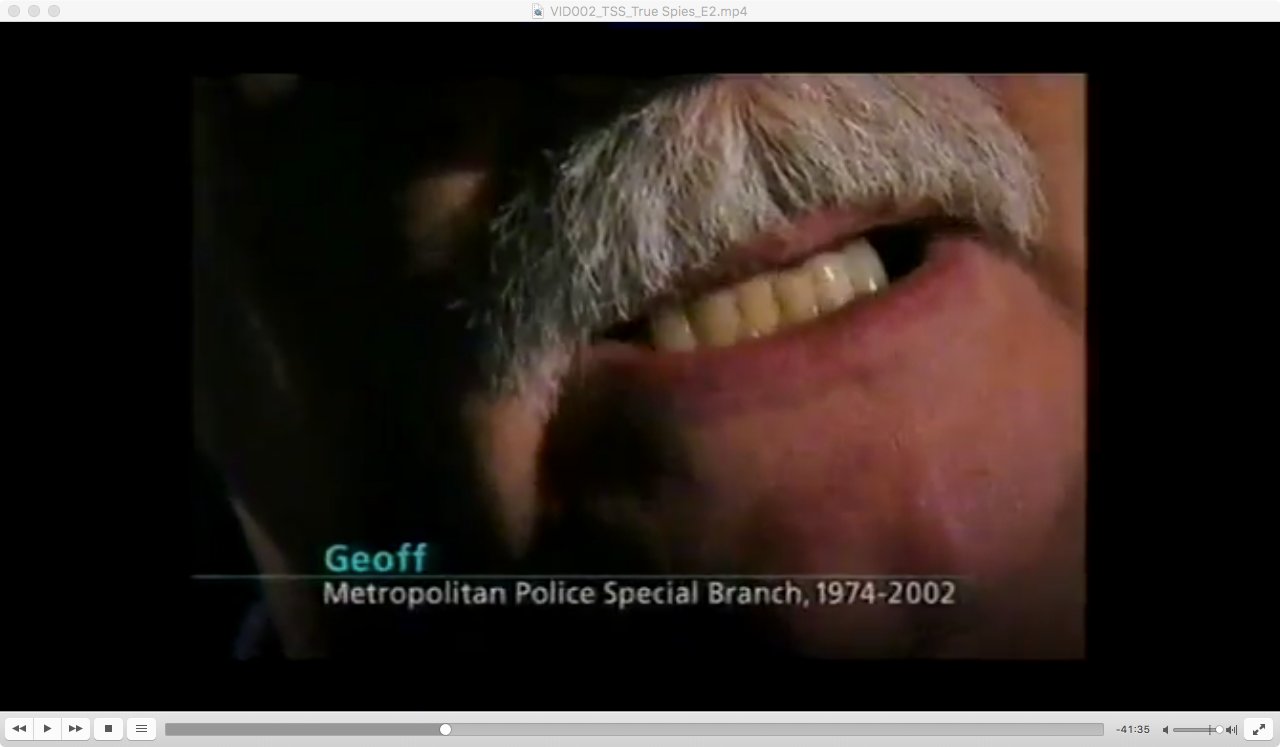
HN21 is the cypher given to a former Metropolitan Police Special Branch officer who served with the Special Demonstration Squad (SDS) during the late 1970s and early 1980s.
He infiltrated the Socialist Workers Party (SWP) and reported on a range of other political campaigns and demonstrations, including anti-fascist mobilisation, Anti-Nazi League activity, Grunwick Strike-related organising and the Blair Peach Justice Campaign.
He had a sexual relationship while undercover, with a woman from an evening class he attended.
HN21 joined the Metropolitan Police in the 1960s before transferring to Special Branch in the 1970s. The BBC documentary True Spies identified him under the pseudonym ‘Geoff’. In this, HN21 described operating within the SWP and ANL and becoming close to anti-apartheid activist Peter Hain.
Later, in 1995, after his SDS deployment, he was sent to monitor the McLibel trial, as it was feared one of the defendants, Helen Steel, would reveal that HN5 John Dines ('John Barker'), who had a deceptive relationship with her, in his cover persona.
Unless otherwise stated, the following information is taken from a heavily censored transcript of HN21’s closed hearing.
Before going into the field, HN21 spent time in the SDS back office preparing cover legends and assisting other undercover officers.
He later stated that there was no formal training system and that officers were instead loosely monitored and mentored by experienced field officers.
HN21 was then deployed into the SDS during the late 1970s and early 1980s and infiltrated the Socialist Workers Party (SWP). During his deployment, he reported on anti-fascist mobilisation, confrontations with the far right, and campaigns for police accountability following the death of Blair Peach. He also took part in the surveillance of the Anti-Nazi League (ANL).
HN21 confirmed that his undercover identity was based on the identity of a deceased child and that the identity had been researched for him by others within the SDS.
He linked the practice to concerns arising after the compromise of undercover officer HN297 Richard Clark (‘Rick Gibson’).
HN21 described a long-standing SDS ‘folder’ containing accumulated operational guidance from previous officers, including tradecraft advice and lessons learned. According to HN21, officers were advised not to enter positions of authority within target groups, warned not to become directly involved in criminal acts, and told to avoid sexual relationships if possible.
Later, he added notes to the SDS guidance folder about moments when his cover identity nearly failed, including an incident in which he almost gave the astrological sign linked to his real birthday rather than his undercover identity.
Socialist Workers Party (SWP)
HN21 described the SWP as a revolutionary socialist organisation, though in his view it was less extreme than Maoist groups.
He claimed it was highly centralised and organised around the principle of ‘democratic centralism’, while also heavily involved in anti-racism, anti-fascism and anti-police brutality campaigns.
According to HN21, the SWP attempted to influence student organisations and grassroots campaigns, sought to dominate anti-fascist organising through the Anti-Nazi League, and in some circumstances physically confronted the far right.
He described frequent confrontations between the SWP and far-right organisations, particularly around anti-fascist activities on Brick Lane in east London, involving both verbal abuse and physical violence.
He stated that he personally became involved in physical altercations and that some SWP activists later moved toward the more militant group Red Action. He also claimed that SWP leaders gave rhetorical support for confrontation, though senior figures were generally ‘more intellectually confrontational’ than physically violent.
Present at the iconic 'Rock Against Racism' concert in Victoria Park, Hackney, in 1978, he claimed to have helped to collect money.
Attending meetings and demonstrations were routine - and reported on by SDS officers. He justified infiltrating legitimate campaigns because the SWP was considered to be influencing or exploiting them.
Also admitting to taking positions of local responsibility within the SWP, he said he tried to keep a low profile while remaining close to decision-making processes. According to HN21, obtaining such positions gave access to information about members and activities and his managers appeared to welcome this increased access.
Blair Peach Justice Campaign
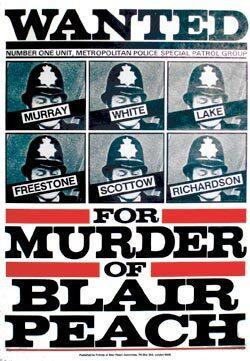
HN21 reported on events connected to the campaign following the death of anti-fascist teacher Blair Peach in April 1979, killed by the Special Patrol Group.
Controversially, HN21 reported on Peach’s funeral at the request of SDS managers, identifying attendees and supposedly assessing the potential for disorder. There was none.
As mentioned, HN21 recalled an SDS file containing advice on Tradecraft. Within the folder, the advice was not to get involved in sexual relationships if it could be avoided.
He said there was no advice if undercover officers did get involved, claiming it was left up to the undercover’s own ‘discretion’.
He admitted to having had sexual relations with one woman while undercover. He initially referred in his witness statement to two women but later corrected this, stating that there had been only one woman. He described how he first got involved with her:
It was sporadic and [Redacted] [Gist: evening classes led to other events] but it wasn’t a one-on-one. It would be a group of maybe four or five of us. At that particular time, I recall that there was some form of festival on, so we went along to lots of concerts and various other things [Redacted] and that was quite important to my cover to be able to have something that related to (inaudible) and she was present at some of them, she wasn’t present at others and, after the classes finished [...] we often used to go out for a drink [Redacted] in the pubs [...]
He said the woman was not part of the SWP – and was in fact ‘apolitical’. He described how they came to sleep together:
It was one evening whereby she was living in [Redacted] and she was quite frightened and I stayed overnight because one of the guys [Redacted] had been making approaches to her and she was a bit frightened and I stayed there one, one evening till slightly later and then, and then it just happened. We weren’t too pleased about it because we were friends.
There was one further occasion where they had sex, and other occasions involving kissing and cuddling, but not intercourse. This happened over an approximate six to seven-month period.
He confirmed that the woman did not know he was a police officer, that alcohol was involved on both sides during the first sexual encounter, and that he told nobody within the SDS about the relationship.
HN21 described the relationship as ‘a weakness which I regret’, unprofessional conduct while he was ‘a police officer on duty’, and something he regretted ‘to this day’. Justifying his actions, he claimed that as the woman was not part of the group he was infiltrating, he had not exploited her. However, he agreed that the woman could not have given informed consent because she did not know his true identity.
HN21 defended aspects of the SDS operation and said he remained ‘very proud’ of the work done by the unit.
He argued the SDS believed it was helping to prevent violence during a politically turbulent period marked by anti-fascist mobilisation, industrial conflict, the decline of the Labour government, and the rise of Thatcherism. He said that information on potential public disorder was passed on to the Metropolitan Police public-order unit A8.
HN21 criticised inadequate welfare support for undercover officers, citing insufficient monitoring of officers’ mental health, and poor exit strategies for officers leaving their deployments.
He said he and others later pushed for mentoring and welfare support systems within the SDS.
HN21 stated that senior officers, including Metropolitan Police Commissioner David McNee , visited the SDS and were aware of the nature of SDS deployments, including the depth of infiltration into political groups, and the intelligence gathered by undercover officers.
He described senior management as generally supportive and proud of the SDS.
In the 2002 BBC documentary True Spies, HN21 appeared under the pseudonym ‘Geoff’, describing his work infiltrating left-wing groups including the Socialist Workers Party (SWP) and Anti-Nazi League during the 1970s.
He discussed the SDS' ‘hairy’ tradecraft of growing long hair and beards, recalling he even had a perm to fit in.
‘Geoff’ recounted attending major protests such as the Grunwick strike alongside Arthur Scargill and described gaining the trust of activists, including Peter Hain. However, he later suggested the original claim of closeness to Hain was not true.
He portrayed undercover work as exciting and politically necessary, claiming SDS officers helped to prevent disorder and defend parliamentary democracy. He called the role ‘salaried schizophrenia’ and described it as ‘the best job I ever did’.
In 2011, Peter Taylor, who had presented True Spies, made a programme for Radio 4’s Secret Britain series on undercover surveillance. He interviewed someone who used the pseudonym ‘Steve’, whose biography strongly resembled those of both ‘Geoff’ and HN21.
In HN21’s impact statement, which pleaded with the Inquiry not to reveal either his cover or real names, he said he regretted taking part in the programmes.
Little is known about HN21's subsequent career; however, it is established that, as a Special Branch officer, HN21 was sent to monitor the McLibel case at the Royal Courts of Justice on 2nd October 1995.
This was due to a fear that Helen Steel would unmask HN5 John Barker ('John Dines') as an undercover officer. Helen Steel, in her testimony to the Inquiry on 24 July 2026, said that as HN21 apparently 'knew her', it was vital that she should at least know his cover identity.
On 7 March 2018, Inquiry chair Sir John Mitting said he was minded to restrict HN21’s real name, but, citing medical evidence to suggest that even the release of HN21’s cover name would adversely impact the officer’s mental health.
On 23 May 2018, Mitting decided to withhold both the officer’s real and cover names.
Publications relating to the anonymity process can be found on the documents tab.