
HN297 Richard Layton Clark (‘Rick Gibson’) is a former Special Demonstration Squad (SDS) undercover police officer. He joined the police in 1967 and was deployed in the SDS between 1974 and 1976. While undercover, he co-founded the south-east London branch of the Troops Out Movement (TOM) and attended Big Flame meetings.
Clark had four known sexual relationships in his cover identity, including with ‘Mary’. As ‘Rick Gibson’, he held influential national roles at TOM and was a key figure in internal political disputes within the organisation.
When Clark sought to join Big Flame in 1976, members found out he was using the identity of a deceased child. Confronted with these findings, Clark disappeared. That year, Clark, still a police officer, was promoted to detective inspector. He retired in 1998.
In 2021, the Inquiry published written evidence from ‘Mary’ about Clark and heard oral evidence from activist Richard Chessum.
Disambiguation: There was an NPOIU officer who used the cover name ‘Ritchie Clarke’ (2001-2006).
Richard Clark was born on 6 April 1945. He joined the Metropolitan Police on 26 June 1967 and Special Branch in October 1970.
Having qualified to become a detective sergeant on 8 January 1975, Clark was promoted on 17 November that year. A police memo dated 31 May 1975 noted that Clark had been approached and had agreed to join the SDS.
Clark had spent the previous six months on E Squad (Black Power). Clark joined the SDS in the summer of 1975 and spent the rest of the year in the back office.
Summing up Clark’s reporting, Counsel to the Inquiry (CTI) attributed to him two Special Branch reports written in November 1974, before his deployment. Both concerned south-east London – including a student protest at Goldsmiths College, which Clark infiltrated as ‘Rick Gibson’.
A memo written by S Squad’s senior officer, Chief Superintendent HN332 Cameron Sinclair , dated 9 December 1974, indicated that Clark had been working in the SDS back office for some months and was about to be deployed.
Tradecraft
Richard Clark adopted the identity of a deceased child, common practice among SDS officers from 1973.
Clark approached the Troops Out Movement (TOM) by writing to the national office, stating that he wanted to join a group in south-east London. Under the name ‘Rick Gibson’, he wrote that he had enrolled in an evening Portuguese course at Goldsmiths College in Lewisham. Richard Chessum, a student active in TOM, was contacted by the TOM national office and agreed to meet with Clark.
After leaving his part-time course at Goldsmiths College, Clark said he started work as a van driver. This was a common cover employment for SDS officers. Although many undercover officers had fake (or ‘duff’) jobs, Clark invited Chessum to his phoney place of employment. One of his cover addresses was 62 Peckham Road, Peckham.
Clark successfully secured his nomination and election to influential roles within TOM. He achieved this by being politically neutral in TOM’s sometimes-contested debates and not advancing an overtly political agenda. Chessum noted that he had a longer history in groups campaigning on so-called Irish issues, and that Clark was effectively promoted over him into more senior organising roles.
Clark principally infiltrated two groups; the Troops Out Movement from January 1975 and, less successfully, Big Flame from September that year.
Outside these two main groups, he also reported on the International Marxist Group and the National Abortion Campaign.
Troops Out Movement
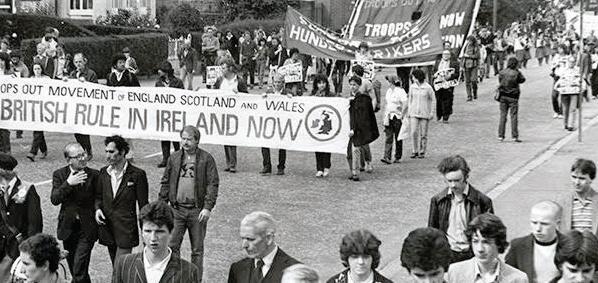
Clark played an important part in founding the south-east London TOM branch. Richard Chessum said that although he was already interested in forming a group, Clark’s letter was the catalyst to do so.
Subsequently, Chessum, ‘Mary’ and others met at Goldsmiths College bar in December 1974 or January 1975, and agreed to create the branch. Although Clark did not attend the initial meeting, the activists soon made contact with him. The South East London branch of the Troops Out Movement (SEL-TOM) launched on 12 March 1975, with Clark present.
South-east London TOM was not the first example of an SDS undercover officer getting involved in co-founding a political group. In 1970, HN68 ‘Sean Lynch’ attended the founding meeting of the Irish Solidarity Committee.
From March 1975, Clark filed regular reports from meetings of SEL-TOM. One of the first meetings was held at a private residence. This report states that Clark and Chessum were planning to attend a meeting of the University of London student union stewards. In the list of those present, ‘Rick Gibson’ is named with his Special Branch Registry File number: RF 405/75/202.
From early in his deployment, Clark assumed positions of responsibility within SEL-TOM. Given the size of the branch, around 10 people attending, and as one of its first members, it would have been almost impossible for Clark not to influence decisions. In fact, Clark embraced taking on responsible positions, in one instance, being selected alongside Chessum as a delegate to TOM’s London region meeting in April 1975.
As a coordinator within TOM, Clark had access to membership lists and learned of problems within or between branches. Chessum said Clark ‘would have had the ear of the national leadership’.
Much of what Clark reported, aside from on meetings, concerned how TOM operated as a pressure group, lobbying MPs and attending trades-council meetings. He also noted details of public meetings, their speakers and film screenings.
There is little or no evidence that Clark supplied information relating to public disorder or to so-called subversion, the supposed remit of SDS surveillance.
One exception was a report Clark filed, concerning plans to picket the home of Lewisham Labour MP Roland Moyle. This report was passed on to A8, the Metropolitan Police’s public-order squad.
Chessum’s memory of the occasion is very different to the account Clark set out in his Special Branch report. Clark described the event as a ‘rally’, and claimed he encountered security measures at the MP’s home. However, Chessum described the event as a ‘vigil’ and recalls being invited into Moyle’s residence for tea and biscuits – although Moyle himself was not present.
Chessum also noted that Clark had taken a lead in organising the event. Clark also played a key role representing TOM at meetings of other organisations, to increase support for the new south-east London branch.
SE-TOM’s first public meeting, chaired by Clark, took place on 21 May 1975, with 45 people in attendance. Clark went on to report the event as an ‘unqualified success’.
During another meeting, SE-TOM members discussed whether to picket the trial of those falsely accused of the IRA Birmingham pub bombings. Other meetings, including one on 20 June 1975, were preoccupied with internal tensions between rival political groupings trying to influence TOM. This hotly contested meeting went on to nominate Clark as delegate to TOM’s London Coordinating Committee. By March 1976, Clark had become the convenor of the secretariat of TOM.
Because the Coordinating Committee provided a strategy and leadership for London, Clark was able to influence the campaign and its strategy.
Significantly, Clark also appeared as the public face of SEL-Tom, for instance, chairing a public meeting on 30 June 1975. This meant he was not only deceiving those he targeted about his real identity but also the wider public.
HN819 Chief Inspector Derek Kneale referred to Clark as ‘a leading member of the South East London Branch of the Troops Out Movement’, suggesting that Clark’s active and leading role within TOM was apparent to senior Special Branch officers.
Despite this, during the Inquiry hearings, Detective Inspector HN34 Geoff Craft , an SDS manager at the time, denied any knowledge of Clark’s role, despite having signed reports indicating that Clark had participated in such activity.
Internal conflict
In addition to adopting formal roles of responsibility within the organisation, Clark was also involved in at least one internal conflict.
On 25 July 1976, Clark held a meeting at his cover address in Peckham. The meeting was part of an internal conflict within TOM, with Big Flame members seeking an alternative to Géry Lawless’ leadership. At a second meeting, Clark, as ‘Gibson’, was nominated as one of the new members of the leadership team. It is unclear from the reports to what extent Clark played a role in this schism and put himself forward. The fact that a crisis meeting took place at his house indicates that he was at the centre of things.
Although Clark’s intentions are unclear, the senior officers who signed and authorised the report could have been left in little doubt that Clark was actively intervening in a dispute within the group.
Proposed visit to Northern Ireland
Activists involved in Irish-related solidarity and pressure groups were often invited to visit Northern Ireland. Clark was invited to visit ‘comrades from Northern Ireland’ in 1975. In a memo from SDS head Chief Inspector HN819 Derek Kneale to his superior, S Squad Chief Superintendent HN332 Cameron Sinclair , Kneale sought to persuade his superior to allow Clark to travel to Northern Ireland, saying:
Several members of this organisation have visited Northern Ireland recently, and DC CLARK has been pressed to go on more than one occasion. His cover is good, and the fact that he is being urged to go is indicative of his standing within the movement.
However, despite Sinclair recommending that Clark should go, his own senior managers, commanders Rollo Watts and Matthew Rodger, decided that the benefits of Clark visiting Ireland were not worth the risk to his safety. Commander Rodger argued:
In this case, I believe that the Troops Out Movement and other associated groups do not justify us permitting one of our officers to venture into 'no-go' areas in […] Northern Ireland and risk his life - for that is what it means should his identity be discovered. On these grounds, therefore, I feel that DC Clark should not be permitted to make the suggested visit.
Back in England, Clark reported on a protest to highlight the fourth anniversary of the Bloody Sunday massacre committed by British troops in Derry on 13 January 1972. Chessum questioned the legitimacy of this SDS surveillance:
It was done to highlight the abuse of human rights, to commemorate the unlawful deaths of innocent people.
Trade councils
According to SDS managers, they did not task undercover officers to infiltrate, spy and report on trade unions. Evidence heard at the Inquiry contradicts these claims. A central topic of investigation by the UCPI is how far SDS undercovers reported on trade union activities, notably whether SDS surveillance was connected to ‘blacklisting’ trade unionists.
Clark was involved in meetings of trades councils, local organisations that elect members from branches of different trade unions in the area.
Clark attended trades council meetings regularly. On 10 April 1975, he and Chessum attended Greenwich Trades Council to ask it to sponsor the TOM Labour Movement Conference. Another report discussed sending a supporting TOM to the conference and records the names of trade union officials who agreed to sign it, their union affiliations and noted that they were members of International Socialists.
Big Flame
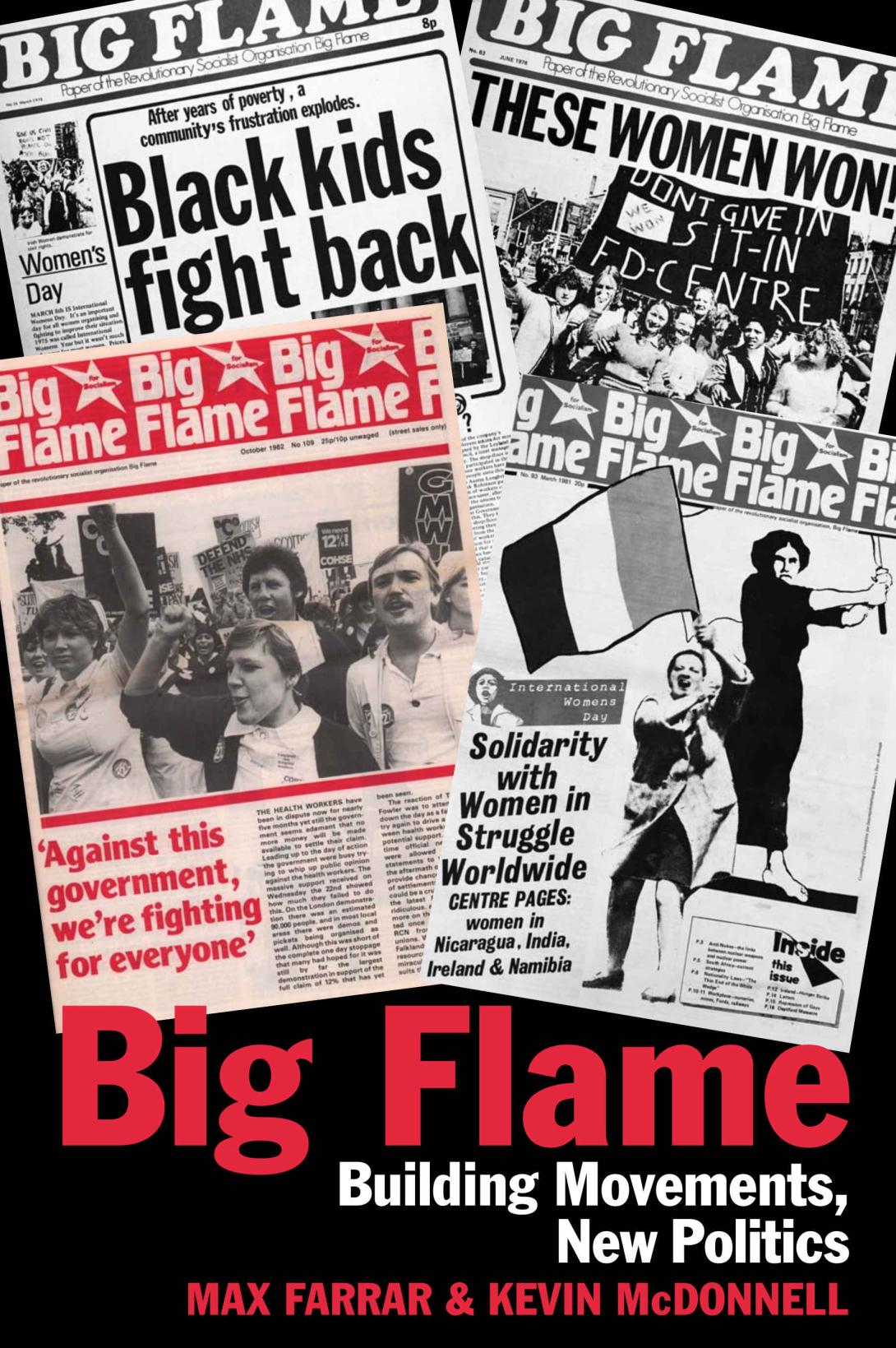
Chessum mentioned to Clark that he attended Big Flame discussion groups. Clark asked whether he could attend and Big Flame members granted him permission. Between September 1975 and September 1976, Clark attended several Big Flame meetings in London and elsewhere.
One report, dated 17 June 1976, covers a conference by Big Flame’s Northern Ireland Commission, where Clark gave a downbeat assessment of TOM in his Special Branch report.
In 1976, a detailed report was submitted by Special Branch about a national day school held by Big Flame in Liverpool. Clark had indicated to Chessum his plan to relocate to Liverpool to be closer to other Big Flame members.
Chessum described his relationship with the undercover officer he knew as ‘Rick Gibson’ as initially ‘political’, which developed into a more rounded and social relationship. Chessum often met after meetings in the pub or at Goldsmiths College bar.
Chessum thought they shared an interest in combating ‘political sectarianism’ within the Troops Out Movement. Meetings of SEL-TOM were initially held at Chessum’s home before relocating to Charlton House, Peckham. However, Clark continued his social visits to Chessum’s home, where he lived with his partner. Chessum also recalled attending football matches at Charlton Athletic with Clark.
Several reports authored by Clark go into intimate detail about Chessum’s personal life. The earliest is dated 17 February 1975, noting Chessum's address in south-east London, and information about the person he was ‘co-habiting’ with.
A second document submitted that day added detail about Chessum’s partner. It noted she was a student nurse and named the hospital she worked at. It went on to note her physical details, including the brand of cigarettes she smoked.
Two months later, in 1975, a Clark report detailed Chessum’s position at his current university in London and his plans to continue his education at Warwick University. Special Branch went on to report in July 1976 that Chessum had married his long-term partner.
Richard Chessum stated that ‘Rick Gibson’ had sexual relationships with at least four women, but could not give all the details.
Two were women Chessum knew from Goldsmiths College, one of whom gave evidence to the Inquiry using the pseudonym ‘Mary’.
However, Chessum recalled seeing a dossier prepared by Big Flame that asserted that ‘Rick Gibson’ had two further sexual relationships, including one described as ‘serious’.
However, the Inquiry heard only from ‘Mary’. Initially, having examined Clark’s deployment in the preliminary stages of the Inquiry, chairman John Mitting decided that the undercover officer had had an ‘unremarkable’ deployment. He revised that assessment only after Chessum and ‘Mary’ came forward.
Impact on Mary
‘Mary’ trained as a teacher at Goldsmiths College between 1972 and 1975. As a student, she was a member of the Socialist Society and the Student Union. She said both organisations supported political campaigning against apartheid and anti-fascism.
‘Mary’ believes she first met Clark in February 1975. A second report on her, filed on 17 February 1975, notes that she shared a flat with another female activist. In his undercover persona, Clark had had sexual relationships with both women.
A later report noted ‘Mary’s’ plan to holiday in South Africa, the country of her birth. Another detailed her employment. ‘Mary’ noted that this report wrongly claimed that she had moved to Great Yarmouth; she had, in fact, moved to Cardiff.
A report of 7 March 1975 noted that ‘Mary’ attended Jack Boot, a play about the rise of the National Front by the Mayday Theatre Group.
Clark’s reporting of intrusive personal details about ‘Mary’ and the events she attended would seem to have no interest whatsoever to policing matters. Yet personal information routinely features in Clark’s reports, and in those of other SDS officers.
Describing the impact of her sexual relationship with Clark, ‘Mary’ downplayed the personal effect on her but said:
I did not initiate or make the first move, but assumed that our sexual encounters were a manifestation of a mutual attraction.
She remembered the relationship with Clark being ‘half-hearted’, recalling that it soon ‘fizzled out.' However, she was clear that she would never have had a relationship with Clark had she known he was a police officer. ‘Mary’ views the sexual relationships that Clark and other undercover officers initiated as ‘a form of state violence’. She added:
In my opinion, the sexual contact and his use of sex were a way of consolidating his history and to cement his reputation. He was using it to get closer to us as a group of activists.
Richard Chessum recounted to the Inquiry the story of Clark’s outing as some kind of infiltrator or agent.
In September 1976, Clark indicated that he wanted to move closer to Big Flame than attending its meetings, which were open to anyone interested, and had applied to join the group.
Big Flame carried out security checks on people seeking to become members, mindful of the risk of state spies given the group’s ties to Republicans in Ireland. Members told Clark they had run routine checks on everyone who applied to join and asked him to prove his identity by providing details about his family and schooling.
The school Clark claimed to have attended had no record of him. When a Big Flame member travelled to north-east England to investigate ‘Rick Gibson’s’ claims to have lived there, local people said they had never heard of him. Clark also told Big Flame members that he had worked on a caravan site near Harwich before coming to London: this turned out to be run by an army major and his son.
Confronted with these inconsistencies, Clark tried to bluff it out. He said he had been expelled from school and had been ashamed to tell them.
However, Clark did not know that Big Flame had made a more significant discovery. Having obtained his apparent date of birth, members checked the births, marriages and deaths registry, then at St Catherine’s House in London. Big Flame located the birth of a Richard Gibson in the right year, confirming his identity and providing a birth location. When members looked up the local records, they also found the birth and death certificates.
Confrontation and exit
Thus, Big Flame confirmed that Clark was not who he said he was; this begged the question, who was he? Members felt the likeliest explanation was that Clark worked for Special Branch or military intelligence, or could even be a fascist infiltrator. They wanted him out of their group and the Troops Out Movement.
Alan Hayling, an activist with Big Flame, told Chessum they had asked Clark lots of personal and intimidating questions, hoping to frighten him away. To stop him bluffing, members took Clark to a pub and waited for him to buy a round. When he returned with the drinks, they had laid out his birth and death certificates on the table.
Chessum recalls Hayling saying that Clark ‘trembled and went white as a sheet. He seemed emotional and close to tears’. Even then, Clark claimed it was a mistake in the records office and provided Big Flame with a number for his brother. This was yet another dead end. The next morning, Big Flame members found Clark’s house empty. They never saw him again.
Clark wrote a letter to one woman he had a relationship with, which Chessum has seen:
Rick stated that he was very sorry not to be seeing her again. He denied being a spy, stating that he had once committed a serious criminal offence and had been on the run ever since, necessitating a complete change of identity.
Big Flame decided not to go public with the findings. Aly Renwick, a founding member of TOM, said the organisation had realised early on that if it succeeded in putting pressure on the government of the day, it would inevitably come under scrutiny from the state intelligence services. However:
To succumb to paranoia over the issue of state agents would have been totally counterproductive and indeed would probably have aided the establishment to paralyse our work.
Big Flame opted for a low-key approach, telling people only on a ‘need-to-know’ basis. While investigating Clark, members had photographed him at demonstrations to warn those who should be aware. Big Flame members recorded the entire investigation and left their findings in sealed envelopes handed to one or two people, instructed not to open them unless something happened to anyone who had uncovered the story.
Although Clark was long dead by the time the Inquiry hearings took place, two SDS management team members from the time provided statements and testimony.
HN34 Geoff Craft and HN244 Angus Macintosh were asked what they knew about Clark’s deployment, including his sexual relationships and positions of responsibility with TOM. This issue is also addressed in Craft's profile.
Lawyers acting for ‘Mary’ and Chessum were disappointed that the Inquiry failed to interrogate Craft, claiming ignorance about Clark’s rise through TOM's hierarchy. Both claimed Craft’s position was untenable, not least because his signature appears at the bottom of Special Branch Reports that highlighted Clark’s roles and activities within TOM. A memo also indicated that the commander of Special Branch had been briefed on Clark’s leading roles in TOM.
HN297 was promoted to detective inspector on 6 May 1986. He received police 'Long Service' and 'Good Conduct' medals in 1989.
Clark retired in 1998 after 31 years of service. His conduct was certified as ‘exemplary’.
Journalistic interest in ‘Rick Gibson’
On 24 June 1986, a Metropolitan Police Special Branch memo stated it had received information from a ‘delicate and reliable source’; this normally indicates an undercover police officer, but could have come from another covert intelligence source. The memo noted that Richard Chessum had spoken to a freelance journalist regarding ‘Rick Gibson’s’ true identity as a Special Branch officer. However, Chessum said it was investigative journalists Nick Davies and Ian Hollingsworth who convinced him that ‘Rick Gibson’ had been a police officer.
The following day, on 25 June 1986, Acting Commander Ison (Admin) of Special Branch issued a memo stating that the ‘attention of all Special Branch officers’ should be directed at Chessum and others due to their involvement in Special Branch and specifically SDS activities. It does not state what actions Special Branch officers should take; it implies plans to increase surveillance of Chessum and others.
A third memo on 27 July 1986 featured more information from a ‘secret and delicate source’ about the journalistic investigation. It noted that the journalists had spoken to members of Big Flame. These reports indicate that Chessum and Big Flame remained under police surveillance long after Clark’s deployment.
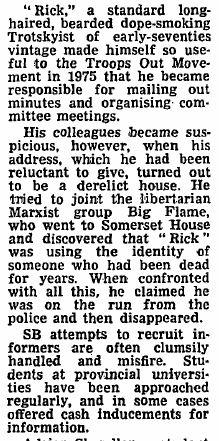
Earlier, in 1984, Nick Davies and Ian Black published a series of articles in The Guardian. One article, 'Infiltrating agents of counter-subversion,' described Richard Clark. (see picture).
On 3 July 2017, the Metropolitan Police applied to restrict Clark’s real name, citing the privacy of Clark’s widow, who had not been asked to give a witness statement.
One month later, on 3 August 2017, the Inquiry released Clark’s cover name and details of his deployment dates and targets.
At the November 2017 hearing of the Undercover Policing Inquiry, the Undercover Research Group revealed that Clark had at least two relationships with women, having spoken to activists who knew him. Inquiry Chair John Mitting agreed that this ‘puts a very different complexion on matters’. Mitting was quick to realise the significance of this, Clark’s deployment coming so early in the history of the SDS. Mitting added:
HN297 is 1974 to 1976; that is probably when practices started to be adopted routinely, and things may have started to go wrong.
After ‘Mary’ submitted her first statement to the Inquiry, Mitting announced that Clark’s real name would be published on 20 February 2018, although he initially disclosed it only to ‘Mary’.
A second witness statement from ‘Mary’ was published on 4 May 2021, and from Richard Chessum on 5 May 2021. Chessum appeared as a witness at the Inquiry on that date.
In April 2018, the Inquiry revealed that the undercover officer known as HN302 appeared in the True Spies documentary under the pseudonym 'Brian', rather than Clark, as some had suspected.