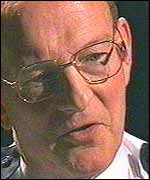
Charles Pollard was a senior police officer who worked with the public order unit (A8) within the Metropolitan Police during the 1970s and 1980s.A8 - Metropolitan PoliceThe Metropolitan Police's A8 Department (1968-1993) was responsible for policing public order events in London. Several of these overlapped with SDS' infiltration of the groups that organised these demonstrations and protests.Full page: A8 - Metropolitan Police
He gave evidence to The Inquiry via a witness statement about this role.Witness of Sir Charles Pollard, given in the Metropolitan Police Service, Tranche 1, Phase 3, 17 Mar 1968.View Document
He was involved in organising the policing of the 1979 demonstration in Southall, where Blair Peach was killed by police officers.The Battle of Southall (part one): BackgroundOn 23 April 1979, a National Front election meeting was held at Southall Town Hall in west London. Southall was, and still is, known for having a relatively large number of migrants, particularly from India. The meeting was intended to be - and was seen as a provocation. There were large counter-demonstrations on the day, but aggressive police tactics resulted in 345 arrests. Blair Peach was attacked by members of the Metropolitan Police's Special Patrol Group and died as a result of head injuries from baton blows. His partner, Celia Stubbs, was key to the justice campaign that continued for decades afterwards, the Friends of Blair Peach, which was spied upon by the SDS.Full page: The Battle of Southall (part one): Background
Pollard joined the Metropolitan police in 1964, at the age of nineteen. After two brief breaks, he rejoined in 1970 and thereafter rose through the ranks. As a chief inspector, he worked within A8 between November 1978 and August 1980. He was therefore involved in planning public order policing for what became known as 'The Battle of Southall'.The Battle of Southall (part one): BackgroundOn 23 April 1979, a National Front election meeting was held at Southall Town Hall in west London. Southall was, and still is, known for having a relatively large number of migrants, particularly from India. The meeting was intended to be - and was seen as a provocation. There were large counter-demonstrations on the day, but aggressive police tactics resulted in 345 arrests. Blair Peach was attacked by members of the Metropolitan Police's Special Patrol Group and died as a result of head injuries from baton blows. His partner, Celia Stubbs, was key to the justice campaign that continued for decades afterwards, the Friends of Blair Peach, which was spied upon by the SDS.Full page: The Battle of Southall (part one): Background
Pollard described the event in his statement as a 'riot'.Witness of Sir Charles Pollard, given in the Metropolitan Police Service, Tranche 1, Phase 3, 17 Mar 1968.View Document
He later became Deputy Assistant Chief Commissioner of the Metropolitan Police in 1988. His final role was as Chief Constable of Thames Valley Police between 1991 and 2002.
In 2002, he also appeared in the BBC documentary True Spies. Pollard stated that an agent of a private security firm was spying on the protests at the proposed Newbury bypass route. Later, it became clear that this was the individual the protesters knew as 'Radio Nick'. Donal O'Driscoll, The troubling case of `Radio Nick', Undercover Research Group, 28 Nov 2025.