
HN299/342 ‘David Hughes’ was recruited into the Metropolitan Police in the 1960s and joined the Special Branch in 1964. In 1968, he was engaged in infiltrating meetings of the Vietnam Solidarity Campaign (VSC) and took part in a protest march.
Hughes was recruited into the Special Demonstration Squad (SDS) in 1971, but underwent no formal training and largely created his own cover identity. He began his deployment in the summer of 1971.
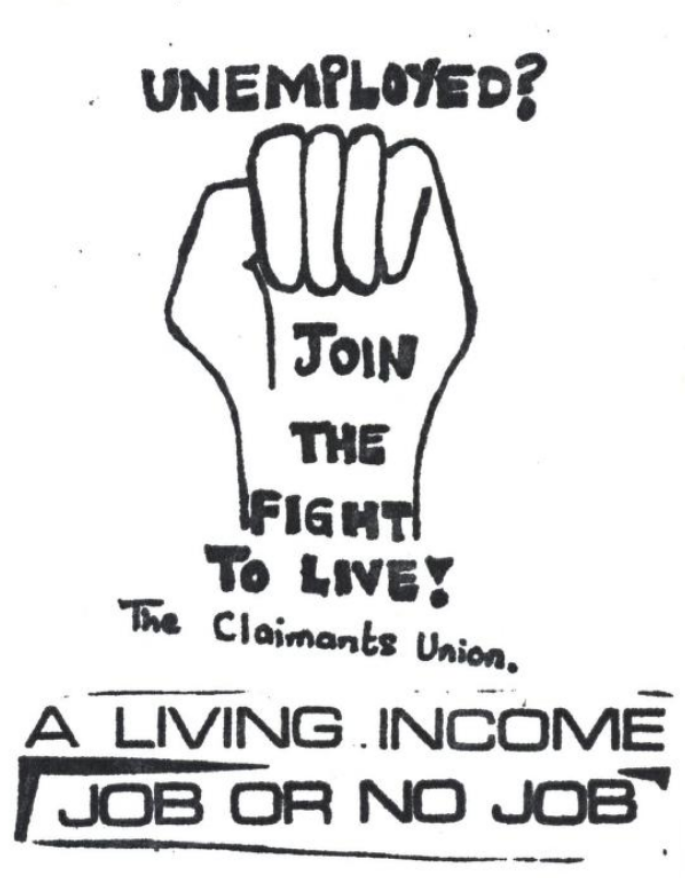
Hughes was not given a specific target group to infiltrate but, through attending left-wing public meetings, focused on the International Marxist Group (IMG) for most of his deployment. From this association, he also spied on the North London Claimants Union and various Irish solidarity groups that intersected with the IMG. Hughes also took part in various Marxist study groups, one of which was of particular interest to MI5.
Hughes successfully exfiltrated from the groups he had spied on in the spring of 1976, completing a five-year deployment. He retired from the Metropolitan Police Service in the 1990s, after 30 years’ service.
Unless otherwise indicated, the information below is taken from the first witness statement of HN299/342 ‘David Hughes’.
HN299/342 ‘David Hughes’ was born in the 1940s and joined the Metropolitan Police in the early 1960s. He was posted as a uniformed police constable to duties in London. In 1964, Hughes joined Special Branch at the rank of detective constable (DC).
Hughes took on a series of different roles in Special Branch over the following years. In early 1968, while attending a training course in London, Hughes was picked out and asked by a senior Special Branch manager to meet him in his office. Hughes speculated retrospectively that the reason he was selected was because he had recently grown a beard. At the meeting the Special Branch manager offered him an undercover role, spying upon meetings of the Vietnam Solidarity Campaign (VSC).
The VSC was planning demonstrations around London and to take part in the Easter march for peace from Aldermaston, the UK’s Atomic Weapons Establishment in Berkshire, to the capital. There was significant disquiet in government circles about the potential conjunction of the VSC and this annual event.

Hughes recalled that the Special Branch manager:
due to my appearance, he thought that if I attended those meetings in my plain clothes I would be able to blend in.
Hughes agreed and, while continuing his training course during the day, in the evenings attended several public and private meetings of the VSC from at least February to April 1968. Hughes also attended the 52-mile march from Aldermaston to Trafalgar Square. At these various events, Hughes wore casual clothes, and although not instructed to do so, used a fake name as a ‘sensible precaution’.
Hughes asserted in his witness statement that he produced ‘6 or 7’ reports on the VSC for Special Branch in this period which contained information such as venues for meetings, numbers attending, details of banners, slogans and literature, identified speakers and organisers and summaries of speeches.
Hughes also claimed that he provided advance intelligence to Special Branch about an action by VSC activists against the offices of The Daily Mirror in London. He stated that they planned to break the windows, though:
When the VSC activists turned up at the Daily Mirror building they were greeted with a substantial police presence. They later wondered how the police knew this activity was due to take place, although no one at the time said it might have been because of an undercover officer. I think members of these groups by and large knew that their activities were monitored by the police, either by informants or UCOs.
Hughes said that his reports were ‘well received’ by his senior officers and, as a result, he received a commendation from HN2857 Arthur Cunningham , the chief superintendent (CS) in charge of C Squad in Special Branch. Hughes added in his witness statement:
I think that the success of the reporting that I did during that assignment might have been one of the inspirations for the SDS [Special Demonstration Squad] being set up.
Recruitment
After completing his course in London, Hughes returned to his normal duties in Special Branch, and it was three years before he was again approached to undertake undercover work. Hughes stated that ‘most members of Special Branch were aware of the existence of an undercover unit [SDS]’, though ‘I did not have much idea about what it actually did’.
Hughes was invited to meet Detective Chief Inspector (DCI) HN1251 Phil Saunders , who was running the SDS. Hughes believed Saunders was aware of his reports on meetings of the VSC in 1968 and ‘thought that I would, therefore, be a good candidate for the role’. The informal meeting led to Saunders offering Hughes the opportunity to join the unit, which he took based on his previous undercover experience.
Hughes, a married man at the time of his recruitment, stated that:
I do not think that anyone spoke to my wife either before or during my SDS posting about what the work involved or the impact that it might have on our family life.
He also noted that he was not given any information in advance about the kind of work he would be doing or the length of his deployment and recognised that the SDS at the time ‘was still very much in its infancy’. He added:
I do not think that the SDS management had much idea about what working in the field involved as they had not done it themselves.
Training and tradecraft
Unlike many SDS undercovers, Hughes could not recall being placed in the back office of the unit in New Scotland Yard when he joined. Neither could he remember being given any training before he was deployed, whether formal or informal. He stated that ‘my deployment began very quickly after I joined the unit’ and speculated that the reason for this was his previous experience, infiltrating the VSC three years previously.
According to Hughes there was no SDS tradecraft manual or ‘any written guidance about how to behave whilst deployed undercover’. He had no knowledge of Home Office Circular No 97/1969 Informants who take part in crime , though, ‘I was aware during my time on the SDS that I should not seek to act as an agent provocateur’.
Hughes also claimed that he received no specific guidance about how far:
it was acceptable to become involved in the private lives of those I met whilst undercover, or how close my relationships with them could be…How far it was acceptable to enter sexual relationships whilst deployed on an undercover operation…Participation in criminal activity whilst undercover…Provoking or encouraging another to participate in criminal activity whilst undercover.
Neither was Hughes given any instructions about what to do if he was arrested, brought before a court, as a defendant or as a witness, or if he obtained information subject to legal privilege. In his witness statement Hughes added the caveat that:
we were all Special Branch officers who knew or should have known how it was appropriate to conduct ourselves whilst deployed… I understand that SDS management tried to select people for the unit who could be trusted to exercise common sense and good judgment.
What Hughes was made clear about was the kind of intelligence Special Branch required from his spying. In his written evidence he listed the ‘certain kinds of information that the SDS office was always interested in knowing’:
a. Any advance notification of any event at which there might be a public order issue.
b. Any information material to public order policing at forthcoming events.
c. The identity of individuals who had attended meetings or demonstrations. The SDS office were particularly interested in individuals who were 'active' within groups, rather than those who only occasionally attended meetings and demonstrations.
d. Any major changes within groups, such as if anyone was adopting a more prominent role within a group, or if people were leaving a group who was replacing them.
e. Who was in charge of organising things within groups, and who was in charge of deciding policy.
Cover identity
It appears that at this relatively early stage of the SDS operation cover identities were rudimentary and did not involve using deceased children’s names. Hughes claimed that he had not used this practice to create his cover name, instead he had just made one up.
Hughes’ legend was that he had come down to the capital from Glasgow to find work. To substantiate this background, he travelled to Glasgow in his new identity and visited the ‘well-known Glaswegian left-wing activist, Tony Southall’. This was a unusally extensive and thorough legend-building exercise for an SDS officer to undertake.
I [Hughes] introduced myself (in my cover identity), told him that I was interested in left wing politics, and said I wanted to become more involved in it. He [Southall] was friendly and encouraged me to do that.
Once Hughes had deployed into the political milieus of London, he told his target groups he was friends with Southall. He continued:
Tony [Southall] would come down to London occasionally to attend meetings or demonstrations and I would see him at those. It was useful to have someone like that who you could speak to and be seen with. It bolstered your cover background. He [Southall] had no idea I [Hughes] was a Special Branch officer.
Hughes’ cover job was as a van driver for a carpet-supply and fitting service. Special Branch provided him with a Bedford van and a driving licence in his cover name, though no other cover documents. The arrangement with his cover employer was approved by SDS managers, though he never actually did any work for the company. Hughes began his cover job less than six months into his deployment and recalled:
After I obtained cover employment, I would always keep a few rolls of carpet in the back of my cover vehicle in case anyone ever looked inside.
Hughes’ initial cover accommodation was a flat in Finsbury Park in north London but he moved several times over the period of his deployment, to Dulwich in south London, Kilburn in the north-west, and Streatham, again south of the river, moving close to areas where his target groups were located. Although the main reason for this was convenience, Hughes had another motive:
I would try and choose places that were in between my real home and the meetings that I attended. This was to ensure that I could visit my cover flat regularly. I would try and be seen at my cover flat as often as possible so it looked to the neighbours as though I actually lived there.
Hughes obtained the flats himself, typically through advertisements in local newspapers, although they were paid for by the SDS. He stated that he never shared the flat with anyone and that he sometimes stayed at the flat overnight, but in general he would stay at his real home. The only break to this routine was:
On perhaps a dozen occasions during my deployment I went to meetings or demonstrations outside of London, and stayed on the sofa of a member of the groups I reported on for the night. Other than that, I did not live anywhere other than my official cover accommodation.
Unusually for a Special Branch officer in the period, Hughes already had a beard, moustache and curly hair when he joined the SDS, so apart from becoming ‘a lot scruffier’ and wearing casual clothes his appearance hardly changed.
As his trip to Glasgow indicates, Hughes was more fastidious than some of his contemporary undercovers in the SDS in his preparation for deployment:
After I obtained my cover flat I spent around 6 or 8 weeks visiting places in the local area to establish my cover background. I went to the local pubs, visited the local library, and shopped in the local shops so I was seen around the place. Once I had done that, I started attending meetings.
Hughes records that he first went to political meetings in August or September 1971, suggesting his deployment commenced in June or July that year.
It is important to note a lack of reports made available in the Undercover Policing Inquiry attributed to Hughes over the five years he was deployed. The Inquiry supplied only 23 documents, leaving significant gaps of up to six months in Hughes’ reporting over the years 1972-1974. This fragmentary record presents difficulties in judging the content of Hughes’ spying and priorities.
Hughes stated that he was not given a specific target group or groups when he began his deployment. Instead, he was told by his SDS managers to ‘attend meetings’. Consequently, Hughes surveyed the ‘left-wing’ meetings in the ‘agit prop’ (political) section of Time Out, the London-based listings magazine. Hughes chose whichever looked like ‘they would be the most interesting’ and were near to his cover accommodation.

Hughes added that sometimes he would be asked by his SDS managers if he was going to a ‘particular upcoming meeting or demonstration’ but the ‘tasking was never more specific than that’. His understanding was that he should ‘find out whatever information I could about whichever groups I came into contact with’. This rather vague, laissez-faire approach to targeting by SDS managers was common in this early period of the SDS.
Hughes explained the process for infiltration:
I believe that is the way that all [SDS] undercover deployments began at the time. You would go to publicly advertised meetings and meet people. Those people would sometimes invite you along to other meetings, and you would naturally find yourself falling in with a certain group.
The group that Hughes first ‘fell in with’ was the International Marxist Group (IMG).
International Marxist Group
Hughes’ first report of his deployment in November 1971 concerned a joint meeting of members of the IMG and its youth organisation, the Spartacus League (SL). The fact that the meeting was not open to the public and held in a private house suggests that Hughes had successfully infiltrated the IMG by this stage of his deployment.
The following year Hughes added further reports on IMG activities. These included attending the formation of a Tottenham Red Circle (RC) , one of a series of socialist discussion groups set up by the organisation, a pre-conference meeting for London members of the IMG and, in May, a fusion conference of the IMG and SL.
The latter report differs from Hughes’ relatively brief accounts of weekly meetings in both its scale and complexity. At 21 pages, it contained an outline of the structure of the conference, detailed accounts of the positions, debates and disagreements between the various tendencies, descriptions of speeches and a tranche of attached documents including position papers, critiques and internal conference memos.
As with all SDS reports, attention was directed towards identifying individuals. Hughes’ report provided the names of approximately 170 of the 300-500 people who attended the conference. The indiscriminate collection of personal data of suspected ‘subversives’ was a hallmark, not just of SDS reporting, but of Special Branch as a whole.
For two years after 1972, evidence of Hughes’ reporting on the IMG is non-existent, as it appears he concentrated on other peripheral groups, see reports on other groups below, and on a series of weekly Marxist-Leninist study classes. The latter, which ran from May to September 1974, were probably an offshoot of the IMG or the RC and dominated his reporting until the classes were ‘temporally suspended due to lack of support’.
After a gap of almost a year, Hughes returned to reporting on the IMG providing the brief news that the organisation had ordered a substantial section of its members to join the Labour Party ‘in anticipation of a split’. He followed this up with a report on the re-emergence of the Marxist-Leninist study classes, this time in Woolwich in south-east London.
Hughes’ final reports on the IMG appeared in 1976 just prior to the end of his deployment. The first, in February, described a weekend meeting of around 40-120 London IMG members who were reviewing party structure in the capital. The report identified around 50 members of the IMG. The second, briefly noted an IMG rally in the west end and identified Ernest Mandel, the Marxist economist, as being the lead speaker.
Reports on other groups
Based on a very few individual reports, Hughes has been associated with several groups outside of the IMG, including the North London Claimants Union (NLCU) , Palestine Solidarity Campaign (PSC) , Fight On (Lotta Continua) and several individuals in other left-wing groups. Referring to these scant pieces of evidence, Hughes only recalled reporting on the NLCU, stating:
The North London Claimant's Union may well also have regarded me as an informal member. I was involved with it for 2 or 3 years and attended several conferences, including conferences in London, Oxford, and Birmingham.
On the evidence for his reporting in general, Hughes made this comment in his written statement:
My witness pack is definitely not the totality of the reporting I provided. Indeed I think that the Inquiry is missing large numbers of my reports. For example, I remember submitting a lot of reports towards the end of my deployment on a Marxist Class that I attended in Streatham. I have not seen a single report on those classes in my witness pack. Most of my reports on the North London Claimant's Union are also missing.
Irish solidarity groups
Of the remaining reports attributed to Hughes that are available, the majority were associated with support for Irish Republicans and their struggle for a united Ireland. This probably reflects Hughes’ involvement in the IMG, the period he was operating in and Special Branch interest in groups supporting Irish Republicans. The first group Hughes reported on was an Irish Solidarity Campaign (ISC) meeting at the IMG centre on the Pentonville Road in north London in February 1972.
Hughes followed this up by spying on the inaugural meeting of the Finsbury Park branch of the Anti-Internment League (AIL) in April. It appears he also took part in an AIL protest in December 1972 which highlighted the occupation of Andersonstown, Belfast, by the British Army. The demonstration occurred at the elite Eton College, close to Windsor, to the west of London.
Finally, in 1975, two reports attributed to Hughes concerned the Troops Out Movement (TOM). The TOM was formed in 1973 and rapidly became the leading Irish solidarity group in Britain, absorbing the membership of earlier groups such as the ISC and AIL.
Hughes’ reports cover a TOM meeting at the London School of Economics in February, which featured an IMG speaker, and a list of attendees at a TOM protest against the Prevention of Terrorism Act (1974) in Kilburn in July. Between 1974 and 1976, SDS undercover HN297 Richard Clark (‘Rick Gibson’) was spying on and taking an active part at the national level of TOM.
Hughes made sure that he went to his cover flat as frequently as he could and spent ‘a lot of time … making sure I was seen by my neighbours and others in the local area’. He attended between one and six political meetings during the week, then pickets and demonstrations at the weekend. This meant being in his cover identity for five to six days every week.
On top of this was his reporting activity, which involved two principal types of communication with the SDS office. The first was by telephone. Hughes called the SDS office every morning to confirm he was ‘alright’ and to let them know which meetings or demonstrations he had attended the previous day. This call was also an opportunity to pass on any urgent intelligence to Special Branch.
The second was his written reports, which he drafted as soon as possible after meetings and demonstrations. These had to be written at his real home and never in his cover flat for security reasons. Hughes stated that the standard reports might take an hour or so, but write-ups on conferences took a lot longer because of the number of attendees and the length of the extended meetings.
To aid his memory, Hughes kept an index book of everyone he met:
When attending a big meeting or demonstration I would see a lot of people. When I was preparing my draft report I would go through my index book and make sure that I mentioned everyone that I had seen. I did that to make sure that I did not accidentally miss anyone out.
After his deployment began, like most undercovers, Hughes did not visit New Scotland Yard, the SDS headquarters, for obvious security reasons. Instead, all the SDS undercovers met in a safe house with their managers. Hughes stated that over the period of his four-year deployment, there were five or six of these properties used by Special Branch. He explained:
They moved around if the SDS office felt that our presence was being noted by people who lived in the area, or if another property became available that sounded more suitable than the one the unit was currently using.
The safe flats for meetings that he could recall were in west, north-west, south and south-east London. The meetings between SDS undercovers and their managers occurred two to three times a week and typically lasted about an hour or so.
These meetings were an opportunity for Hughes to hand in his draft reports to his managers. These would be returned to him at a subsequent meeting. He noted that the SDS office would edit the documents and add in file references, and he would then be asked to sign them off.
The meetings in the safe flats served other functions. Hughes recalled that he would discuss with his managers what was going on in Special Branch, which meetings and demonstrations he had attended that week and any particularly interesting information about the target groups he was reporting on, such as ‘a major rift’ between members. Hughes also remembered sometimes being asked to attend a specific demonstration or meeting.
As for discussion between undercovers, Hughes stated:
To a limited extent UCOs would talk to each other about what they were doing in the field. Most of us worked in different fields, but we would occasionally come across each other. If we were involved in related activities we might discuss with one another a particular upcoming demonstration, or things that were going on in groups we reported on, such as an internal dispute or a change in leadership. Sometimes management were around for those conversations and overheard them, sometimes they were not.
This contradicts with what many other SDS undercovers claimed – that there was a near prohibition on talking about their deployments with their contemporaries. The weekly safe-house meetings also involved a social aspect, undercovers sharing cooking duties and the group eating together:
Most of the time we would talk to one another about everyday things unrelated to our undercover work. After management had left we would sometimes stay at the cover flat for a while and carry on chatting.
Hughes would occasionally go for a drink with another undercover officer but not an SDS manager. He explained they ‘would be wearing suits so we would rarely go for a drink with them in case we were spotted’.
The only unusual break to the weekly routine of SDS undercover meetings that Hughes recalled came in 1972 or 1973, when Metropolitan Police Commissioner HN3810 Robert Mark visited the SDS cover flat in north-west London. Hughes remembered:
It was obvious to me that he had concerns about the SDS. I remember him saying words to the effect that "you realise that you [the SDS] could cause me tremendous problems under certain circumstances".
Relationships
In his witness statement, Hughes, listed the six people he had the closest personal relationships with while on deployment. These included two members of the IMG who he had social drinks with, a member of the NLCU whose house he visited several times, a couple who ran the Marxist classes in Streatham and an attendee of this study group. The latter three, he stated, would have seen him as a friend.
None of the core participants in the inquiry from the groups targeted by Hughes could recall him without the aid of a photograph. The exception was Piers Corbyn , a member of the IMG, ISC and TOM who remembered his cover name.
Hughes stated that ‘I did not engage in any sexual activity whilst in my undercover identity’ and there is no evidence to contradict this assertion.
Among the available evidence, the only direct request for intelligence directed to Hughes from the SDS that came from MI5, referred to as ‘Box 500’ in the reports, concerned the Marxist study classes he was attending in the summer of 1974. In June, MI5 asked for ‘further information’ about some of the participants in this group.
Hughes supplied details on five members which ranged from speculative associations with criminality to racialised descriptions of one member’s young children and their living arrangements. The only politically relevant information was that one member of the class was:
an influential member of the ‘Shrewsbury 24 Defence Committee’ and is in regular contact with all the leading members of that group.
Two subsequent reports from Hughes concerning this study group were passed on to MI5 but his reporting was curtailed when the group folded in September 1974.
Assuming Hughes’ active duty commenced in the summer of 1971 and that SDS deployments lasted at most four or five years in this period, by the beginning of 1976 he was clearly approaching the end of his tenure as an undercover. The last available report Hughes authored was in March 1976, suggesting he had exfiltrated before the summer of that year.
In his witness statement, Hughes explained that a few months before his end date, the SDS office ‘suggested that I should start to begin the process of withdrawing’. His exfiltration plan was agreed with his SDS managers, and he began to implement it:
My tactic for withdrawing from my deployment was to gradually stop attending meetings. It was very common for people who were not undercover officers to come and go in these groups. People would often join, become very influential within them, and then just completely fade from the scene. The process of my gradually leaving the group would not have aroused any suspicions as a result. I eventually told people I was going back to Glasgow and stopped attending meetings entirely.
Hughes’ relatively simple plan was apparently successful, and he claimed he had no further contact with those on whom he had been reporting, nor did he make any further use of his cover name.
He recalled that he had no ‘period of rest’ and was not debriefed or offered any kind of ‘advice or support’ by the Metropolitan Police Service immediately after his withdrawal from active duty.
Hughes remained in Special Branch for the rest of his police career, which amounted to more than 30 years’ service. He retired in the 1990s at the rank of detective sergeant.
On 13 Sept 2018, Undercover Policing Inquiry chair Sir John Mitting indicated he was minded to restrict HN299/342’s real name on health grounds. That decision was confirmed on 17 April 2019.
Subsequently, Hughes’ cover name and target groups were published. Hughes submitted a written statement on 19 September 2019, which was published on 29 April 2021. He was not called to give live testimony.