
HN298 ‘Michael Scott’ was recruited into the Metropolitan Police in the 1960s and became part of Special Branch in 1970, where he took part in surveillance of left-wing groups. He joined the Special Demonstration Squad (SDS) in April 1971 and was deployed as an undercover later that year. Scott was one of the first SDS officers to use a living person’s identity for his cover.
Scott claimed that, initially at least, he was given the freedom to infiltrate groups that he regarded to be of interest to Special Branch. These included the South West Spartacus League (SWSL/YSL) and the International Marxist Group (IMG).
However, in 1972, he was tasked with infiltrating the Putney branch of the National League of Young Liberals (YL), the youth wing of the Liberal Party. It was also the home group for the anti-apartheid activist, Peter Hain, its president, who was a particular target for Special Branch.
Scott infiltrated the group, becoming the membership secretary for the Putney branch of the YL and attending the organisation’s national conferences. He then exploited connections between the YL and other campaigns and groups in south London.
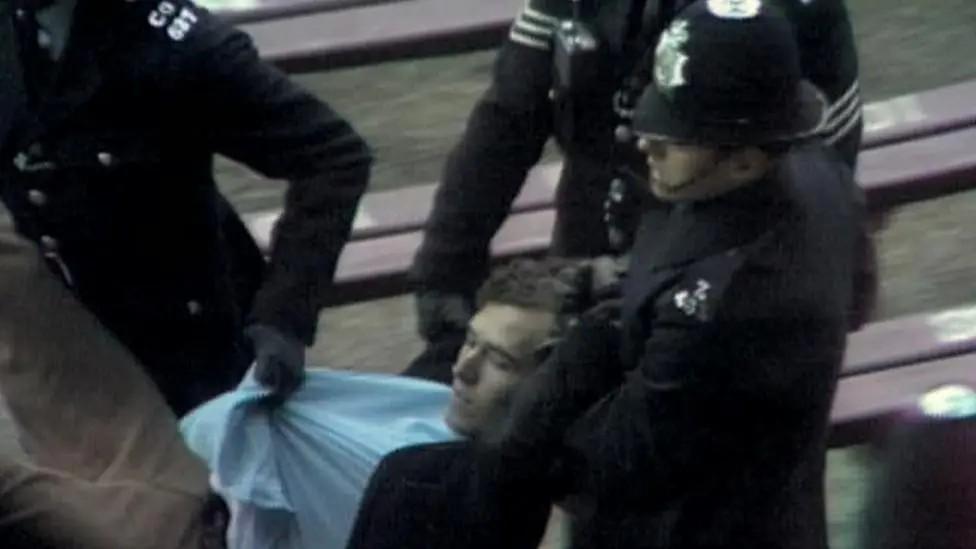
Scott was arrested along with 14 others at an anti-apartheid protest at the Star and Garter hotel in Richmond in May 1972 that sought to prevent the British Lions rugby team leaving London for a tour of South Africa. Scott, along with 12 others, was convicted of obstructing the highway and the police. His undeclared status as an undercover police officer led to his co-defendants’ convictions being overturned in September 2024.
Scott subsequently infiltrated libertarian activist groups, Croydon Commitment (CC) and Croydon Libertarians (CL). He also gravitated towards groups supporting the anti-colonial struggle in Ireland, infiltrating the Irish Solidarity Campaign (ISC), shortly before it was absorbed by the Anti-Internment League (AIL) in late 1972. He then followed many members from these organisations into the new Troops Out Movement (TOM).
After almost having his cover compromised at a TOM meeting in 1974, he moved on to spying on the Workers Revolutionary Party (WRP). In February 1976, Scott attended a week-long training course at the WRP education centre, the Red House in Derbyshire, which police had recently raided.
Despite wanting to continue in the field, Scott was withdrawn from active service in the SDS in April 1976 after three years. He left the Metropolitan Police soon after.
Unless otherwise indicated, the information below is either taken from Scott’s first witness statement or the oral evidence.
HN298 ‘Michael (Peter) Scott’ (hereafter Scott) joined the Metropolitan Police in the 1960s and was promoted to detective constable (DC) on his recruitment to Special Branch in 1970. Scott was initially working in C Squad and was tasked with surveillance of ‘communists’.
Part of this work involved him attending, in plain clothes, public meetings of political activists and reporting back. It was through this activity that he gained an understanding of the kind of intelligence information Special Branch was seeking on targeted groups.
Scott was aware of the existence of the Special Demonstration Squad (SDS) before he joined, because its office was ‘just along the corridor’ from C Squad in Scotland Yard. He stated that it was general knowledge within SB that an undercover unit existed, called the ‘hairies’:
I knew of the unit as the Special Demonstration Squad, and so common sense suggested that they were deployed in groups involved in such activities.
Scott also knew that the creation of the SDS lay in ‘what had happened in Grosvenor Square and that people like Tariq Ali and groups such as the International Marxist Group were involved’.
Scott wanted to join the SDS as he ‘liked the sound of being undercover. It seemed like it would be interesting and exciting work’. So he approached Detective Inspector HN294 who interviewed him and a couple of months later, in April 1971, he was accepted into the unit.
Scott was married when he entered the SDS, but he stated that no senior officers spoke to his spouse or to him about what the work would entail or its potential impact on him before, during, or after his deployment.
Training and tradecraft
Like most undercover officers, Scott received no formal training. It is notable that, given his later arrest and prosecution under his cover identity, he had had no formal advice on what to do if he ended up in court during his deployment.
There was also a lack of clarity about what the SDS considered to be ‘subversive activity’ within the target organisations, or what to do if Scott was offered positions of responsibility in an organisation he had infiltrated. Scott suggested that this was a question of ‘common sense’, and that he was largely ‘left to get on with it’ by his SDS managers, who, in certain circumstances, would countenance him ‘carrying on in a situation which was contrary to the law’.
Scott did say he was aware that ‘you should not act as an agent provocateur’, but this came from his general police training, rather than any directive from his SDS managers.
Scott also stated that he had been given no rules or even guidance on how far it was acceptable to become involved in the private lives of those he met while undercover, how close your relationships with them could be and, crucially, whether it was acceptable to enter sexual relationships while deployed on an undercover operation.
Cover identity
As soon as Scott became aware that he was going to join the SDS, he began to grow his hair to shoulder length and a beard. He stated that he received no assistance or guidance from SDS officers or managers in creating a basic undercover identity.
On his own initiative, he visited the Registry of Births, Marriages and Deaths, where he had previously undertaken research when a member of C Squad of Special Branch. In this case, he took the name of a person from the birth records, based on a similar birth year and date, without knowing if that person was alive or dead.
Scott did not consider that taking another living person’s identity presented any significant risk to them. He may have been the first SDS undercover to use this process to create the basis for an identity, although those who followed him generally took the name of a child who had died in infancy.
With this information, plus a driving licence provided by Special Branch, Scott set about constructing the identity. He obtained a library card and then a doctor’s card.
His cover employment was as a tank erector/estimator, i.e. someone who determines the cost of erecting oil and gas tanks and gasometers although, unlike some other SDS deployments, Scott did not have a cover employer or place of work.
Initially, Scott’s cover accommodation was a single-bedroom flat in Kensington, south-west London. Later in his deployment, he moved to Goodmayes, in the east London borough of Redbridge, as it was closer to the group he was infiltrating at that time. Special Branch also provided Scott with a car, which he used to attend meetings and protests, and to commute from his cover flat to his real home.
Upon deployment, Scott stated that he spent little time acting out his new identity and immediately started attending meetings. His deployment had an element of free association, as his SDS managers had not defined a group or groups to be infiltrated, leaving this largely to Scott to decide in the field.
This laissez-faire approach led Scott to traverse and report on a wide range of liberal, left-wing and libertarian groups loosely connected to one another and with varying political perspectives.
South West (London) Spartacus League
In July 1971, Scott began by reporting on the South West Spartacus League (SWSL) , which effectively served as the youth wing of the International Marxist Group (IMG). In his reports to Special Branch, he provided physical descriptions of named and unnamed speakers and organisers at the meetings, details of their political positions on various themes, and information about a ‘revolutionary training camp’ established by the IMG in the New Forest, Hampshire.
By August, the IMG was courting Scott as a potential recruit by inviting him to group meetings at private houses, though after one attempt, it appears Scott did not follow this route into the organisation. Instead, in September and October, Scott began reporting on the attendees and their vehicle makes and registrations, and meetings of the Enfield branch of the International Socialists (IS) in north London.
Young Liberals
In January 1972, Scott joined the Putney branch of the National League of Young Liberals (YL), the youth wing of the Liberal Party, because members were involved with anti-apartheid protests. At a meeting earlier in January 1972, between MI5 and SDS managers, the YL had been identified as a target group.
Within a fortnight of joining the Putney group, he became its membership secretary, gaining access to members’ details, which he passed on in his reports.
Scott would go on to report on the YL for nearly three years, attending meetings of the National Council of the YL and three national conferences as a delegate from the Putney branch. He supplied lists of people he had identified as members, officers elected and attendees at the annual conferences.
One report alone carried the names of around 100 attendees to the conference in May 1972, including a Liberal councillor and an MP.
The honorary president of the Putney branch was Peter Hain, who had joined the YL in 1968 and held different roles over the period he was spied on by Scott; National Chair (1971-1973), National Executive Member (1973-75), and National President (1975-1977).
Hain had already come to the attention of Special Branch because of his activities in the Anti-Apartheid Movement (AAM) from 1967, and the Stop the Seventy Tour (STST) in 1969. That campaign aimed to stop the South African cricket team’s tour of Britain the following year.
It is unclear whether the YL and specifically the Putney branch were targeted because of Hain. The first meeting of the Putney YL and several subsequent meetings that Scott spied on took place at the home of Hain’s parents.
Scott’s reports also referenced several other Hain family members, including his two teenage sisters.
The Putney branch was involved in diverse campaigns, including local initiatives on the environment, air and water pollution, and road building, as well as national and international issues such as British involvement in Ireland, boycotts of Rhodesia, and the struggle against apartheid in South Africa. It would be the latter that led to Scott’s arrest.
On 12 May 1972, Scott claimed that he became aware of a meeting to be held that day at the house of Ernest Rodker , an anti-apartheid activist in Fulham in west London. Scott claimed he gained entry to this meeting by calling Hain’s number and being told about it by his mother.
Star & Garter Arrest
Rodker and another core member of the group, Jonathan Rosenhead , had called the meeting to plan a protest aimed at preventing the British and Irish Lions rugby team leaving for a tour of South Africa that afternoon. This was part of a wider campaign of sporting boycotts aimed at isolating South Africa because of its apartheid regime. The Lions had gathered at the Star and Garter hotel in nearby Richmond, in preparation for their departure by coach to Heathrow airport.
The peaceful protest outside the hotel, attended by about 30 people, led to the arrests of 14 of the group for obstructing the highway, including Rodker and Scott. Throughout the subsequent legal process, in which Scott and 12 others were found guilty at the magistrates’ court and fined, neither the local police nor the judiciary had been made aware that he was an undercover officer.
This non-disclosure was a decision made by Scott’s SDS managers, to protect his identity and to further the spying effort on what they described as ‘a group of anarchist-orientated extremists’:
[T]he case should prove beneficial to us [SDS] in that DC [HN298] has proved himself to the extremists and may well become privy to subsequent mischief; at the same time, his being bound over is a ready made excuse for avoiding further arrest.
Recent investigations have shown that the undercover Scott’s Star and Garter conviction is not currently recorded against the real Michael Scott on the Police National Computer, though there may have been a record in the past. (As mentioned above, Scott’s undeclared status as an undercover police officer led to his co-defendants’ convictions being overturned in 2024.)
Three of those convicted for the Star & Garter case gave evidence, including Jonathan Rosenhead.
Although he claimed that the AAM was not a primary target, Scott’s surveillance of the organisation did not halt after his arrest. He reported on the meetings of the defence campaign for the activists arrested at the Star and Garter, protest vigils outside the South African embassy and at the organisation’s annual conference in 1973.
Croydon Commitment & Croydon Libertarians
In March 1972, Scott reported on the Croydon Commitment (CC) group that Peter Hain described as part of an ‘anarchist’ element within the YL. Scott noted in his analysis of the annual conference of the YL in May 1972, that the Commitment groups were anti-electoral in their outlook and connected to the Claimants Union movement.
In August 1972, Scott attended a joint meeting of the CC and its supposed counterpart, Croydon Libertarians (CL) in Thornton Heath, with just seven people present. Despite claiming to have infiltrated both groups from this meeting on, Scott’s reporting is thin in the rest of 1972 and non-existent after April 1973. This may have reflected the lack of activity in both CC and CL, or the absence of further reports disclosed by the Inquiry. The undercover officer defended his choices with the ultimate circular argument:
Of course, until I had infiltrated the group, I would not know what their activities were and whether they were of interest.
Irish Solidarity Campaign, Anti-Internment League and the Troops Out Movement
In 1972, the conflict in Ireland became an increasingly important issue. YL had long debates on the subject at their conference in May, while Hain and others in the Putney branch wrote a position paper, both of which were reported on in detail by Scott. The YL proposed a number of short-term demands with the ultimate aim of:
[T]he reunification of Ireland under a democratic secular independent state which will guarantee within its framework cultural diversity.
The YL encouraged members to support pro-Irish solidarity and campaigning groups. As a consequence, Scott attended a meeting of the south London branch of the Irish Solidarity Campaign (ISC) in May 1972. Then, after the ISC's absorption into the Anti-Internment League (AIL) , he reported on the central London branch of the latter organisation until November 1973. As members of the AIL began to gravitate towards the newly formed Troops Out Movement (TOM) , Scott followed them, reporting on an early meeting of the west London branch of TOM in the same month.
Scott came close to being uncovered as an undercover officer at a TOM meeting, probably in the autumn of 1974. Scott was quietly informed by someone present at the meeting that Gery Lawless, a leading member of the IMG and an activist in several other organisations focused on Northern Ireland as well, had accused him of being a spy.
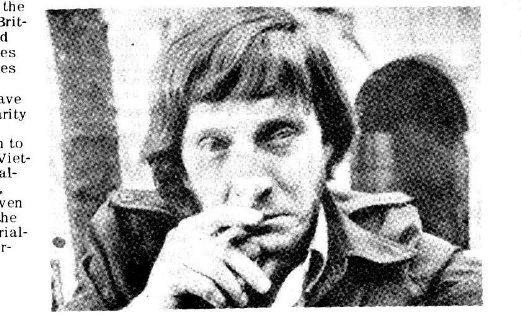
After the meeting, by chance, Scott noticed Lawless in a phone box. Scott confronted him about the accusation and then punched him in the face, breaking one of his own fingers in the process. During his hearing at the Inquiry, Scott was unapologetic about assaulting Lawless - and seemed to think it was amusing. He had acted without sanction from his managers and, he claimed, with the intention of protecting his undercover identity.
Scott proposed to his SDS managers that, to further protect his identity, he should attend the next TOM meeting, which they agreed to, but with the provision that they would be present in the area to physically assist him if necessary. Scott carried out his plan, and it seems it was successful in protecting his undercover identity, but after the incident the ‘writing was on the wall’ with regard to his future in TOM.
Workers Revolutionary Party
Consequently, Scott turned his attention to penetrating the WRP, which he knew to be of interest to Special Branch. He had come into contact with members of the party, probably through his involvement in the various Irish solidarity groups.
In January 1975, Scott provided a first report on a member of the WRP. Two days later, he authored a detailed account of a meeting of the North London Sub-District Committee of the party, held at a private residence. This was a high-level meeting with the leader of the party Gerry Healy present as well as members of the central committee, including the chair of the Stoke Newington branch of the WRP, a role occupied by yet another undercover HN303 ‘Peter Collins’.
Scott knew Collins had infiltrated the WRP, and although he claimed the undercovers didn’t discuss their deployments, they did meet each other regularly at the weekly SDS safe house meetings. By April 1975, Scott was attending meetings of the Little Ilford branch of the WRP and reporting back regularly on party activities and members. The latter includes personal details, such as relationships between party members, pregnancy and marriage arrangements.
One of the people targeted, Roy Battersby, has since suggested that the Little Ilford branch of the WRP was targeted because it was within the Newham constituency, whose MP was Labour cabinet minister Reg Prentice. At the time, Prentice, a right-wing Labourite, was under pressure from his constituency, where left-wing groups were entering the party and attempting to deselect him.
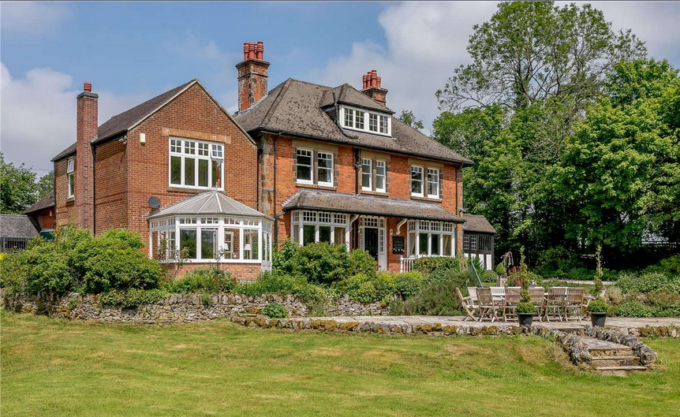
In September 1975, after about a year infiltrating the party, Scott was invited by the WRP central committee to attend a week-long training course at their new education centre, White Meadows House, near Bradbourne in Derbyshire - also known as the Red House. Scott’s SDS managers were keen for him to participate:
As well as gaining useful security information, such a visit will undoubtedly do much to consolidate HN298’s standing in the WRP – an organisation notorious for its security consciousness.
The Security Service was also interested; MI5 had been discussing an exchange of information about the Red House with the then head Chief Superintendent Wilson [[link]] of C Squad just that week.
One of the difficulties for the Metropolitan Police Special Branch was carrying out an operation outside its jurisdiction without informing the local police force in order to maintain the security of the SDS. This issue was further complicated when Derbyshire Constabulary and Special Branch officers raided White Meadows House in a major police operation on 13 October 1975, just a week before the course was supposed to start.
The October course never went ahead and a new invitation failed to materialise. On 6 February 1976, senior Special Branch officers decided to cancel the permission for Scott’s trip to the ‘Red House’. They were worried he could be exposed as a police spy at the education centre amid the heightened climate of suspicion after the raid. The cancellation was to be implemented first thing on Monday, 9 February. However, coincidentally on that Sunday, in accordance with their security procedures, the WRP informed Scott that he would be attending the week-long course the day before he left, too late for him to refuse without compromising his cover.
Scott attended the course and, on his return, he wrote a comprehensive and detailed report for Special Branch on the White Meadows education centre. This included details of class topics, teachers, attendees, security, accommodation and facilities. It appears that only parts of the information from Scott’s report appear amongst the evidence disclosed by the Inquiry.
Scott provided little evidence about his daily routine, other than that it seemed less pressurised than that of other undercovers who had to fabricate their employment. He generally travelled between meetings, his cover flat and real home by car. He sometimes visited his cover flat, but only stayed there overnight about once a week.
When it came to socialising, Scott claimed that he was given no guidance by his SDS managers about ‘how far it was acceptable to become involved in the private lives of those he met’ while working undercover. Neither was he advised about entering sexual relationships while deployed.
Scott claimed that, outside meetings in pubs, he did not fraternise with any members of the organisations he infiltrated, nor did he have any sexual relationships.
Scott normally typed up his SDS intelligence reports at his real home, as soon after the meeting or event as he could. He submitted these reports to his SDS managers at the weekly meeting in a safe house, presumably for editing and enhancement with further intelligence material.
These weekly meetings involved most of the active SDS undercovers, as well as their SDS managers, typically a detective inspector and a detective sergeant. The meetings were used to discuss their deployments, any upcoming large demonstrations and any problems they had. They were also partly social affairs with the participants sharing meals and sometimes going to the pub afterwards.
According to Scott, they also had another function, an assessment of him and his behaviour:
[I] suppose they made a judgment then about how deployed officers were behaving and whether there was any cause for concern.
Other than this, Scott stated, there was little or no support from the SDS management while he was in the field.
Scott recalled visits from senior Special Branch and Metropolitan Police officers to the safehouses. These included Superintendent HN357 David Bicknell on two occasions during Scott’s time in the SDS, and one by the Deputy Assistant Commissioner, HN1253 Victor Gilbert.
Scott stated that he was ‘enjoying the job’ and was happy to carry on in his undercover role, but was withdrawn from active service by his SDS managers in April 1976. Scott’s exfiltration strategy was to tell the WRP branch that he would be working away for a while in Scotland. He relied on there being such a ‘high turnover of people that after a matter of months, I would not have been missed’.
After his withdrawal from the field, Scott did not return to the back office of the SDS at New Scotland Yard and he was not given a rest period, as many other undercovers were. He claimed he was not debriefed, or offered any advice, or support from the SDS. Scott left the Metropolitan Police a few months after his deployment ended.
While no submission was made over HN298’s cover name, the Metropolitan Police did apply to restrict Scott’s real name in May 2017, on grounds that releasing it would interfere with his Article 8 right to a private life. In May 2018, Inquiry Chair John Mitting ruled that Scott’s real name should be withheld.
HN298’s cover name, ‘Michael Scott’, was published on 20 March 2018. He submitted a written statement to the Inquiry on 5 February 2020, and appeared at a hearing on 4 May 2021.
All procedural and evidential material can be found in the documents tab.