
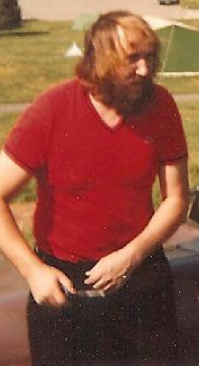
HN155 ‘Phil Cooper’ joined the Metropolitan Police in the 1970s, and Special Branch in 1977. Cooper was unusual in that he had experience of longer undercover assignments working in B Squad , dealing with Irish Republican groups. Married with a young child, Cooper joined the Special Demonstration Squad (SDS) around autumn 1979.
After a couple of months in the back office of the SDS, with little formal training, Cooper began his deployment. Cooper fabricated his own cover employment as a delivery driver, obtained his name from a deceased child and combined it with a cover identity he had used in his previous Special Branch role.
Cooper was tasked by his SDS managers with infiltrating the Socialist Workers Party in east London. After developing a ‘friendship’ with a couple who were members of the SWP, he largely spent the first year of his deployment helping to form and participating in anti-nuclear groups. After that, he concentrated on the SWP, successfully following the path of another undercover HN80 ‘Colin Clark’ into the national office of the party.
Based in the party HQ, Cooper took over Clark’s role as national treasurer of the Right To Work campaign (RtWC) in 1982, after the latter began his exfiltration. Cooper, like Clark, organised and attended RTW marches, national delegate conferences and annual party rallies.
Cooper was now well placed to access a large number of internal documents, including membership lists, financial details and policy documents. This was noted by MI5, which made several requests of Cooper for specific pieces of information between 1982 and 1983. The information and analysis he provided led to him being commended twice.
Nevertheless, Cooper’s SDS managers considered him to be a liability, as his marriage broke down in acrimonious disputes and his behaviour became erratic. This threatened both his cover identity and the security of the SDS. Despite this, his SDS managers decided to keep him in the field, probably because of his unique position in the SWP.
Cooper left the Metropolitan Police in 1985 after being dismissed for assault and was then reprieved after threatening to write to the Home Secretary with his grievance.
Unless otherwise indicated, the information below is taken from the first witness statement of HN155 ‘Phil Cooper’.
HN155 ‘Phil Cooper’ was born in the 1940s, joined the Metropolitan Police in the 1970s and, after completing the training, was assigned to a police station in London as a constable.
In 1977, he joined Special Branch, working for a period in B Squad, which dealt with ‘Irish related groups’.
Unlike many officers who joined the SDS, Cooper had prior experience in undercover work requiring a cover identity. He stated that his B Squad deployments in ‘pubs frequented by Sinn Fein’ (SF) required creating false employment and family background details. Cooper chose the merchant navy as his cover employment precisely because it was difficult for people to check.
Recruitment
Cooper first became aware of the SDS when he was approached on an informal basis by Detective Chief Inspector (DCI) HN135 Mike Ferguson , the unit’s senior officer. They socialised together, though Cooper suspected that Ferguson had ‘established this friendship specifically to sound me out about joining the SDS’.
Cooper stated that:
[Ferguson] suggested I applied and said that it would be good for the SDS and myself. He told me that it required going deep undercover and said I seemed to have a background that was appropriate.
He applied to join the SDS in April 1978, but was not accepted into the unit until September 1979. As far as he was concerned, there was no formal selection process for the SDS because he already had two years’ experience in Special Branch, and ‘his reputation would have been well-established’.
Cooper stated that he joined the SDS because he ‘enjoyed’ his undercover work in B Squad of Special Branch and felt confident that he could deal with ‘social settings’ in that role. He added:
This was at a time when there were bombs going off in London and soldiers being killed in Northern Ireland. The SDS was aimed at obtaining intelligence to protect the public, and I considered this to be the ultimate task of being a policeman.
Cooper was married with a young child when he joined the SDS. He did not recall SDS managers speaking to him about the effects that longer-term undercover work could have on him or his family. Neither did any SDS manager speak to or visit his wife to discuss these matters prior to his deployment. He divorced while he was in the SDS.
Training and tradecraft
Cooper stated that he received no formal training when he joined the SDS. Instead, like many other SDS undercovers, he spent some time in the back office in New Scotland Yard. Here, he learned from other SDS managers who had experience of being undercover.
In particular, Cooper named DCI Ferguson and Detective Inspector (DI) HN68 ‘Sean Lynch’ , who acted out role-playing scenarios to test his cover identity. As Cooper approached deployment, the training became more intense, the two senior officers subjecting him to mock interrogations. No other undercover officer has mentioned this type of ‘testing’ being carried out.
Cooper maintained that while in his back-office role, he never saw anything resembling a tradecraft manual or the Home Office circular 97/1969, titled ‘Informants Who Take Part in Crime’.
Cooper stated that he was never given any guidance by SDS managers regarding possible involvement in criminal activity or the encouragement of others to do so. He claimed ‘my understanding was that I should avoid getting into these situations in the first place’.
Neither was Cooper given any formal training or guidance on how much he should get involved with the private lives of individuals while deployed, including sexual relationships. Cooper claimed, in retrospect, that:
In my view, the deeper you become involved and have to maintain cover, the fewer distractions you want. The last thing I would have wanted to have done is to get involved in a relationship as it has the potential for destroying your cover rather than strengthening it.
Undercover identity
In his witness statement, Cooper claimed that he did not recall using a deceased child’s name to create his undercover identity. However, Special Branch records suggest that he did employ one and Cooper recognised that:
It would be convenient to use the identity of a child who was deceased as they would not have any records, such as school records, for people to check up on.
Cooper was aware that the best place to start constructing a false identity was at the Registry of Births, Marriages and Deaths, though he couldn’t recall visiting the institution. Cooper claimed that he did not use the background of the deceased child to embellish his undercover identity. Instead, having been brought up in the Merseyside area, he chose Liverpool as his ‘home city’, and researched addresses and schools that no longer existed due to redevelopment. This, he thought, would make it ‘harder to trace’ his background and ‘activists could not ask questions of people who lived there now’. This deception was combined with his recent Special Branch cover, that he had come ‘straight out of school, into the merchant navy, and then into my cover employment’.
He lived at three different cover addresses during his deployment. They were all bedsits, although one had a separate kitchen. The first two were in Forest Gate and Wanstead in east London and the last was in Blackheath in south-east London.
Cooper stated that he did not share these addresses with other undercovers or invite them to visit. However, activists from his target organisations visited the properties. Cooper claimed that, apart from a few occasions where he slept on sofas or floors, he ‘did not live with activists for any significant period of time’.
Like most other SDS undercovers, Cooper was left to fabricate his own cover employment. Over the period of his deployment, he arranged four different jobs, all involving driving, as this would mean he was ‘out and about and so not always accessible’. He made it clear to his targets that they should not call him at work because ‘it was frowned upon by my employer’.
His cover jobs included transporting marble, delivering and repairing coffee machines, supplying TVs, installing aerials, and, finally, working for a cleaning company, which he did not use as a cover in practice.
In each case, he took time to learn the minimum skills for each task, such as operating machinery or installing or repairing devices, so that he appeared to be proficient. Although he did carry out each of these jobs intermittently, he did not routinely go to work as such.
Cooper began to change his appearance upon deployment. He grew his hair and a beard and chose clothes like those he observed activists wearing. Immediately prior to his deployment, he visited Liverpool to help him remember his ‘legend’. Special Branch provided him with a driving licence in his cover name and a car.
‘Phil Cooper’ began his deployment in late 1979 and was primarily tasked with infiltrating the SWP in east London. He recalled, ‘beyond that, I was left to my own initiative’. This laissez-faire approach from the SDS managers was typical of the period.
Like some other SDS undercovers, Cooper did not rush into making contact with the target group. Instead, he stated:
I would have familiarised myself with the area where I lived before approaching any activists. It was not an area I knew well, so I would have frequented local pubs to get my face known. It was probably in a pub where I first met an activist, or through buying the Socialist Worker newspaper.
Cooper was attending political public meetings in November 1979 and became a member of the SWP around this time. Although he became involved in a number of other groups in this period, Cooper explained that the SWP was the focus of this deployment, which he targeted via its Walthamstow branch.
Socialist Workers Party
Cooper provided his first report to Special Branch, on a member of the Waltham Forest district of the SWP, in April 1980. He had developed a friendship with a full-time SWP activist and his partner, Julia Poynter, both members of the Walthamstow branch of the party.
His reports on SWP branches and their activities featured lists of identified attendees at internal and public meetings, pickets and demonstrations and details about individual members. The latter included personal information such as employment details, trade union membership and living arrangements.
Cooper was also keen to pick up on any personal or political disagreements leading to rifts in the party branches. For example, in August 1980, he reported on the breakup of a relationship between an SWP member and a supporter of Women’s Voice , a feminist-orientated sub-group in the party.
Commenting on this, Cooper explained why this kind of personal information was gathered by SDS operatives:
… the purpose of providing such information is to provide a complete intelligence picture. This is built up of many, many parts, and what might seem irrelevant to the author of a report might be highly relevant to someone else who has the rest of the picture. In this particular case, the breakdown of their relationship suggests one or both of the activists might be likely to join another group or cause a division within that group.
Living relatively close to the national office of the SWP in Reading Lane, Hackney. He stated that:
The SWP was always looking for volunteers for various positions, and they were not slow in asking people with a trusted pedigree.
To get trusted status, Cooper seems to have followed the path of his predecessor HN80 ‘Colin Clark’ , who had successfully infiltrated the national office of the SWP in 1978, helping to organise national delegate conferences and taking on the role of treasurer for the Right to Work (RtWC) campaign in late 1980.
As a result, Clark was well known to the central committee of the SWP and was even sitting in on its meetings. Clark’s intelligence reports, coming from the very top of the party structure, were being commended by both his SDS managers and MI5.
As the end of Clark’s tenure approached in 1980, SDS managers realised they would lose an extremely valuable and well-placed source of information. The solution was to infiltrate another SDS undercover into that position.
Consequently, Clark’s exfiltration was delayed by around a year whilst Cooper worked his way into the national office. Like his predecessor, Cooper offered his skills and the supposed flexibility of his employment to help the party with day-to-day tasks.
And so Cooper was nominated as a driver of a support vehicle, alongside Clark, for the Port Talbot to Brighton RTW march in autumn 1980. Cooper and Clark travelled and worked together during the march, communicating clandestinely when they could.
Cooper then began driving a lorry for the SWP overnight, delivering copies of Socialist Worker to railway stations for distribution. Through this activity, he got to know Mike Barton, a full-time worker in the SWP national office, who oversaw distribution of the paper.
By 1981, Cooper asserted, he was regularly ‘in and out of the SWP main office’. His ability to enter the national office at will gave him access to restricted documents.
There is considerable evidence that Clark and Cooper worked clandestinely together in the SWP national office during 1981. Minutes from a meeting in October 1981, between SDS managers and MI5 ‘to discuss the activities of the two SDS sources who clearly have fairly unrestricted access to SWP HQ’, state:
both of his ‘hairies’ [Clark and Cooper] would normally have good reason to be in SWP HQ out of working hours, and from that point of view they were reasonably happy that nothing could give the SWP cause for suspicion.
This also allowed them to photograph numerous internal SWP documents, including subscription lists and bank account details.
The SWP held a four-day national delegate conference in Poplar, east London, in November 1981. The document describing the conference listed its organisers and participants, naming Cooper alongside Clark amongst the 12 administrative staff.
The document, attributed to both undercovers, was the last report written by Clark before his exfiltration a few months later.
This point marked the transition, Cooper taking over from Clark as national treasurer for the RtWC in January 1982. Clark was a ‘close friend’ of John Deason, the RtWC national secretary, and it seems likely that this relationship had at least some influence on Cooper obtaining the role in the RtWC central-planning committee.
Cooper’s new role brought him into contact with the Labour MP, Ernie Roberts, who was the honorary national treasurer of the RtWC.
In practice, it was the undercover officer who actually carried out the work for the campaign, who was in control of the bank account, signed the cheques, and had access to other personal financial details. Cooper was also able to access Roberts’ and other Labour Party internal correspondence with the SWP and the RtWC.
The role also gave Cooper a desk in the SWP national office and, from July 1982, at the party’s new premises on Mare Street, Hackney. Security at the new office was tightened up, such that rank-and-file members of the party were not allowed entry to the premises, only ‘central committee members, London full-time organisers, and full-time office workers’.
He thus circumvented another layer of protection for the party and even supplied a floor plan of the new premises to Special Branch, which showed the locations of his desk and the SWP full-timers.
Cooper could now obtain the internal SWP central committee weekly bulletin and acquaint himself more closely with central committee members such as Lindsey German, a core participant in the Inquiry. He made several reports on the living arrangements and relationships between party members from 1982 to 1983.
His first task as the national treasurer of the RtWC was to help to organise the finances and logistics for a RTW march in London, terminating at the House of Commons, over 21-25 February 1982. Now that he had full access to the internal meetings and plans for the march, he was able to report on the route in detail and supply the names of both the leading and local organisers to Special Branch.
Cooper also gained access to the SWP membership records, which, at the time, were being transferred from card indexes to a computer. He provided the old hard-copy membership cards to his SDS managers and shared the specification of the computer in the SWP office with MI5.
As one of the very few SWP officers with authorisation to operate the computer, Cooper used this to his advantage. From 1982 to 1983, he supplied Special Branch with hundreds of records of SWP branch organisers and comprehensive details of the national distribution and finances of the party paper, Socialist Worker.
The amount of information Cooper gave Special Branch and MI5 about SWP membership continued to grow. During Easter in 1982 and 1983, he attended and helped to organise the annual party rally at a holiday camp in Skegness, which doubled-up as a large social event for party members, their families and friends.
After these rallies, he made reports listing the names of hundreds of local organisers and attendees from London.
In a similar manner, though with far more political content, Cooper reported on the SWP annual delegate conferences in November 1982 and October 1983. These detailed and lengthy reports carried internal conference bulletins and other material; agendas, details of resolutions, analysis of the party structure and organisation, details of expelled members and groups, and confidential information concerning membership and future policy.
As part of the administrative staff, Cooper gained access to the delegate attendee lists, which he duly copied for appendices in the reports.
Cooper’s intelligence reports were not just limited to London. For example, apart from Skegness, he also supplied complete membership lists, including trade union affiliations for branches of the SWP in Cardiff and Brighton.
Special Branch and MI5 considered Cooper’s comprehensive reports to be of significant value, and Cooper claimed to have received two commendations for his work from the upper echelons of the Security Service. His report on the 1983 SWP delegate conference was picked out for particular praise:
This is an excellent report by an SDS officer who has now left the field, and is his ‘swan song’. It gives us a complete breakdown of the SWP and the very full and informative appendices will be of invaluable assistance to Box 500 [MI5] in their study of this important Trotskyist group.
Anti-nuclear groups
Although Cooper was tasked with infiltrating the SWP in east London, his initial reports in the spring of 1980 are primarily concerned with anti-nuclear campaigning groups. It appears that Cooper’s friendship with an unnamed member of the SWP (from here on ‘X’) and his partner, Julia Poynter, brought him into contact with this movement.
X, Poynter, Cooper and five others helped to set up the Waltham Forest Anti-Nuclear Campaign (WFANC) in April 1980, with X taking on the position of secretary, and Cooper becoming treasurer.
Shortly after the founding of WFANC, Cooper reported on two previous meetings of about 20 anti-nuclear groups making up the Torness Alliance (TA). The meetings, held in Nottingham in March and Lancaster in April, were to plan a non-violent occupation of the Torness nuclear power station construction site in East Lothian, Scotland, in early May 1980.
These meetings may have been the catalyst for X, Cooper and Poynter to set up the WFANC. Either way, Cooper apparently took part in the ‘protest week’ at Torness, remembering having ‘camped on the beach.’ Two other undercover officers, HN85 Roger Pearce (‘Roger Thorley’) and HN20 ‘Tony Williams’ , also targeted these protests.
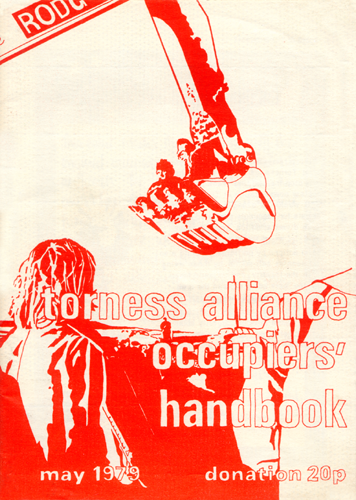
In mid-May 1980, Cooper reported on a planning meeting held by the Dungeness Action Alliance (DAA) for a similar protest a few days later at the Dungeness nuclear power station on the Kent coast.
In June, Cooper reported on a meeting of the North London Anti-Nuclear Group (NLANG) and in July, he attended a weekend conference of the TA in Oxford, which attracted seven different anti-nuclear groups.
In each report, Cooper provided brief notes on the content of the meetings and listed the named attendees. In a few cases, he produced single-page reports identifying individuals in his home group, including their marital status, home address, workplace, trade union affiliation, type of car and a physical description.
In September 1980, Cooper, X and Poynter travelled together to the Trade Union Congress (TUC) conference in Brighton to attend a fringe meeting organised by the Anti-Nuclear Campaign. The group of ten lobbied outside the conference and stayed for a few days. Poynter and X were identified in a report probably written from intelligence supplied by Cooper.
In September and October 1980, Cooper’s reporting began to align more closely with SWP activities such as the RTW marches and Anti-Nazi League (ANL). Several of the reports in this period were co-written by Clark and Cooper, suggesting that they were now collaborating in gathering information.
Cooper’s spying on the anti-nuclear groups began to wane at this point and one of his final reports in November noted that the TA had disbanded at the end of September 1980. After this, Cooper concentrated on reporting on the SWP and its RTW campaign.
Cooper recalled that the SDS ran a flat in west London as a safe house, separate from its office in New Scotland Yard. Once his deployment began, like all undercovers, Cooper never visited the SDS office for security reasons. Instead, he would travel to the safe house once or twice a week for meetings with the SDS managers and other undercovers.
The ‘regular and frequent’ gatherings were an arena for the SDS managers to ‘raise any concerns they had’ and to provide ‘verbal advice or guidance about how to deal with that situation in the future’.
The gatherings also functioned on a social level, undercovers ‘unwinding’ through sharing meals at the flat and discussing ‘everyday matters’. Cooper claimed they did not discuss their deployments, because as far as he was concerned ‘the fewer people who knew what I was doing, the better’.
On top of that, these meetings were an opportunity for the undercovers to present their hours and expenses claims for approval by their managers. For security reasons, Cooper did not compile his reports at his cover flat; he handwrote them at the meetings in the safe house. However, he pointed out:
...a lot of my reporting was given verbally to the back office over the phone, especially if there was a major demonstration imminent and they wanted up-to-date intelligence. Someone else would probably have written that up.
In addition to these regular gatherings, Cooper requested a one-to-one private meeting each week with an SDS manager, who he would meet in a pub near Victoria in central London. This allowed Cooper to discuss specific issues related to his deployment though, over time, he noted that these meetings became less common as, in his opinion, the ‘management became more reactive rather than proactive’.
Cooper noted that, in the early stages of his deployment, he spent more time in his real identity than his cover identity. As he developed his links with the target and other groups, this began to change. By the time he was ensconced in the SWP in late 1980, he was spending longer periods at his cover address than at his real home, sometimes ‘a couple of weeks at a time’.
His daily routine at this stage involved doing:
...something with the SWP in the mornings, an SDS meeting at lunchtime, and an SWP meeting in the evenings. … I would often stay overnight at my cover address if meetings ended late and, if we went to the pub afterwards, as was usually the case.
These patterns of behaviour were exacerbated by Cooper spending weekends driving around London delivering Socialist Worker and his involvement in the RTW marches, which could mean being away from home for several weeks at a time.
Cooper claimed in retrospect that:
my SDS deployment was a significant contributory factor to my divorce, although it was not the sole reason. I did not see it coming. I was wrapped up in my undercover work and my wife did not know exactly what I was doing. I was often away from home and we had a young child.
When I was at home, I often just wanted to recharge my batteries. I would try to reset to my true self just to maintain my sanity, but it was very difficult.
He said that his growing paranoia that he would be recognised in his real identity by the increasing number of political activists he was encountering in his cover identity, meant that he ‘was always looking around and did not really feel comfortable going out with my wife even when I was off duty’.
Cooper’s marriage break-up and divorce during his deployment became a significant issue for his SDS managers in 1981-1982. Through the process, Cooper’s ex-partner retained friendly relationships with one of his SDS managers, Detective Inspector, later Detective Chief Inspector, HN307 Trevor Butler and Butler’s wife.
Through this informal relationship, SDS Detective Superintendent HN218 Barry Moss became aware of a number of disturbing issues concerning Cooper. Moss was told that Cooper was mistreating his wife, that this was domestic abuse and may have involved violence. But although Moss visited Cooper’s wife to check on her welfare, he subsequently decided to keep Cooper in the field.
After the divorce, a legal dispute arose between Cooper and his ex-partner over child maintenance payments, which Cooper refused to meet. With lawyers involved on both sides and the Department of Health and Social Security investigating the dispute, SDS Detective Chief Inspector HN34 Geoffrey Craft advised Cooper to make the payments, to no avail.
It wasn’t that Cooper did not have enough money for the maintenance payments. The extravagant overtime payments Cooper claimed as an SDS undercover made him the highest-paid detective sergeant in the Metropolitan Police at that time. This led to Cooper being nicknamed 'Gold', his superior HN2401 Anthony Greenslade revealed. Later, overtime payments were capped to prevent such situations. Cooper commented in retrospect that the overtime payments had ‘at least doubled my income’, and may have led to unpopular cutbacks by the SDS.
This was not the only problem that emerged during Cooper’s deployment. He had been involved in a road traffic accident with his cover vehicle and had given his cover name to police officers investigating the crash. Although this was policy, it meant that his superiors had to step in to make the issue go away.
Last but not least, Cooper committed ‘the cardinal SDS sin of placing the security of the whole operation in jeopardy’, by leaving his cover vehicle outside his home address.
By the summer of 1982, in a meeting between MI5, Craft, Detective Chief Inspector HN99 Dave Short and Detective Inspector Sean Lynch , the SDS managers expressed serious doubts about Cooper’s performance in the field.
Cooper’s access to Labour MP Ernie Roberts and the House of Commons made them particularly uneasy, because of Cooper’s unstable behaviour at the time and the risk that he might be publicly exposed. The MI5 officer noted that these misdemeanours meant that the officer’s days were numbered.
However, Cooper’s position in the national office and within the SWP hierarchy made him a difficult asset to replace, as Clark had been. So, despite the misgivings of SDS management and MI5 about his conduct, Cooper remained in place for about 18 months after this meeting.
Another aspect of Cooper’s life undercover, that apparently troubled his SDS managers less, was his use of alcohol and drugs. From the very early stages of his deployment in and around anti-nuclear groups, Cooper was consuming large amounts of alcohol and marijuana during drinking sessions.
Julia Poynter remembered:
He used to come to the flat that we lived in to have drinking sessions … I kicked the three of them out, they started going to his flat instead. He told me that Phil would regularly get stoned there, and recounted one occasion where Phil was so inebriated, he fell off his chair and broke it.
The question of whether Cooper entered into sexual relationships with members of his target groups or their acquaintances during his deployment is contentious.
In his witness statement, given in January 2020, Cooper flatly denied he had any sexual activity while in his cover identity. However, two years previously, in an interview with a Metropolitan Police risk assessor, he had admitted to having a number of liaisons:
He stated that he needed to live a 'full alternative lifestyle' in all aspects, but could not recall the specifics. None of the relationships were medium or long term.
He stated there were 'groupies' who wanted to spend the night with someone who was close to the SWP Central Committee. [...] He does not recall their names. [...] He initially stated there may have been two or three women but then said there may possibly have been a few more.
The Inquiry was unable to find any direct evidence of Cooper having engaged in sexual relationships. However, under questioning, DCI Moss, one of Cooper’s SDS managers, stated that he was less surprised to learn that HN155 had confessed to having had sex with activists compared to another undercover.
MI5 was being sent most of the reports written or contributed by Cooper and his predecessor Clark concerning the SWP. As noted previously, by 1981 MI5 was aware that the SDS had two so-called ‘Hairies’ who had unrestricted access to the SWP national office.
MI5 was not just receiving intelligence; it was requesting it. In several memos in late 1981, it tasked Clark and Cooper, via their SDS managers, to photograph membership records, gain access to the new SWP computer and answer questions about documentation they had already supplied.
MI5 also requested coverage of the SWP Youth National Meeting and National Delegate Conference in November 1981, commenting on what a good report the SDS had provided on the latter conference the previous year.
After Clark was withdrawn in early 1982, Cooper continued to service intermittent requests from MI5 for intelligence on the SWP. In June, MI5 asked the SDS for information on the party structure, branches, finances, influential figures, front organisations, factions, members, schisms and relations with non and ex-members and other Trotskyite parties.
Cooper responded in September with a detailed nine-page report, which demonstrated his knowledge of the organisation and the advanced state of his infiltration.
Despite the quality of the information he was providing on request, it appears that MI5 did not debrief Cooper as it had Clark. This may have been the result of the issues his SDS managers had with his conduct as an undercover.
On 23 December 1983, a telephone call was intercepted between two members of the SWP, probably via a Special Branch or MI5 tap. The discussion concerned ‘Phil Cooper’ who, as the note summarised, had not confessed to anything but had provided ‘a very strange story’.
As a result, the gist continued, Cooper’s cover was blown within the SWP; there had already been suspicions regarding him.
The ‘strange story’ was probably a reference to Cooper’s exit strategy from his SDS deployment, that he was leaving to rejoin the merchant navy – not the most likely step for a member of the party.
In addition, there was the inherent distrust, as Cooper explained in his witness statement:
It was always going to be difficult to leave when I had become national treasurer of the RTW campaign as the SWP were suspicious of a lot of people who were no longer part of the activist scene.
The undercover officer made an attempt to leave in a subtle way:
I think I let on that I was considering it a while beforehand to slowly suggest to people that was my intention, but there must have come a point when I announced it at the SWP [office].
The date of the intercepted call mentioned above, Friday 23 December, was the last working day before Christmas – a perfect time for Cooper to make the announcement in the office.
Despite the apparent distrust, Cooper was able to exfiltrate without his role becoming public knowledge. A few members of the SWP thought he was a spy, but how widely this was shared or believed is not known.
When Cooper finally left in January 1984, he travelled to Paris for a few weeks to stay with some friends, in keeping with his exit story. He also sent a few postcards to SWP members to ‘confirm’ this.
He then returned to the UK, ditching his cover name and claiming that he had no contact with any of his ‘ex-comrades’ again.
Cooper claimed he had never taken any leave while in the field and, on his return to the UK from Paris, took a three-month holiday at his new flat. He could not remember being debriefed by anyone from the SDS, Special Branch or MI5. Neither was he offered any welfare support from the SDS or Metropolitan Police.
In his 2020 witness statement, Cooper claimed that the experience of going undercover had a long-term effect upon him:
It is perhaps unsurprising that living in an alter ego for such a long period tends to make you a bit unsure of who you are. I did not find that there was anything in place to help me solve those identity issues.
My deployment still has an effect on me now […] The effects are quite deep-rooted and have probably made me more of an insular and secretive person.
Cooper stayed in Special Branch for less than two years, but the details of his career are restricted. He eventually retired from the Metropolitan Police in 1985 at the rank of detective sergeant.
However, his departure from the police service seems to have been complicated. Some details appeared in an SDS discussion report from 1994, almost ten years after Cooper left the force.
Written by SDS manager HN10 Bob Lambert ‘Bob Robinson’ , the report was a summary of the crisis around SDS ex-undercover, HN11 Mike Chitty ‘Mike Blake’ , who had returned to the group he infiltrated after the end of his deployment. Lambert had spent months investigating Chitty’s misdemeanours and his report is quite strongly worded.
Lambert accused Cooper of collaborating with Chitty, and this did not go down too well. Although Lambert did know Cooper personally, it freed the way for what seems a complete character assassination.
Cooper is referred to as one of four SDS undercovers who have ‘over a twenty five year period involving more than eighty undercover officers, […] tarnished the professional reputation of the SDS’.
Lambert illustrated this with a series of accusations that Cooper forcefully disputed.
First, in 1985, Cooper was dismissed from the Metropolitan Police for assault, but managed to overturn the decision on appeal. Lambert asserted that Cooper wrote a letter to the Commander Operations, ‘threatening to expose the SDS operation to the press if the decision was not overturned’.
Cooper denied this in his witness statement, saying he merely intimated that he ‘was mindful to appeal to the Home Secretary’, but never did in the end. According to Lambert, Cooper’s successful overturning of his dismissal, allowing him to leave with an ‘ill-health pension’, meant that ‘to this day, old hands in the Police Federation marvel at the successful outcome of his appeal’.
Second, that during the process of his dismissal, Cooper had ‘played the SDS card’, which:
basically denotes a current or former SDS officer who seeks to extricate himself from disciplinary and/or criminal proceedings by claiming he was adversely affected by his experience as an undercover police officer.
Cooper completely disagreed with the content of Lambert’s report and said he never threatened to expose the SDS and, had he wanted to, he would have appeared in the True Spies documentary.
Last, Lambert asserted that Cooper was ‘unsuited to the undercover role’ in the opinion of his contemporaries, because he was:
selfish, arrogant, disloyal both professionally and domestically. The writer [Lambert] can think of no redeeming features in the officer [Cooper] and the case represents the lowest point in the twenty five year history of the SDS.
These qualifications contrast strongly with the praise the officer received for his work; as far as the SDS and MI5 were concerned at the time, Cooper’s intelligence was voluminous and of high quality, and considered important enough to let him continue his deployment, despite his misdemeanors.
The Metropolitan Police made an application to restrict HN155’s real name on 19 December 2017. Despite HN155’s name being known to what the Chair called ‘responsible journalists’, who had written to him in that name, Mitting decided to restrict HN155’s real name on 28 March 2018.
However, his cover name, ‘Phil Cooper’, was released on 5 June 2018, alongside a list of his target groups.
Although HN155 produced a written witness statement, dated 13 January 2020, he was unable to give oral evidence due to ill health.
On 20 January 2020, Cooper’s risk assessor, David Reid, submitted a written statement. His other risk assessor, Brian Lockie, did the same on 26 January 2021. The latter subsequently appeared at the hearings on 13 May 2021.