
HN353 ‘Gary Roberts’ joined the Metropolitan Police in the late 1960s and Special Branch in the early 1970s. After gaining some experience in B and E squads, Roberts, by then a married man, was recruited into the SDS in spring 1974.
After a couple of months in the back office of the SDS with little formal training, Roberts began to create his cover identity. This included using a deceased child’s name and creating cover employment as a self-employed painter and decorator, and then as a full-time student and vice-president of Thames Polytechnic student union. He spent his whole deployment renting a room in a large house in north London.
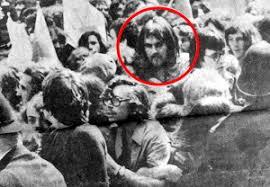
Roberts was ordered by his SDS manager to infiltrate the Finsbury Park branch of the International Socialists (IS), and was redirected a year later to the International Marxist Group (IMG) in south-east London.
Over the succeeding years, Roberts spied on the IMG at branch, district, city and national level, providing Special Branch and MI5 with detailed political assessments and personal details of hundreds of members of the organisation.
He took part in numerous marches, demonstrations and pickets, including the two most violent confrontations between the left and the National Front in 1977, in Wood Green and Lewisham.
Roberts’ deployment lasted for four years. Unless otherwise indicated, the information below is taken from the first witness statement of HN353 ‘Gary Roberts’. Although Roberts gave a witness statement to the inquiry, he did not provide oral evidence.
HN353 ‘Gary Roberts’ was born in the 1940s and joined the Metropolitan Police in the late 1960s. He joined Special Branch in the early 1970s, becoming a detective constable (DC).
His work in Special Branch prior to joining the Special Demonstration Squad (SDS) included stints in B Squad and E Squad. After the outbreak of conflict in Northern Ireland in 1969, the former was concerned with ‘Irish related groups’. The latter dealt with ‘Aliens, Commonwealth and Colonial Communities and racial or colour problems' and with ‘foreign terrorism and extremism’. In neither unit did Roberts create or use a cover identity.
Roberts was aware that there was a covert unit, the SDS, in Special Branch, but he knew little about it, as it ‘was a well-kept secret’.
Recruitment
Roberts was approached by a serving SDS officer with whom he had previously worked, presumably in Special Branch, and asked to join the unit. He remembered:
After that discussion I suppose I would have had a meeting with someone in the middle management of the squad before joining, but I can't remember anything formal.
Roberts accepted the invitation and, after a brief delay due to a temporary posting, he joined the SDS in late spring 1974. He understood the primary role of the unit was getting the intelligence on demonstrations and public order. In his witness statement, he recalled his motivations at the time:
I wanted to join [the SDS] as it was something different and exciting. It was an opportunity to sink or swim by your own endeavours and that challenge appealed to me […] I knew that you would be out there, on your own, seeking information.
During the recruitment process, Roberts, a married man, stated that there was no discussion of the content or impact of the work on his personal life. This also extended to his spouse, Roberts stating that ‘to my knowledge no one went to speak to my partner before I joined’.
Training and tradecraft
Roberts stated that he received no formal training after he joined the SDS. Instead, like many other undercovers in the period, he spent several months in the SDS back office in New Scotland Yard before his deployment. For much of this period, he was typing up the written reports from undercovers, in the process ‘learning what they were doing’. He also met many of these officers in person:
It was from them you got an idea of what the job entailed and what you needed to do to do it successfully.
Although Roberts was not specific about the location and timing of these meetings, they generally took place on a weekly basis in the SDS cover flats.
Roberts maintained that while in the SDS, he was never given the Home Office circular 97/1969, titled ‘Informants Who Take Part in Crime’, though he recognised it from seeing it later in his career. To his recollection, they were not given any advice, guidance or instructions on how far it was acceptable to become involved in the private lives of those they met undercover or how close those relationships could become:
There was no discussion on sexual relationships whilst deployed or participation in criminal activity whilst undercover.
If arrested, undercover officers were instructed to call Detective Chief Inspector (DCI) HN819 Derek Kneale , one of the senior managers in the SDS. Outside of this, Roberts claimed there was no discussion or guidance at all.
It is interesting to note that, prior to his deployment, Roberts apparently had no idea how long he would be active in the field. He claimed later that ‘there seemed to be no set limit in the length’.
Cover identity
In his witness statement, Roberts was asked whether, as part of the process of creating his SDS undercover identity, he had been referred to a Special Branch document written in 1968, titled the ‘Penetration of Extremist Groups’. Roberts had never seen this document and the practice he followed did not correspond with what was set out in it.
Roberts was one of the first SDS undercovers to adopt the identity of a deceased child, though it was still a rudimentary practice at this stage. Someone in the SDS explained to him how to choose a cover name. This was achieved by attending Somerset House and finding a person who was of a similar age:
The name I chose was that of a deceased child. Beyond the name and birthday, no other aspects of that person's identity were used by me.
The rest of Roberts’ back-story was purposefully kept as vague as possible; he was brought up by an uncle, had previously lived in the north-east of England and had a girlfriend there. In this last respect, having a fictional partner as part of his cover story, Roberts was unusual.
Creating cover employment was considered by the SDS to be his own responsibility, and as he had no one to vouch for him, Roberts decided to claim that he was a self-employed painter and decorator, as ‘being an odd-job handy-man was about the only thing I was any good at’.
This choice also anticipated any situation where he needed to work in his cover role. In practice, he was never required to do this. The back office of the SDS provided a vehicle (and presumably a driving licence in his cover name) in which Roberts carried building materials and tools to support his cover-employment story.
Later in his deployment, when his target group changed, Roberts successfully applied to begin a Bachelor of Arts degree in political economy at the recently established Thames Polytechnic in Greenwich, now the University of Greenwich, in south-east London. The Metropolitan Police gave him cash to pay the course fees.
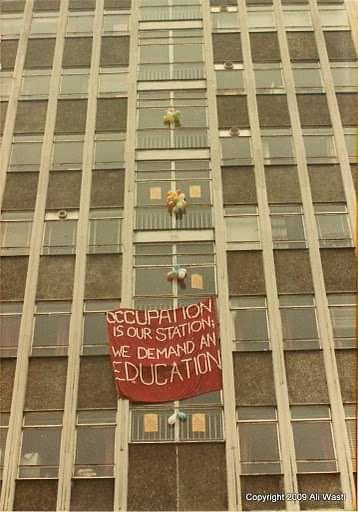
As with his cover employment, Roberts was also given responsibility for arranging his cover accommodation. He chose its location upon its proximity to his target group in Finsbury Park, renting an attic room a few miles away, in a large house on Rosebery Road, Muswell Hill, north London. The owners lived on the ground floor and the upper two storeys were rented out along with Roberts’ room.
Roberts said that no one in the house knew he was an undercover police officer, he did not share his room with anyone and remained at this address for the entirety of his deployment.
In the period before he joined the SDS proper, Roberts had already taken the opportunity to start growing his hair and a beard, and began dressing down, settling for an army surplus jacket and jeans. Thus, by the time of his deployment, his appearance backed up his cover identity.
Roberts implied that it was SDS manager DCI HN891 Derek Kneale who determined his first target area and group; the International Socialists (IS) and specifically the Finsbury Park branch in north London. Roberts could not remember being specifically told, but:
I knew I was there to get information about public disorder, and we all knew as police officers this meant obtaining the details of the numbers in groups, details of the group's planned demonstrations, including their routes, tactics and potential dangers.
To gain information in advance about the target groups, SDS officers could request to see relevant Special Branch files. Roberts did so, and assumed there were no SDS undercovers within the branches that he was going to infiltrate.
International Socialists
Unlike some SDS undercovers, who spent time acquainting themselves with the area to develop their undercover identities, Roberts decided to begin the attempted infiltration of his target group immediately upon his deployment.
Roberts formally joined the IS in September 1974, but it is clear he was reporting on the organisation prior to this. For example, he was present, along with SDS undercover HN301 ‘Bob Stubbs’ , at the Red Lion Square protest against the National Front (NF) on 15 June 1974.
Clashes between the Metropolitan Police and anti-fascist demonstrators at this event led to the death of a protester, Kevin Gately. Although Roberts remembered reporting on this event, there is only one short report attributed to him, documenting criticism of an IS leader for not taking the event seriously enough.
Roberts noted a general dearth of his reports on the IS during this period, the Inquiry considering only one other report, on a member of the Hackney branch in March 1975, and little else. That was not how he remembered this period:
I attended lots of demonstrations, as well as private and public meetings, with the IS and would have reported particularly on the numbers involved in demonstrations both prior to and after.
The suggestion is that either the intelligence Roberts provided on the IS was not used in SDS reports, or that they have not been made available to the Inquiry. The remaining option is that reports were lost.
International Marxist Group
After Roberts had spent nearly a year in the Finsbury Park IS, in September 1975, DCI Kneale asked him to infiltrate the International Marxist Group (IMG):
The IMG were active in organising demonstrations and public disorder at the time which is why I think there was an interest in their activities.
Roberts suggested another reason for this switch in emphasis: the fact that another SDS undercover, the unnamed HN338 was ‘about to move out of the IMG and so they wanted me to replace him’.
The assessment of the SDS was that the ‘IMG membership was very student and teacher heavy’. Consequently, the unit paid for Roberts to enroll as a full-time student on a Bachelor of Arts (BA) degree course in political economy at Thames Polytechnic. This helped to shore up his cover identity and placed him in a useful milieu to aid his infiltration of the IMG.
Over the years, Roberts reported on various aggregate meetings of the IMG, at a national level, for London, and his home branch and district in the south-east of the capital. These expanded to IMG-influenced organisations, including Greenwich Trades Council, the Troops Out Movement (TOM) and the Student Women’s Action Group (SWAG).
Roberts attended student protests in Leeds, National Abortion Campaign marches in London, pickets by the Chile Solidarity Campaign and public debates between the IMG and other left parties concerning the ongoing revolution in Portugal, the nature of the Soviet Union and the Labour Party. IMG students appeared in some of his reporting.
Most of the reports followed the standard patterns of SDS information-gathering and included lists of identified attendees, their personal details such as home addresses, telephone numbers, political and trade union affiliations and occupations. Roberts was also clearly aware of the subtleties in the types of intelligence gathered:
I used to attend many meetings and report back on the politics discussed, though that was probably more helpful to the security service than the police.
After Roberts formally joined the IMG, he offered his vehicle and services as a driver to the organisation. He was tasked with helping distribute the party paper, Red Weekly, by delivering packages to mainline railway stations and driving leading party members to speaking engagements around the country.
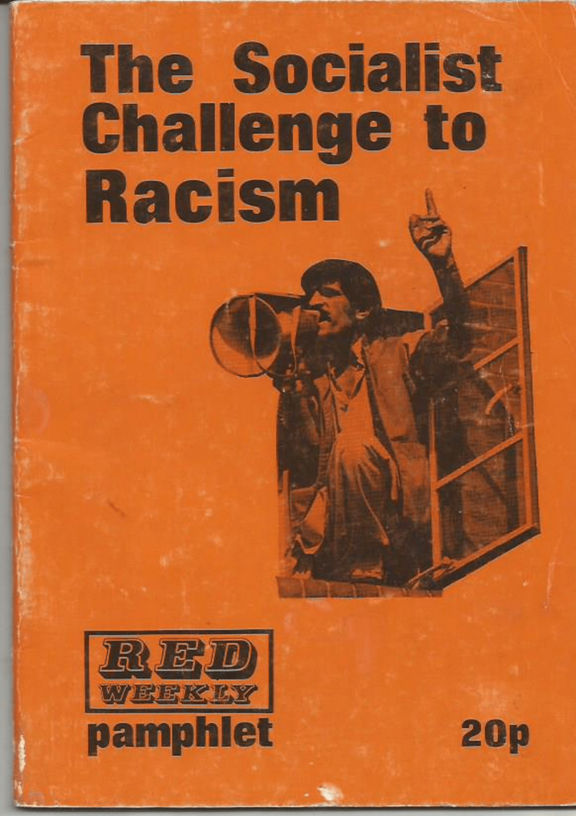
Roberts was also approached by an IMG member to take on a ‘party name’, that is, a ‘pseudonym to disguise their identities and confuse their enemies’. Roberts chose ‘Gary Shopland’, though he could not recall ever using it in practice. Roberts did, however, refer to ‘party names’ in his reports as part of the information gathering on IMG members.
For six months after he joined the IMG, Roberts was effectively a ‘dual carder’; that is, he continued to attend meetings and retained membership of the IS. At this point, he recalled that he was confronted by an IMG member who asked him to choose between the organisations.
As his SDS manager had planned, Roberts chose the IMG, staying with the organisation until the end of his deployment in 1978. The longer Roberts spent at IMG, the more familiar he became with the intricate rules governing internal politics within the organisation.
This is demonstrated by the increasing sophistication of his reporting on aggregate and ‘tendency’ meetings, culminating in the annual national delegate conference in May and June 1976.
The report on the latter ran to 55 pages. It contained detailed explanations of the political differences of the various factions of the IMG and identified nearly 200 participants in the conference. Additionally, it had breakdowns of position statements, the composition of the national committee, financial accounts, membership statistics, and trade union affiliations.
The security service was happy with his work, as an MI5 officer stated:
This is the most comprehensive report I have ever seen on this organisation [IMG] and will be of tremendous value to my Service [MI5].
Roberts was given a formal commendation by the Deputy Assistant Commissioner (DAC) HN1253 Victor Gilbert for this report.
Throughout this period, Roberts was also engaging in student politics at Thames Polytechnic, which he claimed the IMG considered fitting for a ‘good revolutionary’. Although he did not achieve a position of authority in the IMG student organisations, he did become the vice president of the Thames Poly students’ union.
This entailed him attending the National Union of Students (NUS) national conferences and the associated caucus meetings of IMG students, with the aim of ‘trying to get a revolutionary candidate elected’.
In October 1976, Roberts reported that the IMG had moved its London office from Caledonian Road near King’s Cross to Hornsey Road in Finsbury Park, north London. Despite having only been a formal member of the IMG for a few months, Roberts’ ability to access internal information was reflected in the quality of his report.
He included the front name for the IMG office, the temporary phone number, the code word to get through to the office on the switchboard and even the length of the tenancy.
As far as the south-east London branch of the IMG was concerned, the latter half of 1976 into 1977 was becoming dominated by the electoral success and the increasingly aggressive actions of the NF and its local splinter, the National Party (NP), particularly in Deptford.
Roberts reported on various anti-racist initiatives by Lewisham and Greenwich Trades Councils and the formation of the Deptford Anti-Racist Campaign (DARC).
This activity culminated in the founding of the All Lewisham Campaign Against Racism and Fascism (ALCARAF) , which held its first delegate conference at Catford Town Hall in January 1977. ALCARAF represented 65 community groups in the borough and, as Roberts reported, was a diverse umbrella organisation ranging from Communist Party (CP) members to church groups.
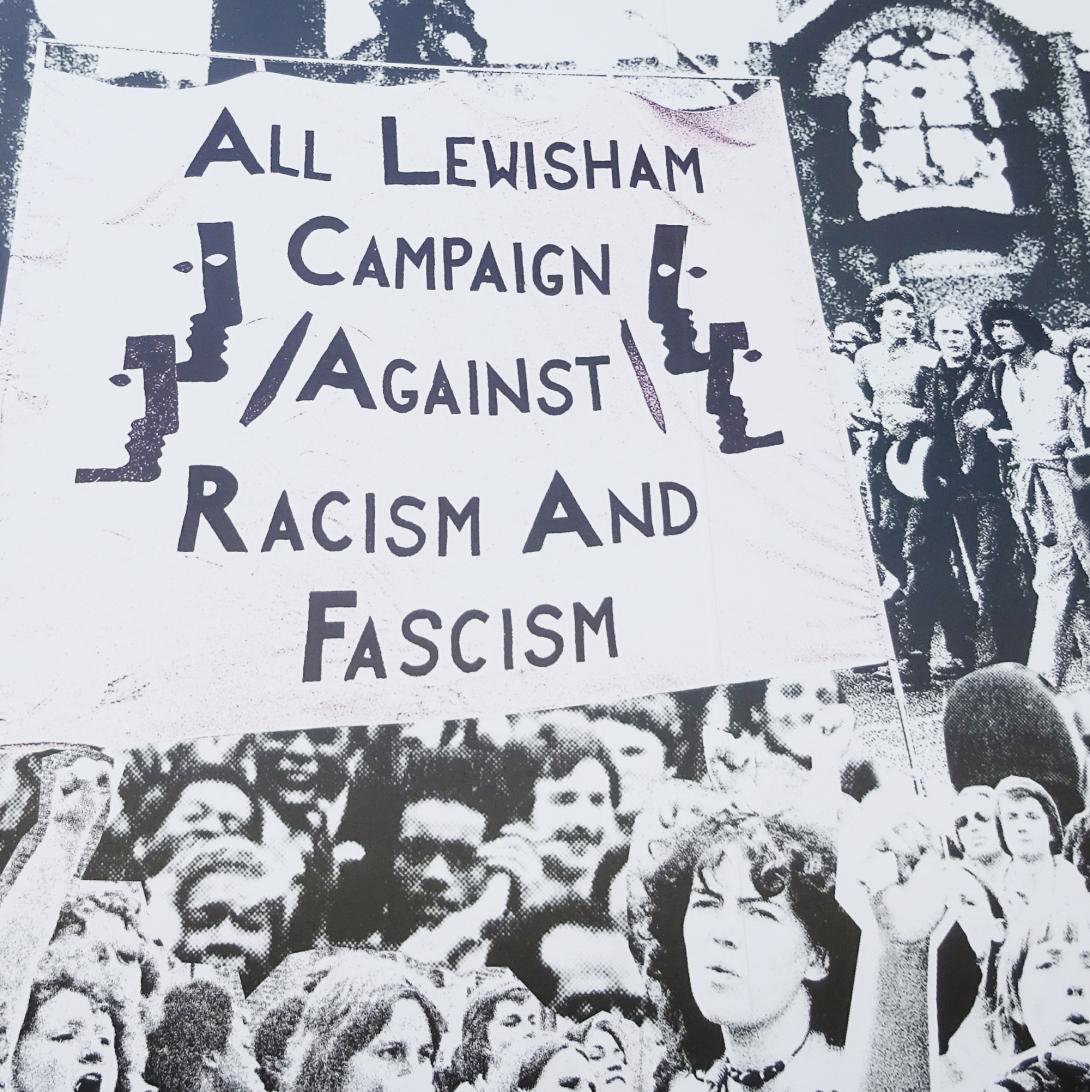
Roberts, who was present at the conference, spied on them all, passing on the names of at least two members of the Anglican church and an alderman, among many others, to Special Branch and MI5. Clearly, his SDS managers believed this was vital information to have included in the final report.
The year 1977 saw various confrontations between the racist parties (NF, NP), who were being aggressively protected by the Metropolitan Police and the anti-fascist left (IS, IMG and the Communist Party of England (Marxist-Leninist) (CPE(ML)), and local multi-racial communities.
These included an attack by the SWP and IMG on an NF march and rally on Ducketts Common near Wood Green, Haringey, in north London on 23 April 1977, St George’s Day, as well as the seminal Battle of Lewisham in south London on 13 August.
Roberts recalled these confrontations and the dangers they presented:
I witnessed the usual punch ups at demonstrations with the IMG, generally I would be at the back, though I recall one occasion where we were charged by the police mounted unit.
There was public disorder when the left-wing and right-wing met in public and the police were generally in between the two groups. The demonstrations at Lewisham in August 1977 and in Wood Green in April 1977 stuck in his mind as particularly violent:
there was many a physical confrontation and you had to try and avoid getting hit by the opposing sides. I don't recall any violence to property, it was all between the left and right supporters.
Roberts took an active role in planning for these events; for example, immediately prior to the NF march in Wood Green, he toured the route of the NF march with other IMG activists:
We were scoping for good attack points and sources of ammunition (i.e. rubble).
The same evening, Roberts made strenuous efforts to write up all the details and even provided a sketch map. He then took the unusual step of driving, in the early hours of the morning, to the home of an SDS back-office detective sergeant to deliver the information. Despite this, Roberts claimed:
I recall thinking at the Wood Green demonstration that the police had left too great a gap between officers as they escorted the National Front demonstrators, meaning it was easier for the IMG to violently confront the marchers and violence ensued as a result.
This annoyed me as whoever had planned the policing of the demonstration appeared not to have paid attention to the information I had provided which could have limited that violence.
In November 1977, due to his increasing standing and usefulness within the IMG, the leadership was pressuring Roberts to travel to Romania, France, and Belgium as a driver. This presented potential problems for Roberts’ cover identity.
He was able to avoid the trip by obtaining permission from his SDS managers to engage in another job for the IMG, this time in the UK. This involved driving the IMG van on a Socialist Challenge (formerly Red Weekly) sales tour, accompanied by other members.
Doubling as a recruiting drive, the trip went through the north of England, staying overnight at Preston, Lancaster and Burnley and selling the paper at universities, polytechnics and institutes of technology.
For the period November 1977 to the end of his deployment in the IMG in June 1978, there is a paucity of reports from Roberts. An exception is the comprehensive and detailed assessment of the IMG national delegate conference held in London from 15-18 April 1978.
This 42-page document, although not directly attributable to Roberts, bears his style, both in length and in its depth of understanding of the various political tendencies within the IMG and the internal debating and decision-making process.
Once their deployments began, SDS undercovers rarely, if ever, visited the SDS office at New Scotland Yard for security reasons. Instead, they had weekly meetings in SDS safe houses.
Roberts recalled that in his time, the SDS used two flats in south London and he was aware of a similar property in west London. He would visit one of the safe houses three times a week, on Mondays to report on what had happened over the weekend, and on Wednesdays and Fridays. Later in his deployment, the frequency of his attendance dropped to twice a week. At the meetings:
...we'd hand in our manuscript reports, which I think must have then been typed up by the full time members of the back office. Sometimes we'd be shown photos at those meetings and asked if we recognised anyone.
The scale of photographic surveillance of the IMG and other similar groups can perhaps be judged by the fact that Roberts himself appeared in one of these images, attending the IMG headquarters. He recalled that:
[The photograph] was taken from a police observation post and was no doubt picked up by someone in the back office of the SDS who had written a humorous note on it and passed it to me.
The weekly meetings would include other undercovers and the SDS management, with the detective inspectors (DIs) present at every gathering, and the detective chief inspector appearing at least once a week. The managers were always available to talk to at those meetings and by telephone outside them. According to Roberts:
At the group meeting you could have a face-to-face chat if there was something you needed to talk about, I don't think I ever did, but I can imagine if someone had a problem or there was an issue at home they'd have been there to talk.
Roberts remembered that at these meetings the undercovers did not, in general, talk to each other about their deployments, instead the conversation was ‘more friendly banter’. In some instances, he would recognise other SDS undercovers at demonstrations, although ‘I was the only person in my group [the IMG] so I wouldn't have spoken to them’.
One exception to this routine of weekly meetings in the safe houses was when a chief superintendent or commissioner visited. Unusually, Roberts recalled, the whole of the SDS was present, and although he claimed the meeting occurred at New Scotland Yard, it is more likely to have been in a safe house. Either way, the visit demonstrates that the highest echelons of the Metropolitan Police were aware of the SDS and its activities.
Outside of the regular SDS meetings, in the early stages of his deployment in the IS, each week Roberts would attend at least one private meeting, as well as other public meetings and demonstrations at weekends. During the day, because his cover employment was as a self-employed painter, he ‘would spend time in my cover address and in the IS bookshop’.
Once Roberts had infiltrated the IMG and became a student at Thames Polytechnic, his daily undercover routine changed as he had to attend college each day, complete the coursework and take exams. On top of this regime, and his commitments to the IMG, he involved himself in the student politics of the NUS.
Unsurprisingly, by the end of his deployment, he had fallen behind on coursework and did not sit his finals, so he never obtained the degree. He was often in his cover role for eight hours a day:
Consequently, I spent little time at home in my real identity off duty, though most nights I would get home and didn't want to stay in my cover flat if I could avoid it. During the winter and autumn, when the weather was bad, there were fewer demonstrations so I might have the whole weekend at home in my real identity.
Roberts did not have any personal relationships with anyone, saying there was no one to go for a drink with or watch the football with:
Even if we'd had a meeting in a pub, I never recall going for a drink with someone and I didn't assume any position of trust with any of the people I was mixing with.
Following this, he claimed that he never ‘engaged in any sexual activity whilst in my undercover identity’ and that he had no knowledge whether other SDS undercovers had engaged in sexual activity, simply because ‘they didn't tell and I didn't ask’.
Before Roberts deployed his exfiltration strategy, he had already been approached about taking another job with the Metropolitan Police, which required attending a training course.
The end of his deployment in June 1978 conveniently coincided with the end of the student term and the conclusion of his three-year degree course at Thames Polytechnic. Roberts noted:
After the three-year course, people went their own ways, so I had a good reason to leave the IMG and said I was moving back up north. I think my story was that I was very depressed, and so didn't sit my finals.
It appears the exit strategy was successful, although when he returned to the SDS, ending his four-year deployment, he did not recall any attempt to debrief him.
Roberts completed his training course and took up his new post in the Metropolitan Police in 1978. He eventually left the force ‘on good terms’, at the rank of detective sergeant.
On 25 January 2018, following an application from the Metropolitan Police, Inquiry Chair Sir John Mitting said he was ‘minded to’ restrict HN353’s real name.
As no application was made over HN353’s cover name, the name ‘Gary Roberts’ was released in May 2018 alongside the names of his target groups. A ruling in July 2018 confirmed that Roberts’ real name would not be revealed.
HN353 submitted a written statement to the Inquiry on 12 July 2019. All procedual material can be viewed in the documents tab.