
HN347 ‘Alex Sloan’ was recruited into the Metropolitan Police in the 1960s and joined the Special Branch in 1969. He became a member of the Special Demonstration Squad (SDS) in 1970 and was deployed on active duty as an undercover in late 1970.
Sloan was tasked with infiltrating the Irish National Liberation Solidarity Front (INLSF), a small Maoist group operating in west London. He had achieved membership of the group by January 1971, participated in paper selling and attended pickets and demonstrations, but was not a core member. Although the INSLF supported the use of violence in certain circumstances, it was not a violent group as such.
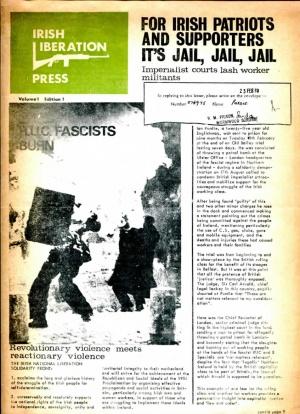
Unbeknownst to Sloan, the INLSF had expelled a suspected undercover police officer just prior to his joining. A dispute over the leadership of the INLSF led to accusations that Sloan was an undercover police officer, and his SDS managers withdrew him in June 1971, just over six months after his deployment began.
Sloan returned to Special Branch and retired from the Metropolitan Police in 2004, after nearly 40 years of service.
Unless otherwise indicated, the information below is either taken from the first witness statement or the oral evidence of HN347 ‘Alex Sloan’.
HN347 ‘Alex Sloan’ was born in the 1940s and joined the Metropolitan Police in the 1960s. In 1969, after successfully taking an examination in mathematics and English, writing an essay and going through an interview he was recruited by Special Branch.
His life in Special Branch was fairly routine, following normal office hours and he ‘was at all times identified as a police officer’. Sloan did not undertake any undercover policing or work using a cover identity prior to joining the SDS.
Sloan stated that he could not recall the first time he heard about the SDS, but was aware of its existence:
At the time I joined I think that there was only 364 people in Special Branch. As such I must have heard about the SDS through word of mouth.
Recruitment
HN347 ‘Alex Sloan’ was recruited into the SDS after being approached by Detective Chief Inspector (DCI) HN1251 Phil Saunders and Detective Inspector (DI) HN294 , the head and deputy head of the unit. Sloan believed that the reason he had been considered for SDS duties was because:
I did not look like a typical police officer, I have a distinctive [Scottish] accent and management did not want to have any flamboyancy or flashness.
Inquiry witness Norman Temple recalled Sloan having a Scottish accent, although that detail was redacted in his witness statement.
Sloan was married at the time of the interview, and could not recall having any discussions about what undercover deployment would be like, or the impact it could have on him or his family.
As far as he knew, the SDS managers did not speak to his wife about these issues either. Despite these limitations he recalled:
Both DCI Saunders and DI [HN294] were laid back individuals which I found helped and was the correct approach to managing UCOs [undercover officers]… I joined the SDS because it sounded like an interesting opportunity.
Although Sloan claimed to have joined the unit in 1971, it is likely to have been late in 1970, as his first reports appear in early January 1971.
Training and tradecraft
Sloan could not recall any training in the SDS before he was deployed, whether formal or informal. He said he received no advice about what to do if he ended up in court in his undercover identity.
He did not recall being pointed to read Home Office circular 97/1969, ‘Informants Who Take Part in Crime’, which asserted that police officers ‘should not counsel, incite or procure the commission of a crime’, or mislead a court. Instead, Sloan claimed he was told that under no circumstances was an SDS undercover permitted to engage in criminal activity.
Similarly, Sloan claimed he could not recall being given any specific advice, guidance or instruction on how far it was acceptable to become involved in the private lives of those that he met while undercover or how close his relationships with them should be:
Nor can I recall if I was given instruction whether it was acceptable to enter sexual relationships whilst deployed.
He added that ‘the guidance was to use common sense.’ This absence of training or guidance extended to a lack of clarity about what the SDS managers considered to be ‘subversive’ within the target organisations. Sloan stated:
I was submitting reports, and it wasn't for me to judge what was in these reports as to whether or not it was subversive or not or against public order.
Sloan would relay the facts to senior SDS officers, who then decided what to do with the information.
Regarding the question of taking a position of responsibility in a target organisation, Sloan responded that he was given no guidance by SDS managers but would have taken the opportunity. Similarly, if his cover was blown, Sloan said he was offered no formal or informal advice and, in effect, ‘left to his own devices’. This laissez-faire approach by Sloan’s managers was common in the early stages of the SDS.
Cover identity
It appears that, at this relatively early stage of SDS operation, cover identities were rudimentary and did not involve using deceased children or person’s names. Sloan claimed that he was unaware of this practice before or during his deployment and certainly had not used it to create his cover name. Instead, Sloan referred to a section, ‘Identity and Background’, in a document titled ‘Penetration of Extremist Groups’ written by SDS founder, HN325 DCI Conrad Dixon , in 1968. This asked prospective undercover officers:
...to supply an autobiography covering his new identity, and after the various inconsistencies have been eradicated he obtains the necessary papers to confirm it.
Significantly, although Dixon’s document reads like a founding charter and guide for the new unit, this is one of the very few times any SDS officer refers to it.
Sloan created a cover name and a back story of having come down to London, presumably from Scotland, to find work. He then ‘obtained employment documents and a rent book’ but did not have a provisional driving licence, library cards, or pay slips.
His cover employment was as a car mechanic, and he was helped by the SDS, which supplied a real garage whose mechanics would say that he worked there, should anyone phone to ask. However, Sloan never visited or worked at the premises.
Sloan’s cover accommodation was a bedsit in Maida Vale, in northwest London. He recalled that his meeting with the letting agent was the first time he tested his cover identity. He lived alone in this property throughout his deployment.
Even though the SDS provided him with a vehicle, he never used it because there was a London Underground station close to the bedsit.
In terms of his appearance, Sloan followed the path of other SDS undercovers by growing his hair and a beard before his deployment.
However, unlike some undercovers, he did little in the way of preparatory work, such as visiting people or places, to help facilitate his cover identity before attempting to infiltrate a target group. It may have been this lack of preparation that led to his demise as an undercover a few months later.
Irish National Liberation Solidarity Front (INLSF)
According to Sloan, he was tasked with infiltrating the INLSF by SDS managers DCI Phil Saunders and DI HN294 and began his deployment at the end of 1970. He claimed that he was not informed by his SDS managers as to how long he would be deployed.
Sloan recalled little of the process he undertook to infiltrate the group, other than ‘I think that I just turned up at meetings’. It appears, by early January 1971, he was invited to the regular Sunday evening private INLSF group meetings, above a pub near Paddington station in west London.
In April 1971, these meetings shifted to the private home of Edward Davoren, the de facto leader of the INLSF, in Golders Green, north-west London. Davoren also ran political education classes on Sunday afternoons in his flat. At this point, the ‘office’ of the INLSF was situated in the private home of a member, though the organisation was looking for relevant properties in ‘Irish area[s]’ of north London.
Inquiry core participant Norman Temple became a member of the INLSF in September 1970, a few months before Sloan. He remembered the expulsion of INLSF member Dick Jackson, the environment Sloan unknowingly entered when he infiltrated the group:
I remember that in late 1970 or early 1971, [Edward] Davoren and [Joe] O’Neill singled him [Dick Jackson] out and accused him of being an undercover police officer. Jackson quit the group that night and I did not see him again.
It is not known whether Jackson was an undercover police officer, although there is compelling evidence that he was. Nevertheless, the fact that the leaders of the INLSF were aware of possible police infiltration did not bode well for Sloan.
For the first few months of his deployment, Sloan reported on INLSF collaboration with the Black Unity and Freedom Party and its support for the family-led protests over the death of Stephen McCarthy at the hands of police in Islington, north London. This is the first example of SDS undercovers spying upon a civil campaign for justice due to police violence leading to someone’s death.
In April 1971, Sloan reported on Davoren meeting a representative of the Chinese legation, who was very interested in learning about groups supporting the struggle in Ireland, who Davoren claimed was offering limited support for the group’s newspaper Irish Liberation Press.
Sloan’s report was annotated with reference to E squad, the Special Branch unit that dealt with ‘foreign politics and liaison related issues’; what the Inquiry has labelled ‘foreign terrorism and extremism’.
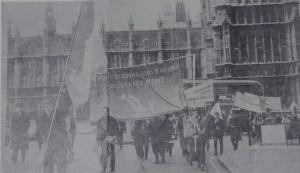
Attending these meetings and ‘political education’ classes run by Davoren, Sloan also sold the INLSF paper in Irish pubs and dance halls in London and sometimes further afield in Birmingham and Coventry. He attended demonstrations and pickets of police stations and stated, categorically, that he:
did not witness or participate in any public disorder whilst serving undercover with the SDS.
Sloan’s reporting to the SDS on these activities followed a typical pattern, recording the locations of meetings, the numbers present and various mundane details of paper sales and finances, noting the locations and content of any future protests, identifying, listing those present and sometimes providing more detailed profiles of leading activists.
His most prolific report was his last in August 1971, after having left the INLSF, in which he provided a list of more than 70 people and contacts for the Irish Liberation Press.
Of most interest to the SDS were reports on members of the INLSF visiting Ireland. In practice, these appear to have been largely paper-selling activities in Republican circles in both in the Republic and in Northern Ireland.
On one occasion, in July 1971, Sloan reported on contact between a member of the INLSF and the Provisional Irish Republican Army (PIRA), despite Davoren having denounced this member as being ‘nationalistic in his attitude to Ireland’. Notwithstanding the rhetoric and stance of the INLSF regarding the armed struggle in Ireland, Sloan realised:
It soon became obvious that the INLSF weren't a group that were going to carry out bombings or any other serious criminal activity.
He understood that although the group expressed support for using violence in revolutionary situations, this was not a tactic the INLSF employed at that time. He noted that the ‘[INLSF] didn't endorse, encourage, instigate, facilitate or participate in violence’ during his deployment. The INLSF went to demonstrations to make noise and give speeches
As his knowledge of the internal workings of the INLSF increased, Sloan was able to report on the existence of a clandestine caucus within the organisation known as the Communist Workers’ League (Marxist-Leninist) (CWL), led by Davoren and involving Temple. This was the ‘inner circle’ that Temple alluded to in his witness statement, from which Sloan was excluded.
Sloan described his average week, beginning with an SDS meeting on a Monday. After his deployment began, like most undercovers, he did not visit the SDS headquarters at New Scotland Yard for obvious security reasons. Instead, six or so undercovers would meet in a safe house, a cover flat in west London, along with their SDS managers, typically DCI Saunders and DI HN294. According to Sloan these meetings functioned as both ‘social and professional’ gatherings. The former aspect allowed undercovers:
To make sure everyone was okay, and we kept in touch with each other. And it was a bit of a […] relaxation period, sort of thing, we all met together.
Although Sloan stated that there were ‘no specific arrangements for welfare monitoring’, these weekly sessions allowed any such issues to be discussed privately with SDS managers, which certainly ‘helped with morale’. Outside of these weekly SDS meetings, it was possible to see managers privately by ringing the SDS office at New Scotland Yard and arranging a clandestine meeting.
The regular weekly meetings provided a place to report back formally in written reports, deal with pay issues and submit expenses claims. They also facilitated group discussions about their respective target groups and individuals, details of any upcoming demonstrations and protests, or to find out what other groups were planning. Problems with tradecraft, such as jobs or transport, could also be resolved in the group sessions with ‘peers and managers’.
Sloan spent Tuesdays and Wednesdays, when he claimed to be working as a mechanic, at his real home with his wife. On Thursday and Friday after ‘work’, he sold the Irish Liberation Press in pubs in Hammersmith and Kilburn. On Saturdays, he would attend demonstrations, or they would drive to other cities to sell the paper. On Sundays, he attended the INLSF's weekly meetings.
Consequently, from Thursday to Monday, Sloan would not return to his real home, but would stay in his cover flat or sleep over at the homes of other INLSF members. This routine brought him into close contact with his targets and ‘differed enormously to my other work in Special Branch, just gleaning some information at the odd meeting at Hyde Park corner’.
Despite the close working relationships he developed with INLSF members, Sloan stated:
I never had any sexual activity whilst in my undercover identity. I did not have any close personal relationship with any person in my group. Nor did I assume any position of trust. All I did was to sell newspapers.
Prior to Sloan’s exit from the INLSF, there was only one incident where his cover could have been compromised. At a demonstration near St James in Westminster, Ed Davoren asked him to give a speech, and Sloan recalled:
I recognised a uniform officer policing the demonstration who would have been able to identify me. I said to Ed Davoren that I could not give a speech because I was too nervous when in fact I did not want to be recognised.
The demonstration continued and Sloan did not have to give a speech. However, in June 1971, Sloan came under the scrutiny of the leadership of the INLSF, the secretive Communist Workers’ League (Marxist-Leninist) (CWL). Sloan noticed that he was being followed by two members of the group, including INLSF co-founder and chair Joe O’Neill.
O’Neill had – along with de facto INLSF leader Edward Davoren – previously denounced suspected undercover officer Dick Jackson. Sloan realised the two INLSF members had tracked him along the Edgware Road towards his cover flat in Maida Vale and managed to lose them. He phoned his SDS managers to report this event.
The next meeting of the INLSF happened to be an emergency two-day conference over the weekend of 26/27 June 1971 at Davoren’s flat in Golders Green. The meeting was called because a document had been circulating calling for some members of the INLSF to be expelled.
Temple recalls growing tensions within the INLSF between Davoren and O’Neill throughout early 1971:
Joe O’Neill was concerned that Edward Davoren was focussing on non-Irish issues and diluting the group’s aims and objectives. In my view, Davoren was keen to hold onto his power within the group at all costs.
At the conference, Davoren spent much of the Saturday politically denouncing O’Neill and his supporters. On the Sunday, Davoren confronted Sloan in front of the whole group, as Sloan recalled:
Davoren said that O'Neill had accused me of being a pig [police officer]. I was irate at that. [...] I got up and I was really cross and tried to threaten someone [O’Neill]. I was pulled back[…]
Davoren then accused O'Neill of making up this terrible allegation against ‘Comrade Alex’. As a result of this confrontation, O’Neill and a few of his supporters walked out, and were then formally expelled from the INLSF.
It seems that suspicions against Sloan had become part of political shenanigans within the group. According to Temple, Davoren admitted that he agreed with O'Neill’s suspicions about Alex Sloan.
However, this contradicts what Davoren told Sloan at a meal with several members of the INLSF immediately after the meeting, assuring him that he never believed O’Neill. Sloan remembered quite specifically that Davoren said:
I never once thought you were a pig [police officer]... Alex.
Later that evening, Sloan met Temple and another INSLF member outside his cover flat. Sloan explained that O’Neill and a comrade had been spying on him. Temple was suspicious about Sloan’s motives: he would never see him again.
Sloan reported this turn of events to his SDS managers, who immediately decided to pull him from his deployment. Sloan simply disappeared, severing all contact with the INLSF and its members.
Sloan was not debriefed after the end of his deployment and was given a post in Special Branch that did not involve meeting members of the public. He eventually retired from the Metropolitan Police, after nearly 40 years’ service, as a sergeant, in 2004.
On 1 August 2017, the Metropolitan Police Service made an application to restrict HN347’s real name. In February 2018, HN347’s cover name and target group were published.
However, in March that year, Inquiry chair Sir John Mitting decided that his real name would remain subject to a restriction order. All procedural and evidential material can be found in the Documents tab.