HN302 is the cypher for a former Metropolitan Police Special Branch officer who worked with the Special Demonstration Squad (SDS) during the 1970s. Neither his real nor his cover name has been published.
Image
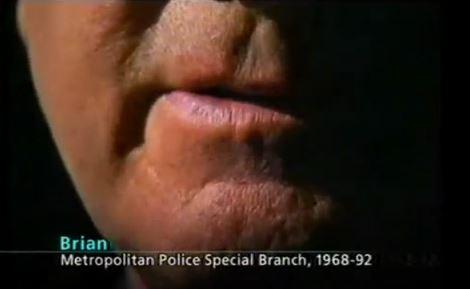
HN302 was interviewed by Peter Taylor, using the pseudonym 'Brian' in 'True Spies'.
In the early 1970s, during his deployment, HN302 infiltrated the Troops Out Movement and other protest groups. He later gave evidence to the Inquiry in a closed session, but most details of his deployment, the groups he targeted, and his operational activities remain censored.
In 2002, years after his deployment, HN302 participated in the BBC True Spies documentary using the pseudonym ‘Brian’. A subsequent article promoting the series revealed his infiltration of the Troops Out Movement.
HN302’s evidence to the Inquiry, given a further two decades after the True Spies documentary, focused on the culture of the SDS, the use of undercover officers for intelligence gathering on allegedly subversive groups, and his sexual relationship with an activist while undercover. Mitting justified not publishing HN302’s real or cover name, citing a potential threat to the former undercover’s life.
In the Special Demonstration Squad
HN302 described undercover policing as requiring officers to live a ‘parallel life’ while embedded within political groups. He defended the broad scope of Special Branch intelligence gathering and argued that intelligence should be collected not only on groups considered subversive, but on peripheral organisations and campaigns, to build a broader intelligence picture:
It is only by gathering and collating a wide range of material that you can form an overall picture, and at some stage, you are able to say ‘Yeah, we think these are subversives’. Equally, you are able to say ‘Well, we don’t think they are.’
HN302 maintained that apparently separate political groups could collectively develop the capacity for serious unrest or political instability even if they lacked the ability to do so individually:
Given the opportunity and the leadership and the right catalyst, the social circumstances perhaps at the time, I believe there was a possibility that that outcome might have taken place or [been attempted].
Tradecraft
HN302 described SDS work as involving social immersion and observation rather than conventional Special Branch intelligence gathering. Officers attended meetings, demonstrations and social events while monitoring activists and gathering information about political groups.
He described the secrecy within the SDS as highly compartmentalised and based on a strict ‘need to know’ principle. Officers generally knew little about each other’s deployments.
According to HN302, weekly SDS safe house meetings were mandatory, combining operational reporting, intelligence sharing, and relief from the pressures of undercover life:
This group of officers cut themselves off, apart from their families, from any of the colleagues they might have affiliated with, from normal socialising with friends and it was a pretty isolated existence.
Target Groups
Although not mentioned in the Inquiry’s published evidence, Peter Taylor, the journalist behind True Spies, wrote that ‘Brian’ had infiltrated the Troops Out Movement in the early 1970s during the initial period of the Irish conflict:
Being a hairy was nerve-wracking and dangerous. Infiltrating the Troops Out Movement, with its Irish republican connections (as Brian did) or the Anti-H Block campaign (as other hairies did), or working on the fringes of terrorist organisations such as the Angry Brigade or the Free Wales Army was a high-risk and potentially life-threatening operation. Peter Taylor, Inside Job, The Guardian, 23 Oct 2002.
Image
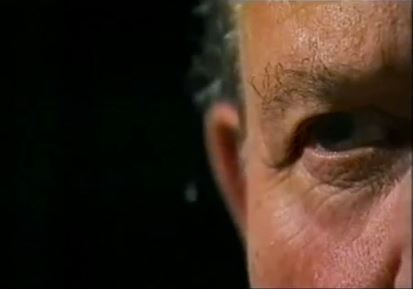
'Brian' - partial image captured on a screenshot in 'True Spies'.
On cooperation with the Security ServiceSecurity Service / MI5 (overview)The Security Service (MI5) is the UK's domestic intelligence agency. Its functions overlapped with those of the Special Branch and the SDS, especially during the Cold War, and the SDS greatly assisted it in gathering intelligence on 'subversion' and 'subversives.' Much of the disclosure published by the Inquiry originated from MI5 archives. Two corporate statements have been submitted to the Inquiry by MI5.Full page: Security Service / MI5 (overview), Taylor noted:
Sometimes MI5 was also a recipient of the political intelligence they gleaned. ‘Occasionally somebody from MI5 would come to a meeting and ask, either individually or generally, if anybody could help with the identity of a photograph,’ says Brian. Peter Taylor, Inside Job, The Guardian, 23 Oct 2002.
Life Undercover
HN302 said the safe house meetings were effectively the only opportunity officers had to relax together with colleagues who understood the pressures of undercover work.
It was the only opportunity not only to relax with these colleagues, but it was the only opportunity period.’
He described the atmosphere ranging from serious operational discussions to more relaxed socialising, with drinks, meals and informal conversation. Officers would sometimes compare the numbers of activists they had identified at demonstrations in what he described as ‘a bit of one-upmanship’.
At the same time, HN302 characterised relationships between undercover officers as ‘extremely complex’, reflecting the pressures and secrecy surrounding their work.
Sexual Relationships
HN302 admitted to having had a sexual relationship with a woman he met while attending activist meetings as part of his deployment. He stated that the relationship developed gradually, through repeated encounters at meetings, demonstrations and social gatherings:
Much as any relationship begins, frankly, yeah. You meet people in a social setting. You may or may not go and have a drink together or with others and these friendships develop.
HN302 denied deliberately targeting the woman and claimed the relationship developed ‘simply’ by chance. He said they socialised together, both alone and with others, over several months before having sex.
He acknowledged that the woman did not know he was a police officer and accepted that she probably would not have consented to sex had she known his true identity:
No, my whole life for the next [Redacted] was a lie, so it made no difference then.
I was trying to live a parallel life and this was very early on in my deployment and yeah, … with hindsight, I might have changed my behaviour, but I was trying to live a life and I made no distinction then between being a police officer or not. I wasn’t a police officer. I was trying not to be a police officer.
HN302 claimed he did not tell his managers or colleagues within the SDS about the sexual encounter because he did not think it was necessary. He suggested that, had managers known, they might have advised him that he had made a mistake.
He also said that he never saw the woman again after the encounter.
Views on Subversion
HN302 gave evidence about how Special Branch and MI5 viewed political extremism and ‘subversion’:
the overthrow, the destabilisation or indeed the destruction of, I suppose, our democracy in these circumstances.
He maintained that many of the political groups monitored by Special Branch possessed both the intention and the potential capacity to undermine parliamentary democracy if social and political conditions changed in their favour.
HN302 defended the continued surveillance of political groups even where they had not been conclusively identified as subversive. He argued that groups could evolve over time and that intelligence gathering was necessary for this reason.
In the Inquiry
On7 March 2018, Inquiry Chair Sir John Mitting said that neither the real nor the cover name would be published. This departed from his stated policy of revealing both the real and cover names of officers known to have had sexual relationships. Mitting justified this because:
The nature of the deployment was such as to create a real risk to the safety of HN302. To an extent which cannot be precisely quantified, that risk remains. Because it is contingent, it does not engage Articles 2 or 3 of the Convention, but if it were to mature the harm to HN302 would be serious, possibly even lethal.
The right of [the person in the sexual encounter] to know the identity of HN302 is outweighed by the risk of safety of HN302.
The Inquiry formalised this decision in July 2018.