
In 1979, NATO member states agreed to expand their ‘first-strike’ capability against the Soviet Union, which involved Britain receiving US ground-launched nuclear-armed cruise missiles in a number of military bases across the country.
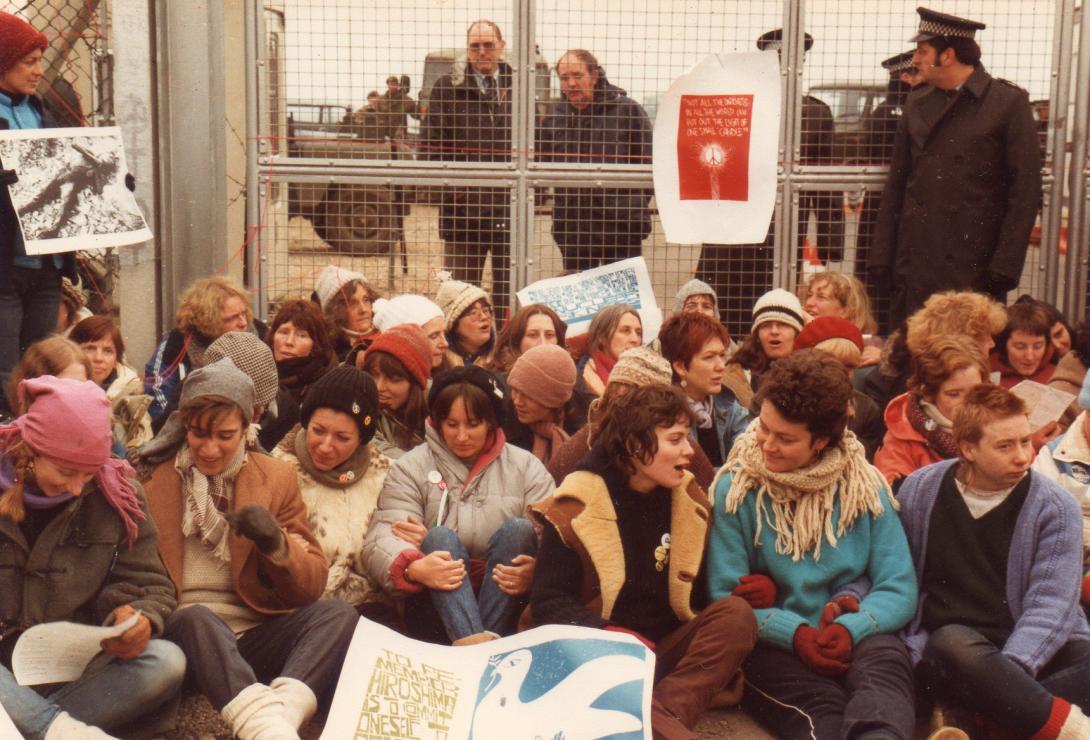
RAF Greenham Common near Newbury in Berkshire was selected as the first base to receive cruise missiles, providing the catalyst and a focal point for protests. Starting in August 1981, Women for Life on Earth (WLE) marched from Cardiff to Greenham Common to organise public debates about nuclear weapons. After being rebuffed by the US commander at the base, they decided to camp outside, where they remained from September 1981 until 2000.
The Greenham Common Women’s Peace Camp (GCWPC) was infiltrated between June 1983 and June 1986 by HN33/98 ‘Kathryn Lesley ‘Lee' Bonser’ , through her membership of a supporting group, Lambeth Women for Peace (LWP). [[link]] Bonser was one of seven signatories on the GCWPC bank account and attended discussions subject to legal professional privilege through Greenham Women Against Cruise Missiles, which she had also infiltrated.

According to Bonser’s written statement, she was asked by SDS manager Chief Inspector HN819 Derek Kneale to infiltrate the Greenham Common peace camp. He told her that Margaret Thatcher,‘wanted to know what the Greenham Women were doing’.
Bonser was the first female officer to join the SDS in more than a decade.
SDS officers had also infiltrated the Campaign for Nuclear Disarmament (CND). HN88 ‘Timothy Spence’ , HN65 'John Kerry’ were therefore in a position to report on the Greenham Common Women’s Peace Camp.
The Greenham Common Women’s Peace Camp (GCWPC) was a decentralised group, comprising many different camps situated around the base’s nine-mile perimeter fence.
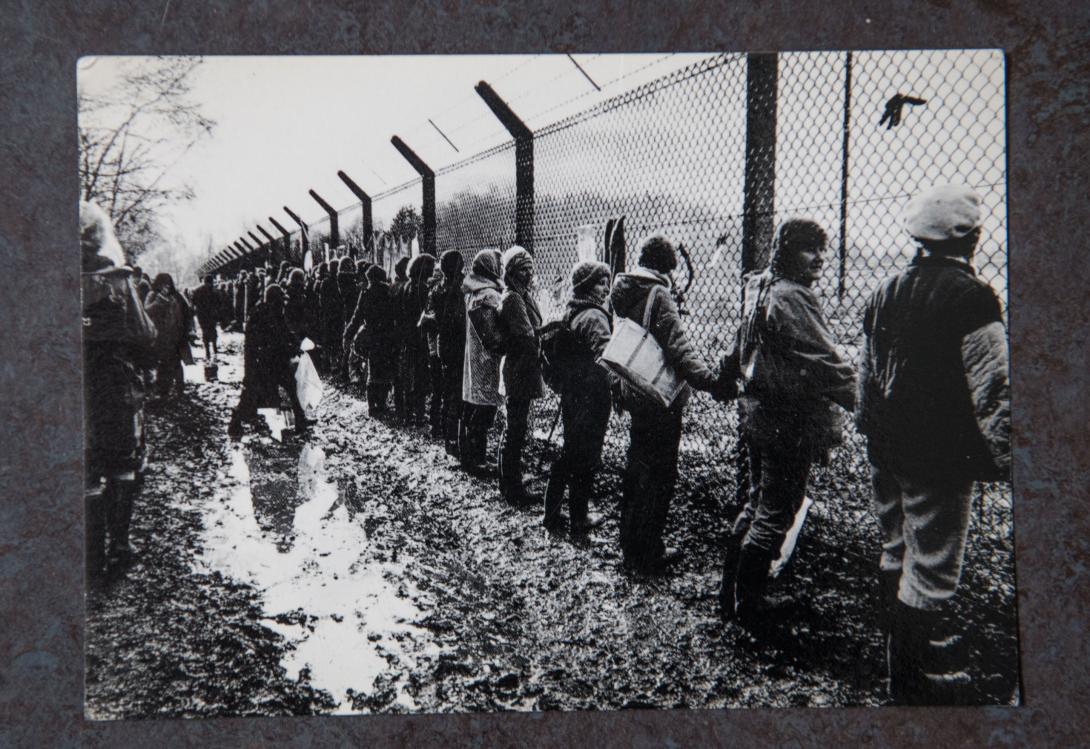
It grew far beyond the initial marchers from the WLE and attracted thousands of supporters. As a women-only group, the GCWPC encouraged male allies to take supporting roles such as fundraising and childcare. It drew widespread support from CND, the Quaker movement and trade unions, including the NUM.
The 1983 SDS Annual Report stated that the women ‘would resort to any tactic to gain access’ to the base. In fact, GCWPC based its tactics explicitly on principles of non-violent direct action (NVDA) and made decisions by consensus.
Disruption through NVDA included sit-ins that blocked entrances and occasionally cutting through the fences to enter the military base. Women at GCWPC relied on telephone trees to mobilise supporters elsewhere to join these actions. Spycop Lee Bonser obtained these phone numbers and contact details by infiltrating the camp.
Early examples of GCWPC actions included a 24-hour blockade of the base on 22 March 1982. When the first 96 cruise missiles arrived at Greenham Common in November 1983, the women in the camp organised Embrace the Base, attracting at least 30,000 protesters. In late December 1983, campaigners broke into the base’s air-traffic control tower, undermining government claims at the time that the base was secure.
Sources
Commonground. A Greenham Women Everywhere project.